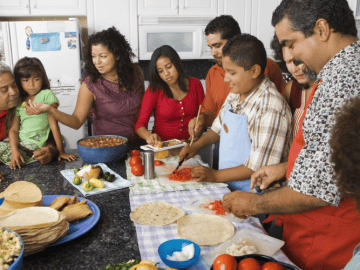
The CDC recommends at least 20 minutes of actual seat time for lunch, but getting to the cafeteria, waiting in line and finding a table can leave children with far less time to eat.
A child can eat lunch in 20 minutes.
Some can probably finish much faster.
But should the goal of a school lunch be simply to make sure a child finishes before the bell—or to give children enough time to eat a nutritious meal without feeling rushed?
That distinction is at the center of a question facing schools across the country.
The Centers for Disease Control and Prevention recommends that students have at least 20 minutes of “seat time” for lunch—meaning time after they have received their meal and are seated. The agency makes an important distinction: 20 minutes of seat time is not necessarily a 20-minute lunch period.
Getting to the cafeteria, washing hands, standing in line, choosing food, waiting to pay, finding a table and cleaning up can all take time away from eating. The CDC specifically recommends that schools consider lunch periods longer than 20 minutes to accommodate those activities. Some studies cited by the agency suggest that a 30-minute lunch period can allow students to get the recommended 20 minutes of actual seat time.
And there is another reason the clock matters: what children eat.
More time can mean more food—and more of the healthier food
Research reviewed by the CDC has found that providing students with more time for lunch is associated with greater consumption of food and key nutrients. Students also consumed more fruits and vegetables, the lunch entrée and milk, and there was less food waste.
That doesn’t mean every child needs 30 minutes to eat.
It does mean that eating quickly and eating adequately are not necessarily the same thing.
A child who is hungry may be able to finish a meal in 10 minutes. But a child who spends several minutes waiting in line, then talks with classmates, opens containers, drinks milk, eats vegetables and fruit, and simply eats at a comfortable pace may need considerably longer.
The CDC recognizes that distinction. Its guidance says students should have at least 20 minutes after being seated to eat and socialize.
That last part is easy to overlook.
Lunch is more than calories
For children, lunchtime is also one of the few parts of the school day specifically devoted to sitting down with other children.
Conversation takes time.
So does trying a food a child has never eaten before. So does deciding whether to eat the vegetables. So does opening a package, peeling an orange or simply slowing down enough to recognize when you’re full.
Health Canada’s current guidance makes a similar point. It advises schools to plan meal and snack times so children can eat without being rushed, and encourages children to eat with others and enjoy conversation with their peers.
Canada’s Food Guide also tells children and families to take their time eating, enjoy conversation and allow themselves time to enjoy their food.
The underlying idea is simple: mealtime has value beyond the food itself.
France offers a very different philosophy
France provides an even more striking comparison.
French national guidance on school meals says the nutritional quality of a meal should be accompanied by a pleasant environment that encourages conviviality. It also says that the time devoted to eating is as important as the contents of the plate.
The French guidance, issued in 2001, recommended that the eating period itself be at least 30 minutes, excluding time spent waiting for service.
That doesn’t mean every French child today sits at a school table for exactly 30 minutes. The recommendation is more than two decades old, and school schedules vary.
But the philosophy is revealing.
The French guidance treats the school meal as an experience involving nutrition, comfort and social interaction, rather than simply a short break between classes. It specifically discusses the importance of the physical environment, including appropriate furniture and limiting excessive noise.
So what does “enough time” actually mean?
There is no magic number that works for every child.
Twenty minutes may be plenty of time for one student and barely enough for another.
The more useful question may be what happens inside those 20 minutes.
If a student sits down immediately with a complete meal and has 20 uninterrupted minutes, that meets the CDC’s minimum recommendation.
But if a student has a 30-minute lunch period and spends 10 minutes waiting in line, the difference is significant.
The same is true if a child has to choose between eating and talking with friends, or between finishing the meal and getting a few minutes of recess.
In that situation, the issue isn’t whether a child can eat quickly.
It’s whether the school has designed lunchtime around eating well—or simply finishing on schedule.
The question for American schools
American schools have increasingly focused on the nutritional quality of what children are served. School meals now include fruits, vegetables and whole grains, and federal nutrition standards have sought to improve the quality of those meals. The CDC notes, however, that students may be unfamiliar with some healthier options and may take longer to eat them.
That creates an intriguing contradiction.
Schools can spend more money and effort putting healthier food on a child’s tray.
But what happens if the child doesn’t have enough time to eat it?
The CDC’s research suggests that giving children more time is associated with greater consumption of fruits, vegetables, milk and other components of the meal—and with less food waste.
So perhaps the question shouldn’t be:
Can a child finish lunch in 20 minutes?
A hungry child may be able to finish it in half that time.
The better question is:
Are American schools giving children enough time to eat—or merely enough time to finish?
Because there is a difference between getting food into a child’s stomach and giving a child enough time to sit down, eat well, enjoy the meal and talk with friends.
And when the bell rings, that difference may be measured not only in minutes—but in the food left on the tray.