Los Angeles and Long Beach are expanding rent assistance Los Angeles programs to prevent evictions before they happen, targeting low-income renters, including many Latino households, while reducing long-term public costs.
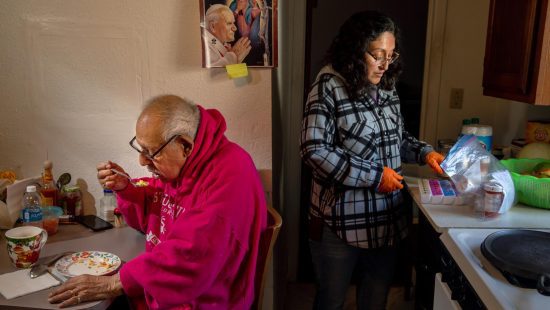
Long Beach’s new rent assistance program is taking a direct approach to one of the most urgent pressures facing working families in Los Angeles County: keeping people in their homes before eviction becomes homelessness. The city’s “Upstream LB” initiative, launched alongside expanded efforts in Los Angeles, is designed to intervene early for households most at risk, many of them Latino families navigating rising rents, unstable work, and immigration-related economic stress.
The program comes as housing instability continues to intensify across Southern California. According to the U.S. Census Bureau, Latino renters make up a disproportionate share of cost-burdened households in Los Angeles County, where more than half of renters spend over 30 percent of their income on housing. Public health officials at the Los Angeles County Department of Public Health warn that housing instability is now one of the strongest predictors of emergency health visits and chronic stress in low-income communities.
Long Beach officials say the goal is not only social protection but financial efficiency. Funded through Los Angeles County Measure A, a voter-approved half-cent sales tax dedicated to homelessness prevention, the program provides temporary financial assistance for overdue rent, utilities, and relocation costs. Payments go directly to landlords to stabilize housing relationships and prevent eviction filings.
The city is prioritizing households earning 50 percent or less of the Area Median Income, with special attention to seniors, families facing sudden job loss or medical emergencies, and residents impacted by immigration enforcement pressures. Applications open monthly, reflecting what officials describe as a “rapid response model” to prevent a short-term crisis from becoming a long-term displacement.
Research from the California Department of Public Health and national housing studies reinforces the logic behind this strategy. Preventing eviction reduces strain on emergency shelters, hospital systems, and local law enforcement. In fact, a landmark study from the University of Notre Dame’s Wilson Sheehan Lab for Economic Opportunities found that every dollar spent on emergency rental assistance generates about $2.47 in community savings. The same research showed families receiving aid were 81 percent less likely to become homeless within six months.
Economist Matthew Desmond, a leading housing policy researcher, has argued that eviction prevention is one of the most cost-effective interventions available to local governments because it interrupts the cycle between housing loss and public system dependency.
In Los Angeles County, where homelessness remains one of the most visible and costly challenges, officials say prevention is becoming a central strategy rather than an afterthought. The Los Angeles programs mirror Long Beach’s approach, signaling a broader shift toward “upstream” interventions that aim to stabilize families before they enter the shelter system.
For Latino communities across Los Angeles and Long Beach, the stakes are especially high. Pew Research Center data shows Latinos represent the largest share of renters in California, making them more exposed to rent spikes and economic shocks.
City leaders say the question is no longer whether prevention works, but how quickly it can scale. As applications open and funding flows through Measure A, Long Beach’s model will be closely watched across California. If successful, it could redefine how cities approach housing instability, not as a crisis to manage after eviction, but as a preventable economic and public health failure.