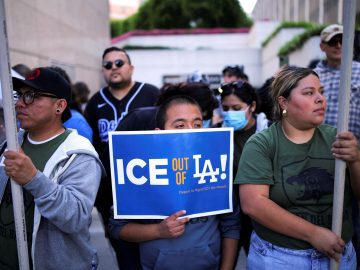
The reported internal directive limits most ICE vehicle stops, adds body camera requirements, and raises new questions for immigrants in California about what changes and what does not.
The Department of Homeland Security and U.S. Immigration and Customs Enforcement have ordered agents to temporarily suspend most vehicle stops nationwide, according to reports from federal officials and news organizations.
The reported policy shift could affect how ICE officers conduct immigration enforcement operations in California, including Los Angeles County, where millions of immigrants live and where federal immigration actions have historically created significant community concern.
The directive reportedly limits vehicle stops unless agents are pursuing people considered among the most dangerous targets, including individuals with serious or violent criminal histories. It also requires updated tactical training before broader vehicle-stop operations resume and introduces a new body camera requirement for certain ICE arrest teams.
However, the change is based on internal guidance reportedly sent from ICE headquarters. Neither DHS nor ICE has publicly released the full directive or a formal policy announcement confirming the details.
What you should know
- ICE has reportedly paused most vehicle stops nationwide.
- Exceptions remain for certain high-priority enforcement targets.
- ICE teams must complete updated vehicle-stop training before the policy changes.
- Arrest teams will be required to include at least one member equipped with a body camera.
- The change does not mean immigration enforcement has stopped.
Why ICE Changed Its Vehicle Stop Policy
The reported directive comes after intense scrutiny following two fatal officer-involved shootings in Texas and Maine.
Federal officials told news organizations that the temporary restrictions are intended to change how agents approach vehicle encounters and increase oversight during enforcement operations.
Vehicle stops have long been one of the most visible forms of immigration enforcement because they can occur in public spaces, workplaces, and residential areas. For immigrant communities, these encounters often create uncertainty about who may be targeted and what rights individuals have.
The reported changes appear designed to narrow when ICE agents can initiate these encounters while additional training and accountability measures are implemented.
What This Means for California Immigrants
For many families, the immediate question is whether this means fewer ICE encounters.
The answer is unclear.
The reported directive affects vehicle stops, not all immigration enforcement activity. ICE can continue other operations, including targeted arrests, investigations, and enforcement actions that follow existing federal immigration laws.
Immigration attorneys and community organizations often remind residents that a change in enforcement strategy does not change basic legal rights.
People generally have the right to remain silent, speak with an attorney, and avoid signing documents they do not understand. However, immigration situations can vary significantly depending on a person’s status, location, and circumstances.
What ICE Agents Can Still Do
The reported policy does not eliminate ICE enforcement.
According to reports, agents can still conduct vehicle stops in specific situations involving high-priority targets, particularly individuals considered a threat because of serious criminal histories.
The directive also reportedly focuses on improving operational procedures, including requiring body camera access during arrest operations.
The body camera requirement is significant because immigration enforcement encounters have increasingly faced questions about transparency, accountability, and documentation.
Why the Lack of a Public DHS Memo Matters
One important detail is that the policy change has not been released publicly through official DHS or ICE channels.
Instead, the information became public after federal sources shared internal communications with major news organizations.
That means some details could change as DHS or ICE provide additional guidance.
For communities trying to understand their rights, official information from government agencies and trusted legal organizations remains important.
What California Families Should Watch Next
The biggest questions are whether DHS will formally publish the directive, whether ICE will expand or modify the restrictions after training is completed, and whether additional enforcement policies will change.
California immigrant families should continue monitoring updates from official agencies, legal service providers, and trusted community organizations.
The reported pause may represent a shift in how ICE conducts certain enforcement operations, but it does not represent the end of immigration enforcement.
For many communities across Los Angeles and California, the immediate need remains the same: accurate information, access to legal resources, and a clear understanding of what federal enforcement changes mean in everyday life.