Joan Sebastián Durán Guerrero, a 26-year-old Colombian immigrant, was shot and killed during an ICE operation.
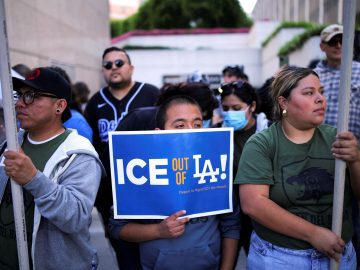
A series of fatal shootings involving ICE and other federal immigration agents has triggered investigations, protests, and new restrictions on vehicle stops as questions grow over accountability and the use of deadly force.
At least eight people have died in shootings involving ICE and other federal immigration agents since President Donald Trump returned to office, prompting investigations, public protests, and changes to immigration enforcement policies.
The headlines have become increasingly familiar.
Another immigration raid. Another traffic stop. Another deadly shooting. Another family searching for answers.
U.S. Immigration and Customs Enforcement (ICE) has ordered agents nationwide to suspend routine vehicle stops used to arrest immigrants following two fatal shootings in less than a week. The directive comes after growing criticism of the agency’s use of force during immigration enforcement under President Donald Trump’s second administration.
According to an analysis by the Gun Violence Data Hub, federal immigration agents have been involved in at least 29 shootings since Trump returned to the White House. At least eight people have died, although some organizations report higher numbers when shootings involving U.S. Border Patrol and other Department of Homeland Security (DHS) agencies are included.
In many of these cases, officials have said the victims used their vehicles as weapons or attempted to drive into officers, prompting agents to open fire. However, family members, attorneys, witnesses, and video evidence have challenged those accounts in several investigations, raising broader questions about transparency and the use of deadly force during immigration operations.
Why ICE Suspended Routine Vehicle Stops
The policy change follows the deaths of two men during separate ICE operations in Texas and Maine.
According to multiple reports, the suspension took effect immediately and applies nationwide until further notice. ICE will still be allowed to stop vehicles in cases involving individuals with serious or violent criminal histories.
The decision marks one of the most significant operational changes to immigration enforcement since Trump’s return to office.
Joan Sebastián Durán Guerrero: Colombian Immigrant Killed in Maine
The most recent fatal ICE shooting occurred on July 13, 2026, in Biddeford, Maine.
Joan Sebastián Durán Guerrero, a 26-year-old Colombian immigrant, was shot and killed during an ICE operation. DHS said Durán Guerrero attempted to flee and drove his vehicle toward officers, leading an agent to fire.
Witnesses disputed that account, saying the vehicle did not appear to be heading toward officers.
The office of Senator Angus King later said Durán Guerrero was not the original target of the operation. Immigrant advocacy organizations also reported that he had authorization to work legally in the United States and possessed a Social Security number.
The FBI and the Maine Attorney General’s Office continue to investigate the shooting.
Lorenzo Salgado Araujo, a Mexican motorist who was fatally shot by an ICE agent during a vehicle stop in Houston.
Lorenzo Salgado Araujo: Mexican Construction Worker Shot in Texas
Just six days earlier, on July 7, 2026, Lorenzo Salgado Araujo, a 52-year-old Mexican construction worker, was driving members of his construction crew to work in Houston when ICE agents stopped his truck.
DHS said Salgado Araujo attempted to drive into officers, prompting an agent to shoot in self-defense.
His family and attorneys representing the passengers have strongly disputed that account and are demanding an independent investigation. Salgado Araujo died while being transported to a hospital.
Silverio Villegas González: Questions Raised by Video Evidence
One of the first fatal ICE shootings during Trump’s second term occurred in September 2025.
Silverio Villegas González, a 38-year-old Mexican cook, was killed during a traffic stop outside Chicago. Authorities initially claimed he dragged an officer with his vehicle while trying to flee.
Later-released video footage appeared to contradict that narrative by showing the officer walking normally after the shooting, raising questions about the severity of injuries originally described by DHS. The investigation remains ongoing.
Renée Good and Alex Pretti: Shootings That Sparked Nationwide Protests
Two fatal shootings in Minneapolis intensified public criticism of federal immigration enforcement.
On January 7, 2026, Renée Good, a U.S. citizen and mother of three, was killed when an ICE agent fired into her vehicle during protests against the Metro Surge immigration operation.
Federal officials said the vehicle posed a threat to officers. Witness videos, however, appeared to show Good steering away from the agent before shots were fired.
Seventeen days later, on January 24, nurse Alex Pretti, 37, was fatally shot during another immigration-related protest in Minneapolis. The fatal shot was fired by a U.S. Border Patrol agent rather than ICE.
Video evidence from the scene also challenged portions of the government’s initial account, leading to additional investigations and renewed scrutiny of federal law enforcement agencies.
Rubén Ray Martínez: A Case Revealed Months Later
In March 2025, 23-year-old U.S. citizen Rubén Ray Martínez was shot and killed during an operation conducted by Homeland Security Investigations (HSI), a division of DHS.
The incident remained largely unknown until documents were released through a Freedom of Information Act lawsuit months later.
Federal officials said Martínez intentionally struck an officer with his vehicle. His family said state investigators informed them that video evidence contradicted that claim, prompting several members of Congress to call for an independent investigation.
Other Deaths Linked to Trump’s Immigration Crackdown
Not every death connected to the Trump administration’s immigration enforcement has resulted from gunfire.
Jaime Alanís, a Mexican farmworker, died after falling from the roof of a greenhouse while trying to hide during an immigration raid in California.
Roberto Carlos Montoya Valdez, a Guatemalan immigrant, and Josué Castro Rivera, a Honduran immigrant, both died after being struck by vehicles while attempting to flee immigration operations.
Although these cases did not involve ICE agents firing their weapons, advocates argue they highlight the broader human consequences of intensified immigration enforcement.
Ongoing Investigations Into ICE Shootings
The suspension of routine vehicle stops signals a significant shift in ICE policy, but many of the fatal shootings remain under investigation.
As federal investigators, lawmakers, and civil rights organizations continue to examine these cases, the debate over immigration enforcement and the use of deadly force shows no signs of slowing down.
For the families who have lost loved ones, the investigations may provide answers. For many others watching these cases unfold, one question continues to linger:
How many more?