The number of retired-worker Social Security beneficiaries with Mexican addresses increased 3.3% in one year, reaching more than 36,000 in December 2025.
More U.S. retirees are receiving their Social Security benefits while living in Mexico.
According to the Social Security Administration, 36,095 retired-worker beneficiaries had Mexican addresses in December 2025, up from 34,936 in December 2024. That’s an increase of 1,159 people, or 3.3% in one year.
Those beneficiaries received approximately $38.6 million in Social Security retirement benefits in December 2025, or about $1,070 per beneficiary for the month.
The figures provide a rare glimpse into Americans and other Social Security beneficiaries living in Mexico during retirement.
But there is an important limitation: the Social Security Administration does not identify these beneficiaries by ethnicity or national origin. That means the data cannot establish how many are Latino, Mexican American or Mexican-born.
Still, the numbers are significant for a country that has long been a destination for retirees seeking a lower cost of living, warmer weather and proximity to family.
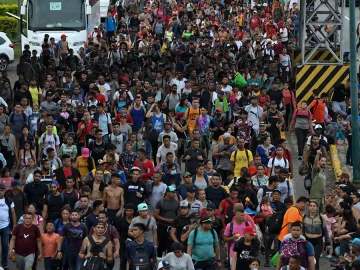
For Mexican immigrants who spent their working years in the United States, retirement can also provide an opportunity to return to Mexico.
Research has documented a relationship between age and return migration among Mexican immigrants. One study found that the annual rate of return among Mexican men with U.S. migration experience increased from about 3.2% at ages 50–54 to 4.4% at ages 65–69, suggesting that retirement can be an important factor in the decision to return.
But the latest Social Security figures do not mean that 36,095 people moved to Mexico in 2025. The data are a count of beneficiaries associated with Mexican addresses and include people who may have lived there for years.
Security is another complicated part of the equation.
Mexico continues to face serious problems with crime and violence, but conditions vary widely across the country. For retirees, decisions about where to live may involve balancing security concerns with family ties, housing costs, healthcare and the purchasing power of U.S. retirement income.
The Social Security data don’t tell us why beneficiaries chose Mexico.
They do show that the number of retired-worker beneficiaries receiving Social Security at Mexican addresses is growing.
And behind those 36,095 monthly payments are thousands of individual retirement decisions—some potentially involving Mexican Americans and immigrants who spent decades in the United States and ultimately decided to spend their retirement years closer to their roots.