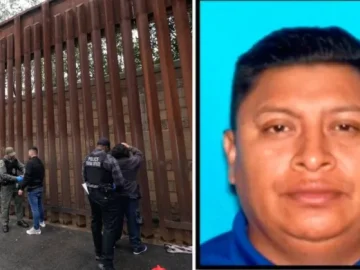
The reported Anaheim and Santa Ana birthplaces of two men linked to Mexico’s Sinaloa and CJNG cartels reveal a little-known Orange County connection to powerful criminal organizations.
Anaheim and Santa Ana are known for their neighborhoods, businesses, and communities across Southern California. But the two cities also appear in the reported early biographies of men whom U.S. authorities have linked to the leadership of two of Mexico’s most powerful criminal organizations.
Two alleged cartel leaders born in Orange County now occupy positions of interest to American law enforcement: Ismael Zambada Sicairos, known as “Mayito Flaco,” associated with the “Los Mayos” faction of the Sinaloa Cartel, and Juan Carlos Valencia González, known as “El Pelón,” linked to the Jalisco New Generation Cartel (CJNG).
Their reported birthplaces, Anaheim and Santa Ana, provide a distinctly local entry point into a story that stretches across the U.S. Mexico border. Both men are associated with criminal organizations whose alleged activities have drawn sustained attention from American prosecutors and federal law enforcement agencies.
Their stories also complicate the familiar narrative of Mexican drug trafficking as a phenomenon rooted entirely in Mexico. The families and histories associated with these criminal networks extend into Southern California, even as the organizations themselves operate across international boundaries.
Anaheim: The reported birthplace of “Mayito Flaco”
Ismael Zambada Sicairos was reportedly born in Anaheim in 1982. He is the son of Ismael “El Mayo” Zambada García, the longtime Sinaloa Cartel figure who entered U.S. custody in 2024.
Following his father’s detention, Zambada Sicairos emerged as a central figure in the faction known as “Los Mayos,” according to U.S. government information. The faction is part of the broader Sinaloa Cartel network, which has been fractured by an increasingly violent struggle for control.
The conflict has implications well beyond Mexico. U.S. authorities have pursued members of the organization through federal indictments and financial sanctions, while trafficking networks connected to the cartel have been the subject of longstanding investigations on both sides of the border.
Zambada Sicairos faces U.S. federal narcotics trafficking allegations. Those allegations must be distinguished from a criminal conviction, and his reported birthplace does not itself establish any connection between his early life in Anaheim and the alleged activities of the organization.
Santa Ana: The reported birthplace of “El Pelón”
Juan Carlos Valencia González is reported to have been born in Santa Ana on September 12. He is the son of Armando Valencia Cornelio, known as “El Maradona,” and Rosalinda González Valencia, whose family has been associated with Mexican organized crime.
The U.S. Treasury Department identified Juan Carlos Valencia González as CJNG’s new leader in July 2026, following the death of Nemesio Oseguera Cervantes, known as “El Mencho.” Treasury also reported that Valencia González faces a federal drug-trafficking indictment in Washington, D.C.
However, the distinction between a reported successor, a senior figure, and a confirmed operational leader matters. His precise current role should be described according to the latest available U.S. government records and independently corroborated reporting.
For Santa Ana, the connection is biographical, not evidence that the city played a role in the alleged criminal activities attributed to him.
Why Orange County matters to this story
The reported birthplaces of these two men do not mean that Orange County was responsible for their alleged criminal trajectories. Nor do they establish that the two men grew up locally or maintained criminal operations there.
What they demonstrate is that the personal histories of people linked to transnational criminal organizations can cross the same international boundary that their alleged networks exploit.
That distinction matters in Southern California, where cross-border commerce, family ties and migration have long connected local communities with Mexico. A birthplace in Orange County may also have legal significance when a person’s citizenship and potential prosecution become relevant, although citizenship alone does not determine where a case can be tried or how an individual may be transferred between countries.
For federal authorities, the central issues remain the allegations, the evidence and the legal proceedings. For Orange County readers, the local connection offers a different way to understand a much larger story: the geography of organized crime is not limited to the places where criminal organizations operate. It can also extend to the places where the people accused of leading them were born.