The California Assembly Appropriations Committee is considering new immigration legislation that would affect ICE operations, detention facilities, protest policing and retailer responsibilities across the state.
This Wednesday, Aug. 5, marks a pivotal moment for immigration policy in California, as the Assembly Appropriations Committee takes up a new slate of bills that could further reshape how federal immigration enforcement operates in the state — legislation advocates say is critical for the Latino and immigrant communities who have borne the brunt of more than a year of intensified ICE and Border Patrol activity.
More than two dozen immigration-related bills are moving through Sacramento this session, part of a sustained legislative response to the federal immigration crackdown that has swept across California. The bills set to be heard Wednesday — all of which passed the Senate in May — target several fronts:
-Masking by federal agents: SB 1004, from Sen. Scott Wiener, revives an effort to ban ICE and Border Patrol agents from covering their faces during operations, after a judge struck down a similar law for excluding state officers from the same restriction.
-Use of force at protests: SB 937, from Sen. Lena Gonzalez, would restrict the use of flashbang grenades and explosive breaching devices near schools, parks and other areas where children are present, and would largely ban their use in immigration enforcement.
-Detention facility oversight: SB 995, the Masuma Khan Justice Act — named for a Bangladeshi immigrant and Eaton fire survivor detained despite having U.S.-citizen family members — would let the California Department of Public Health inspect private detention facilities and fine operators up to $25,000 per day for violations. A companion bill, SB 1367, would block cities and counties from approving new land uses that pave the way for detention centers.
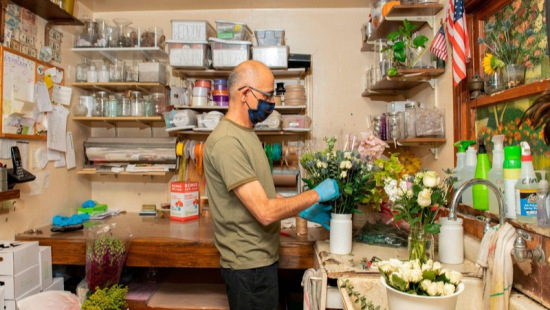
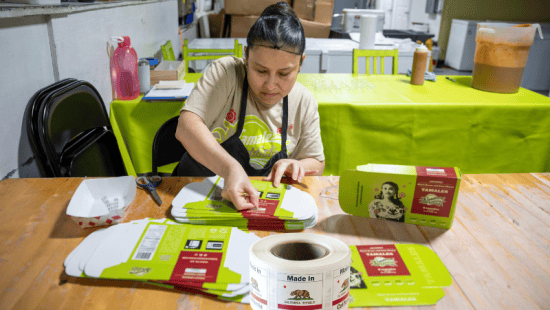
-Retail store accountability: The REPAIR Act, from Sen. Sasha Renée Pérez, would require large retailers to hand over documentation — including video — to the California attorney general when immigration enforcement actions occur on their property.
A Legislature With a Track Record
This isn’t the first time Sacramento has tried to push back against federal immigration enforcement — and last year’s effort shows both what’s possible and what’s limited about that approach.
In September 2025, Gov. Gavin Newsom signed a package of immigration bills amid what advocates described as escalating ICE raids across the state. Among them:
SB 627, the No Secret Police Act — also authored by Wiener — became the first law in the nation to prohibit ICE agents from wearing masks during raids, despite opposition from the Department of Homeland Security.
SB 98 requires K-12 schools, CSUs, UCs and community colleges to notify students, parents, faculty and staff when immigration enforcement officers are present on campus.
AB 49, the California Safe Haven Schools Act, was introduced specifically to keep ICE out of California public schools.
SB 81, from Sen. Jesse Arreguín, was designed to keep healthcare facilities as safe spaces for immigrants.
Sen. Lena Gonzalez, who chairs the California Latino Legislative Caucus, called the 2025 package “a major win for our communities, delivering stronger protections in the face of egregious immigration raids and escalating authoritarian attacks on our freedoms.”
But Passing a Law and Enforcing One Are Different Things
The 2025 experience also revealed the limits of state-level resistance:
The Department of Homeland Security has said it simply won’t comply with California’s mask ban, and analysts — including longtime Republican consultant Mike Madrid — have acknowledged California “may struggle to enforce the new laws,” some of which already face constitutional challenges.
Reception on the ground has been mixed. One 14-year-old student at El Cerrito High School told local reporters the laws were well-intentioned but largely symbolic.
Newsom himself hasn’t always sided with immigrant-protection measures — he has twice vetoed bills that would have limited California’s prison system from coordinating with ICE, in 2019 and again in 2023.
What’s at Stake This Time
That history frames what’s coming Wednesday. This year’s bills push further than last year’s — into detention facility conditions, use-of-force tactics at protests, and corporate accountability at retail stores — areas that go beyond the school- and hospital-focused protections signed into law in 2025.
The open question isn’t really whether the Legislature can pass these bills — recent history suggests Democratic majorities in both chambers are willing to keep advancing them. It’s whether this next round can avoid the enforcement gap that undercut last year’s package, and whether Newsom, weighing his own political calculations, will sign the more aggressive measures on detention oversight and crowd-control tactics the same way he did the school and hospital protections.