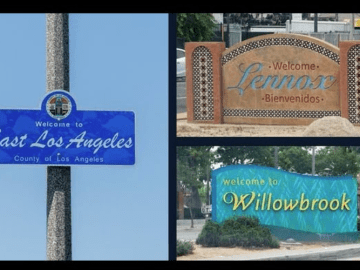
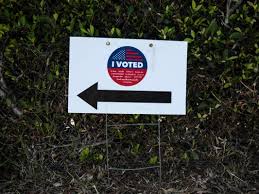
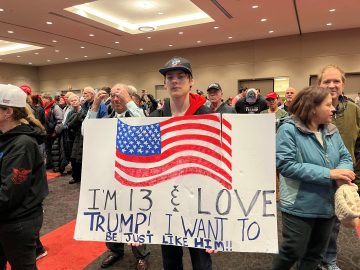
East Los Angeles, California’s largest unincorporated Latino community, says leaders have overlooked housing, parking, development, and accountability for years. Residents now want candidates to prove they understand East LA’s unique needs.
“The only thing I ask from you is ganas. Desire,” says Jaime Escalante to his students at Garfield High School in the film Stand and Deliver.
Escalante, portrayed by Edward James Olmos, says in another part of the script, “The board of education doesn’t want you to succeed. They want you to stay exactly where you are.”
Well, the residents of the iconic East L.A. area want to succeed. They do not want to be ignored and they demand that this unincorporated area of Los Angeles receive the respect and attention of elected officials.
“We are not begging, we are demanding,” says Kristen Hernández, chair of East LA Maravilla CAC, organizers of the forum this Saturday, June 2, featuring four candidates for State Senate District 26.
“We want to be heard. We want to know their proposals, what they think about us, and we want them to listen to our needs. Above all, we want to know if they truly understand what an unincorporated zone in Los Angeles is and what its needs are,” says Hernández, a third generation East L.A. resident.
Ironically, East L.A. is widely known not only in Los Angeles but across the country as a symbol of the history of the Chicano, Mexican American, and Latino community in California.
East Los Angeles is home to Garfield High School, a well known institution portrayed in films like Stand and Deliver, reflecting stereotypes, injustices, and lack of resources affecting Latino communities.
It is also the setting for Always Running La Vida Loca Gang Days in L A by Luis J Rodríguez, a testimony that portrays Mexican origin youth.
The East Los Angeles Walkouts, also known as the Blowouts, took place mainly in East L.A., involving thousands of high school students protesting educational inequality.
East L.A. has a monumental history, yet according to Hernandez, it has been forgotten and ignored by political circles.
Although it is the most populous unincorporated community in California, with nearly 120,000 residents, it has no mayor or city council. Instead, it is governed directly by the Los Angeles County Board of Supervisors.
Recent studies, including one from May 2025, concluded that East L.A. would face an annual deficit of nearly 28 million dollars if it became a city.
At least six incorporation campaigns have taken place over the past century, but they have been rejected due to budget concerns.
“We regularly organize meetings with county officials and departments. We would like to see our supervisor, our assemblymember, our state senator, or our congressmember attend. They never show up; they only send representatives. Residents feel frustrated.”
A Marginalized Community
(“You already have two strikes against you, your name and your complexion. Because of those two strikes, some people in this world will assume that you know less than you do,” Jaime Escalante once said.)
“Residents run our organization. No one funds us. We do this with our own time and resources. We know the history of the fight to become a city, but that does not excuse the neglect we face. We regularly organize meetings with county officials and departments. We would like to see our supervisor, our assemblymember, our state senator, or our congressmember attend. They never show up; they only send representatives. Residents feel frustrated. They see politicians only in photos, never in person. It seems like they only come during election season for votes,” Hernández adds.
Currently, the officials representing East L.A. include State Senator María Elena Durazo, Assemblymember Jessica Caloza, and Supervisor Hilda Solis.
“We only hear promises. We have the same or even greater problems than incorporated cities, some of them smaller than us. But we only hear promises, no action. We have demanded to know how much money we contribute to the economy and how much we receive. It has been a long struggle, and we still have no answer,” she emphasizes.
Hernandez describes her community as deeply passionate about their home, actively participating and exchanging ideas. Many residents are multigenerational.
“It feels like we are just observers. Developers come in and start building hardly affordable housing. Gentrification is hitting us hard. We are not informed about what is being done to stop it or how we will be protected. That is not right. Another issue is parking. Residents receive between 4000 and 5000 parking citations. Who can we turn to solve this? All of this does not improve our quality of life,” she says.
“The candidates have the opportunity to represent the largest unincorporated community in Los Angeles and create real change. We are not asking for dreams. We are asking for commitment.”
Actions Speak Louder Than Words
Hernandez points to what she sees as one of the greatest injustices in politics.
“Many politicians come for a photo opportunity. That is not what we want. We want to hear them, share ideas, and have them listen to us. That is what we expect from this Saturday’s event. The candidates have the opportunity to represent the largest unincorporated community in Los Angeles and create real change. We are not asking for dreams. We are asking for commitment.”
She outlines what they expect from candidates Sarah Rascón, Sara Hernández, Wendy Carrillo, and Juan Camacho:
-Commitment and understanding of what it means to live in an unincorporated area
-Clear proposals, policies, and legislation that will impact residents and provide transparency about public funds
-A concrete approach to developing a local budget that reflects the community’s unique needs
Hernandez stresses that even some officials still do not fully understand what an unincorporated area means. She notes that Supervisor Holly Mitchell has created a working group to study these issues.
From 2014 to 2017, Hernandez served in the administration of Barack Obama, working in the Department of Defense.
East L.A. A Legacy Worth Defending
“You are looking for a cheat, but you should be looking for a miracle,” Escalante said.
Hernandez has lived most of her life in East L.A. From 2014 to 2017, she served in the administration of Barack Obama, working in the Department of Defense. She later returned to continue her advocacy.
“I will always do what I can to defend this community. I had the opportunity to serve in the Obama administration as a little girl from East Los Angeles. This is the community that raised me. Many label us as problematic because we fight for a better life. Because we speak out, they try to minimize and stereotype us, and that is not right,” she says.
Why East Los Angeles Still Unincorporated and What That Means for Residents Today
Event Information
Saturday May 2 2026
1:00 pm to 3:00 pm
Our Lady of Guadalupe Church
RSVP MCAC EastLA at gmail dot com
Submit questions MCAC EastLA at gmail dot com