More than one million LA County residents live in unincorporated communities like East Los Angeles, where services and decisions come from the county. The structure has direct implications for Latino political representation and neighborhood development.
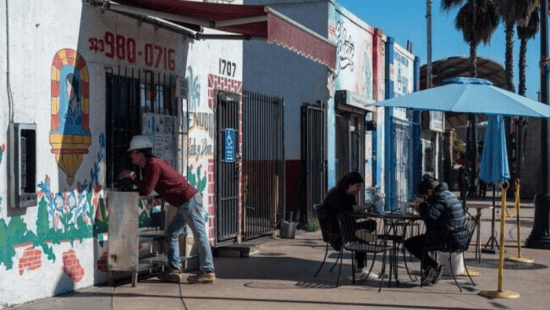
LOS ANGELES — In East Los Angeles, decisions about housing, policing, and development are not made at City Hall. There is no mayor. No local city council. Instead, authority sits miles away with the Los Angeles County Board of Supervisors, a structure that continues to define daily life for one of the most recognizable Latino communities in California.
East LA is one of more than 120 unincorporated areas across Los Angeles County, where nearly one million residents live outside city governments. According to the U.S. Census Bureau, these communities are overwhelmingly Latino, making the governance structure more than a technical distinction. It shapes political representation and access to local control.
In practical terms, being unincorporated means residents rely on the county for essential services. The Los Angeles County Sheriff’s Department handles policing. County departments oversee zoning, public works, and planning. Residents vote for county supervisors who represent nearly two million people each, rather than smaller city councils focused on neighborhood-level decisions.
That scale can dilute local influence.
“Unincorporated communities often struggle to get the same level of attention as cities with their own governments,” said a Southern California urban policy researcher. “When decisions are centralized, smaller neighborhoods compete for limited focus.”
The contrast becomes clear just blocks away. Incorporated cities like Long Beach or Santa Monica operate with their own elected leadership, set local policies, and control development decisions. They can pass taxes, fund services directly, and respond faster to community concerns.
For East LA, the question of becoming a city has surfaced repeatedly over decades. Each time, the effort has stalled.
The main barrier is financial. Studies have shown that incorporating East Los Angeles would create a significant budget gap, with projected deficits reaching tens of millions annually. Without a strong commercial tax base, the cost of running a city government, including police, fire, and infrastructure, would exceed local revenue.
That reality has kept governance at the county level, even as community identity remains strong.
The implications are visible in infrastructure and development patterns. Some unincorporated areas report slower improvements in sidewalks, lighting, and street maintenance compared to nearby cities. At the same time, zoning decisions made at the county level can feel disconnected from local priorities.
For Latino residents, the impact is both practical and political. Data from the Pew Research Center shows Latino communities often face higher barriers to civic engagement, including language access and limited institutional outreach. In large county systems, those barriers can deepen if communication is not tailored to specific neighborhoods.
Still, there are advantages. County resources provide access to large-scale services, from regional healthcare systems supported by the Los Angeles County Department of Public Health to extensive library networks and social programs. For some residents, that scale offers stability that a small city might struggle to maintain.
The tradeoff is local control.
As Los Angeles County continues to grow, pressure is building to rethink how unincorporated communities are represented and served. Some advocates are pushing for stronger neighborhood councils or advisory bodies that can influence county decisions more directly.
For now, East Los Angeles remains a community with a powerful cultural identity but limited formal autonomy.
What happens next will depend on whether residents, policymakers, and county leaders can find a model that gives communities a stronger voice without creating new financial risks.