Xavier Becerra governor race momentum grows after new polling shows a major jump among Democrats, even as Latino voter support remains unclear.
New Emerson College Polling data shows a sharp rise for Becerra after Eric Swalwell exits, but key gaps remain in understanding Latino voter shifts.
A new California poll is reshaping the 2026 governor’s race, with Xavier Becerra emerging as a serious contender after months on the margins.
According to the latest survey from Emerson College Polling, Becerra climbed from just 3 to 4 percent in March to 10 percent statewide in April. Among Democratic voters, his rise is more striking. He jumped 15 points to reach 19 percent, placing him just behind Tom Steyer at 20 percent and tied with Katie Porter.
The shift follows the exit of Eric Swalwell from the race, which appears to have reshuffled the Democratic field rather than consolidating it. No candidate dominates. Instead, support is fragmenting across multiple contenders.
Republicans still lead the overall field, with Steve Hilton at 17 percent and Chad Bianco at 14 percent. That dynamic highlights a volatile race where a large share of voters remains undecided.
But the most important signal from the poll is not candidate positioning. It is voter anxiety.
Forty one percent of respondents identified the economy as the top issue facing California. That figure reflects a broader shift in voter priorities away from partisan debates and toward everyday financial pressure. Research from the Public Policy Institute of California has consistently found that affordability and housing costs are the dominant concerns across income groups.
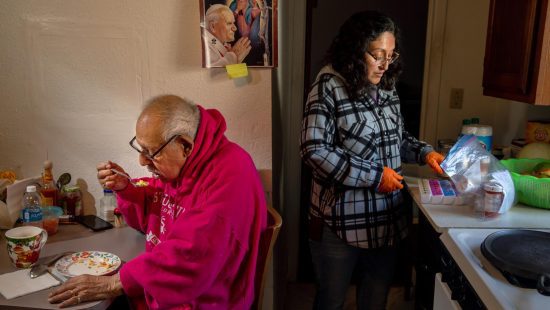
For Latino households, those pressures are often more acute. Data from the U.S. Census Bureau shows that when adjusted for cost of living, California has one of the highest poverty rates in the country. Rising rent, food prices, and transportation costs are reshaping how families spend, save, and plan.
Becerra’s campaign is targeting that reality, emphasizing healthcare access and affordability. His background as a former state attorney general and federal health secretary gives him policy credibility in those areas. Still, the poll raises a critical limitation.
It does not break down Latino voter support by candidate.
That gap matters. Latinos represent a major share of California’s electorate, but without detailed cross tabs, it is not possible to quantify how much of Becerra’s surge comes specifically from Latino voters after Swalwell’s exit.
What can be inferred is indirect. A 15 point increase among Democrats suggests he absorbed part of a broad coalition that includes Latino voters, but the data does not isolate that movement. At the same time, competition for that electorate remains active. Figures like Antonio Villaraigosa have also sought to consolidate Latino support, underscoring that no single candidate has locked it down.
The result is a race defined by fragmentation and uncertainty.
Nearly one in four voters remains undecided. Independents are split across multiple candidates. And within the Democratic field, small shifts in support could quickly change the standings.
For voters, the message is consistent.
Economic stress is driving political behavior more than ideology. Candidates who fail to address affordability in concrete terms risk losing relevance, regardless of name recognition or experience.
Becerra’s rise signals opportunity, but not dominance.
The coalition needed to win California is still forming. And the voters who will shape it are focused less on political identity and more on whether their lives are getting easier or harder.