The U.S. Embassy says Salvadorans with TPS remain protected and should not self-deport. But workers and employers still face questions about documents showing a September 9 expiration date.
For Salvadorans with Temporary Protected Status (TPS), September 9 was a deadline that brought more questions than answers.
Some work permits showed that expiration date. But the federal government says Salvadorans who already have TPS remain protected and authorized to work while it decides what happens next.
Now, the U.S. Embassy in El Salvador has reinforced that message.
The embassy spokesperson Timothy Brown said TPS protection had not changed and warned beneficiaries against using the government’s voluntary-departure program because they mistakenly believe they must leave the United States.
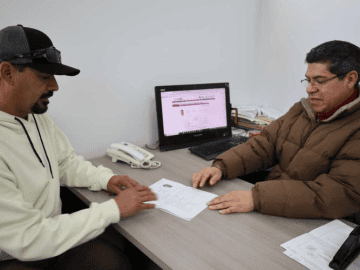
For families who depend on TPS, the reassurance is important. But it leaves a practical problem: What happens when an employer asks about a work permit that appears to have expired?
Is Salvadoran TPS still valid?
Yes. According to U.S. Citizenship and Immigration Services, Salvadorans already covered by TPS retain protection, including permission to work, until the government makes another announcement.
El Salvador’s previous TPS designation period was scheduled to end September 9, 2026. The Department of Homeland Security did not announce a final termination or extension decision by that deadline.
Instead, USCIS said existing beneficiaries would remain protected.
That does not establish a new expiration date. Nor does it guarantee that every individual has TPS regardless of their immigration circumstances.
The important difference is that the September 9 deadline did not, by itself, end protection for existing beneficiaries.
What if your work permit expired September 9?
This is the unresolved part.
Before September 9, USCIS issued instructions extending certain Salvadoran TPS employment authorization documents, or EADs, through that date.
Its September 3 E-Verify bulletin explained which qualifying documents and USCIS notices employers could accept through September 9 when completing Form I-9, the federal employment eligibility verification form.
But those instructions did not provide a new date beyond September 9.
The American Immigration Lawyers Association subsequently reported that federal agencies had not clarified how employers should document continuing Salvadoran TPS work authorization after the deadline.
As of the federal guidance reviewed for this article, that documentation question remains unresolved.
That creates a difference between two questions:
- Are existing TPS beneficiaries still authorized to work? USCIS says yes.
- What documents and expiration dates should employers use to verify that authorization? The reviewed federal guidance has not fully resolved that question.
An expired card should not automatically be treated as proof that someone’s TPS has ended. But workers also should not assume that an expired card, by itself, satisfies every employment-verification requirement.
What can workers and employers do now?
Workers can begin by checking the official USCIS Salvadoran TPS page and keeping copies of their EADs, USCIS notices and relevant application receipts.
If an employer questions their authorization, they can seek help from a licensed immigration attorney or a Department of Justice-accredited representative.
Employers should review current federal Form I-9 guidance and USCIS announcements before making employment-verification decisions.
They should not invent a new expiration date, apply outdated instructions as though they were newly extended, or automatically conclude that an employee has lost work authorization.
The appropriate documentation can depend on the employee’s circumstances.
Why did the embassy warn against self-deportation?
Spokesperson Timothy Brown said Salvadorans who already have TPS should not use CBP Home because they mistakenly believe their protection has expired.
CBP Home is a federal voluntary-departure program. The government has offered financial incentives to eligible participants.
But a financial incentive is not a reason for someone with existing immigration protection to assume they should leave.
Departing the United States can affect immigration applications, future admission and family circumstances. Those consequences depend on the individual’s situation.
A work permit’s printed expiration date should not be interpreted as an instruction to leave the country.
Anyone considering voluntary departure or international travel should obtain individualized legal advice first.
Why does this matter in Los Angeles?
Los Angeles is home to a substantial Salvadoran community, including families whose employment and household finances depend on TPS.
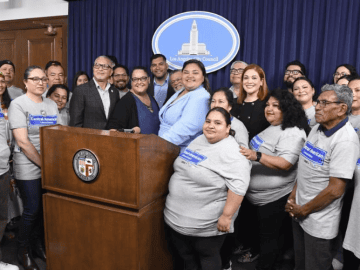
In September, Parriva reported that the Los Angeles City Council voted to examine legal services, financial assistance and outreach in response to uncertainty surrounding Salvadoran TPS.
The city cannot extend federal immigration protection. Its role is to consider how local services might help residents affected by future changes.
The immediate federal question remains whether DHS will announce a formal TPS extension or termination and provide updated employment-documentation instructions.
Until then, the government’s stated position is that existing Salvadoran TPS beneficiaries retain protection and work authorization.
For workers, however, reassurance alone may not resolve a conversation with an employer about an expired document.
Salvadoran TPS protection continues. What remains unclear is how every affected worker should document that protection under federal employment-verification rules.