A Pew Research Center analysis reveals the scale of license-plate surveillance across Los Angeles County. But identifying who operates the cameras and who can access their data is another matter.
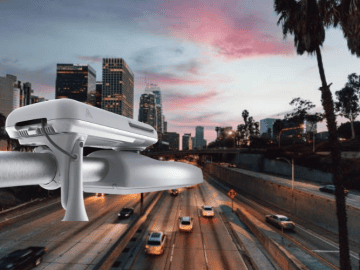
A camera mounted above a street can photograph license plates as vehicles pass. But if a resident wants to know who operates that camera, how long its records are kept or which police departments can search them, finding an answer may be harder than spotting the equipment.
A new Pew Research Center analysis, published November 9, mapped 15,450 Flock license-plate cameras in California, including 2,457 in Los Angeles County.
The numbers reveal how widespread the technology has become. They also raise a question the map cannot answer: Who is responsible for the information these cameras collect?
What does the new camera map actually show?
Pew analyzed locations entered into OpenStreetMap, a crowdsourced mapping project, as of September 17.
Because volunteers contribute the information, the dataset is incomplete and may contain outdated entries. It is not an official inventory of cameras currently operating.
The 2,457 locations are spread across Los Angeles County geographically. They should not be confused with cameras operated by the Los Angeles County Sheriff’s Department or the Los Angeles Police Department.
Nationally, OpenStreetMap identifies an owner or operator for only 12% of mapped Flock cameras.
That does not mean the remaining operators are hiding their identities. Some may be identified in police records, contracts or public transparency portals that are not connected to the map.
What information can the public find?
Pew also examined transparency portals published by 1,517 law-enforcement agencies using Flock technology.
Among those agencies, 96% disclosed how long they retained camera data, 93% reported camera counts and 66% disclosed whether they shared information with other organizations.
Only half provided information about individual searches.
These are national findings from participating agencies, not compliance rates for Los Angeles County.
A public camera count is useful. But it cannot establish whether every camera remains active, who has permission to search its records or whether those permissions are being followed.
Pasadena shows what a public record can reveal
Pasadena’s Flock transparency portal, last updated July 23, reported 61 cameras, a 30-day data-retention period and approximately one million vehicle detections over the preceding month.
It also listed agencies granted access to Pasadena’s data.
A separate police presentation discussed adding 11 cameras. The proposal and the portal count should not be combined into a current total without confirming whether the expansion occurred.
Parriva looked into the Pasadena’s camera system and South Pasadena’s decision to end its Flock relationship.
The new Pew research places those local decisions in a larger geographic context. It also illustrates why the date of a public disclosure matters.
Pomona shows why ownership and access are different
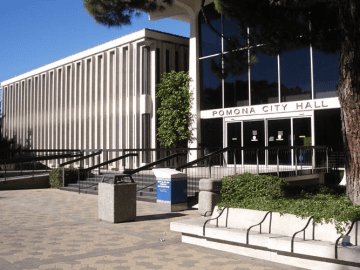
Pomona’s records provide another example.
A September 2024 City Council staff report proposed authorizing up to $500,000 for additional Flock cameras. It also referenced an earlier $860,000 purchase approval.
Those spending figures do not establish how many cameras were ultimately installed.
Another city-published document describes four Flock cameras installed by a downtown business improvement district, with direct access provided to Pomona police.
That is important: a camera can be installed by one organization while its records are accessible to law enforcement.
Parriva has also covered the Pomona’s use of Flock cameras in prostitution-related investigations. The new accountability question is how residents can identify the operators and access arrangements across different systems.
What about LAPD and immigration safeguards?
The LAPD suspended its use of Flock’s system in July amid concerns about privacy, security and data sharing.
As we reported in October, ending police access and physically removing cameras are separate actions.
California restricts certain sharing of license-plate data with federal and out-of-state authorities. But whether a particular agency follows those restrictions must be established through its policies, agreements, system settings and audits.
A camera’s presence is not evidence that its information has been used for immigration enforcement.
What should residents be able to verify?
The most useful records are often held locally: police department inventories, city contracts, data-retention policies, lists of authorized agencies and search-audit reports.
They can help answer who controls a system and what rules apply. They do not always show whether every search was appropriate or whether a camera remains active today.
Pew’s new map offers a picture of the surveillance network’s geographic reach. It is not a complete map of responsibility.
For residents, knowing where cameras are located is one thing. Knowing who is accountable for their use is another.