If your name is missing from the voter list or a poll worker says there’s a problem, you may still have options. Here’s what L.A. County voters should know.
For a voter standing inside an L.A. County Vote Center, the debate in Washington can feel pretty far away.
The immediate question is much simpler: What do I do if someone tells me there is a problem with my voter registration?
That question is important as the Trump administration pushes new efforts to verify citizenship and voter eligibility. But for the November 3, 2026, election, California’s current voting rules remain in place. The California Secretary of State says the state does not plan to use the federal SAVE database for this election.
So if you are an eligible voter and something goes wrong when you try to vote, here is what to do.
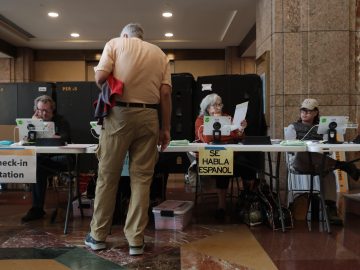
If your name is missing from the voter list, don’t assume you have to leave without voting.
California gives registered voters the right to cast a provisional ballot when their name is not on the list. Election officials review that ballot afterward to determine whether the voter was properly registered and had not already voted.
L.A. County says historical records show that about 85% to 90% of provisional ballots are ultimately found valid and counted. The county also allows voters to check the status of a provisional ballot after the election.
In other words, a problem at the check-in table does not necessarily mean the end of the road.
If Your Name Isn’t on the List
First, ask the election worker to check your information.
If your name still does not appear, ask directly:
“Can I vote a provisional ballot?”
You have the right to ask questions about election procedures, and California’s Voter Bill of Rights specifically protects the right of a registered voter to cast a provisional ballot when their name is not on the list.
A provisional ballot is not an automatic guarantee that every vote on it will be counted. Election officials still have to verify your eligibility. But it gives you a way to have your ballot reviewed instead of simply walking away.
If you want a refresher on the basic voting process before Election Day, Parriva’s guide to Los Angeles County ballots, key dates and Spanish-language voting help can help you prepare ahead of time.
If a Poll Worker Says There’s a Problem
Don’t be afraid to ask one simple question:
“What is the problem with my registration?”
There can be different reasons for a problem. Your name may not appear in the electronic pollbook. Your address may be different from the one on your voter record. You may have a vote-by-mail ballot that election officials need to account for before you vote in person.
The next step depends on the situation.
If the issue cannot be resolved at the Vote Center, ask whether you should cast a provisional ballot and what you need to do next. California election guidance specifically provides for provisional voting when a voter’s registration or voting status cannot be confirmed at the polling place.
And remember: you are allowed to ask questions. California’s Voter Bill of Rights says election officials must direct voters to the right person if they cannot answer a question themselves.
Need Spanish or Other Language Help? Ask for It.
Your ethnicity or the language you speak does not determine whether you are eligible to vote.
If you are a U.S. citizen who meets California’s voting requirements, you have the right to vote. California also gives voters the right to receive certain election materials in languages other than English.
L.A. County’s multilingual election program provides assistance in 23 languages, including Spanish. Voters can request language assistance at Vote Centers or call the county’s language assistance line at 800-815-2666, option 3.
you can also read our article on how California Latino voters can find election information they can trust. The goal is the same here: make sure a confusing moment does not become a reason to give up.
If You Think You Were Wrongly Turned Away
If you believe you were not given a fair chance to vote, write down what happened while you still remember the details.
Keep track of:
- The Vote Center location
- The date and approximate time
- What you were told
- The name or description of the person who helped you, if available
- What you asked for and what happened next
You can contact the Los Angeles County Registrar-Recorder/County Clerk at 800-815-2666. California also operates a statewide voter hotline at 800-345-VOTE (8683) for voters who believe their rights were denied.
If language access was part of the problem, tell the county that, too.
What Has Changed and What Hasn’t
The Trump administration is pursuing a broader federal effort to verify citizenship and voter eligibility. In September, the U.S. Supreme Court allowed the administration to move forward with expanding the federal SAVE database for voter-eligibility checks.
But that does not mean the federal database determines whether an L.A. County voter can cast a ballot in the November 2026 election.
California Secretary of State Shirley Weber said on September 25 that California’s current election rules remain unchanged and that the state does not intend to use the federal database for the November election.
For voters, the practical lesson is straightforward:
If you are eligible to vote and something goes wrong, don’t simply walk away. Ask what happened. Ask what your options are. Ask about a provisional ballot when appropriate. Ask for language help if you need it. And document the problem if you believe your rights were not respected.
A registration problem can be frustrating. It does not automatically mean you have lost your chance to have your vote considered.