Gallup finds 43% of Americans view socialism positively, but capitalism and small business remain broadly popular. California’s economic anxiety adds another layer to the debate.
A new Gallup poll has put socialism at a new high in the United States. But the number does not mean Americans have suddenly rejected capitalism.
Gallup’s latest survey found that 43% of U.S. adults view socialism positively, the highest level in its trend since 2010. At the same time, 55% view capitalism positively and 95% view small business positively. Free enterprise also remains more popular than socialism.
That is a key distinction in California, where economic anxiety is high.
A September survey by the Public Policy Institute of California found that 71% of Californians expect bad economic times for the state over the next year, while 70% say California is divided into economic “haves” and “have-nots.” About six in 10 say recent price increases have caused financial hardship for their households.
The numbers suggest a more complicated story than simply capitalism versus socialism.
Socialism is more popular, but capitalism is not unpopular
Gallup’s survey, conducted Aug. 3–24, found that positive views of socialism have increased seven percentage points since 2010.
But Americans have not abandoned market-oriented ideas.
Capitalism’s positive rating is 55%, while small business remains overwhelmingly popular at 95%. Gallup also reports that positive views of big business have fallen to 35%.
Over the longer term, Gallup says positive views of capitalism have declined six points since 2010, free enterprise has fallen nine points and big business 14 points. Small business is the exception: Its positive rating has remained essentially unchanged.
People can be dissatisfied with how the economy is working without rejecting markets, entrepreneurship or small businesses.
Gallup says its broader research supports that interpretation: Americans continue to express support for economic competition and market choice while also raising concerns about inequality and excessive corporate power.
Independents are part of the new shift
The latest increase in positive views of socialism also does not come simply from Democrats.
Gallup found that independents’ positive view of socialism rose from 37% last year to 45% this year. Democrats were essentially unchanged at 65%, while Republicans remained below 15%.
Among adults ages 18 to 34, socialism was viewed more positively than capitalism, 57% to 43%. Among adults 55 and older, capitalism led socialism 65% to 34%.
Those numbers describe differences in public opinion. They do not establish why people hold those views or predict how their views will change. Gallup’s demographic findings
California’s economic picture adds context
California’s latest economic polling helps explain why questions about the economy are receiving so much attention, without proving that economic hardship is causing greater support for socialism.
The September PPIC survey found that 71% of Californians expect bad economic times over the next year. Seventy percent say the state is divided between economic haves and have-nots.
About six in 10 Californians also say recent price increases have caused financial hardship.
The pressure is particularly pronounced among Latino Californians.
PPIC found that 68% of Latinos in California say recent price increases have caused financial hardship, compared with 52% of white Californians and 46% of Asian Americans. Fifty-two percent of Latino Californians also say housing costs put financial strain on their families.
That is an important economic finding. It is not, however, evidence that Latino Californians are becoming more socialist.
The more defensible conclusion is that many Latino households are dealing with significant affordability pressures while continuing to participate in California’s broader market economy.
In previous reporting we have detailed that tension in “Latino Incomes Are Rising. Why Do Housing, Gas and Health Care Still Take Such a Large Bite?”, which found that rising household income and financial pressure can exist at the same time.
Californians are divided over democratic socialism
California polling also shows why the terms in this debate should not be treated as interchangeable.
The September PPIC survey asked about politicians who identify as democratic socialists. Twelve percent of Californians said those politicians have “a lot” of good ideas and 19% said they have “some” good ideas. Another 20% said they have “a few” good ideas, while 31% said they have “almost no” good ideas and 17% were unsure.
That is a divided response, not a statewide consensus.
It also measures something different from Gallup’s question about whether people have a positive or negative view of the word socialism.
A person’s reaction to a political label does not necessarily tell us which individual policies that person supports. PPIC Statewide Survey: Californians and Their Government
Small business complicates the picture
There is another reason the national poll should not be interpreted as a simple movement from one economic system to another.
Gallup found 95% of Americans have a positive view of small business.
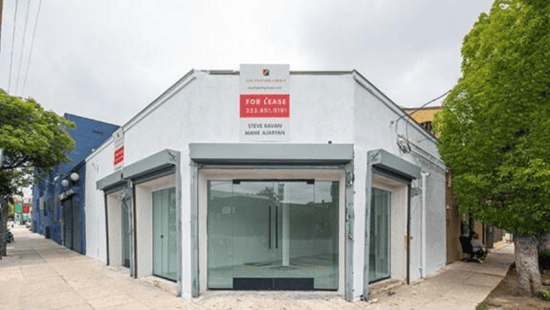
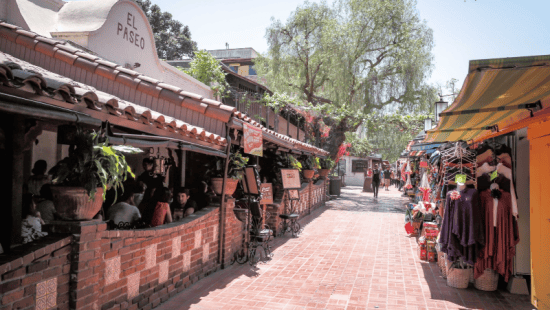
That finding is especially relevant in California, where Latino entrepreneurs are an important part of local economies.
Parriva has reported on the growth and challenges of Latino entrepreneurship in California, including barriers to financing and the difficulty smaller businesses face when trying to expand. Latino Entrepreneurs Are Powering California’s Economy as AI Reshapes Work
And the economic pressure facing small businesses is not theoretical. We have also examined rising costs, weaker customer traffic and financing challenges facing California businesses. Why It’s Getting Harder for Some California Small Businesses to Get Loans
That creates a useful question for California: Can people want stronger economic protections or government assistance while also strongly supporting entrepreneurship and small business?
The polling suggests those views can coexist.
What the polls cannot tell us
The available evidence does not establish that economic hardship caused the rise in positive views of socialism.
It also cannot tell us that Californians or Latino Californians are becoming socialist.
Gallup measures people’s overall views of economic concepts. PPIC measures attitudes toward California’s economy and political labels. Neither survey provides a complete measure of which specific economic policies each respondent would support.
The polls also cannot predict whether today’s differences between younger and older Americans will persist.
Those limitations matter because socialism, democratic socialism, capitalism and free enterprise are labels that can mean different things to different people.
The bigger California question
The new Gallup poll is significant because attitudes toward socialism have changed. But the larger story is more complicated than a single percentage.
Americans continue to value small business and market competition even as some have become less positive about capitalism and big business.
California shows the same tension from another angle: economic pessimism and financial hardship are widespread, while opinions about what government and economic systems should do about those problems remain divided.
For Latino Californians, the question is particularly practical.
When housing, food, transportation and other necessities take a larger share of household income, the debate over economic systems can become less abstract.
But the polling does not tell us which system people should choose.
It tells us something narrower and useful:
More Americans are questioning aspects of the economic system, while still expressing strong support for capitalism, free enterprise and especially small business.
Understanding that distinction may be more informative than simply asking whether America is becoming more socialist.