Proposition 39 would add new identification and citizenship-verification requirements to California elections. Here’s what would change for in-person and mail voters—and what Latino voters should know.
The 30-Second Answer
Proposition 39 would change how California voters prove their identity when they cast a ballot.
If approved on November 3, 2026, voters would generally have to provide additional identifying information every time they vote. People voting in person would have to present government-issued identification. People voting by mail would have to provide the last four digits of a qualifying government-issued identification number. Election officials would have to verify the information before counting the ballot.
The measure would also require election officials to make greater efforts to verify the citizenship of registered voters and would create additional rules for maintaining voter lists.
The basic question for voters is simple:
Would these additional checks make California elections more secure—or make voting more complicated for eligible voters?
What Is Proposition 39?
Proposition 39 is a proposed change to California’s election system focused on voter identification, citizenship verification and voter-list administration.
Under California’s current system, voters generally establish their identity through information provided during voter registration and through their signature when casting a ballot.
Prop. 39 would add another layer of verification.
The official California Legislative Analyst’s Office Proposition 39 analysis says the measure would require voters to provide additional identifying information each time they vote and require election officials to verify that information before counting the ballot.
What Would Actually Change?
Here’s the easiest way to understand Prop. 39:

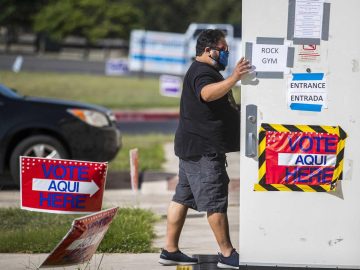
What If You Vote In Person?
This is probably the easiest part to understand.
Today: California does not generally require you to show a government-issued photo ID every time you vote at a polling location.
Under Prop. 39: you would have to present government-issued identification when voting in person.
The measure also provides for a free voter identification card for people who request one.
That means the cost of obtaining an ID would not necessarily be the biggest issue.
The practical question would be whether voters have the required identification—or obtain the new state voter ID card—and whether their information can be successfully verified.
What If You Vote by Mail?
This is an important part of Prop. 39 because California has millions of voters who cast ballots by mail.
Under the measure, mail voters would provide the last four digits of a qualifying government-issued identification number associated with their voter registration. Election officials would then verify the information before counting the ballot.
So Prop. 39 is not simply a law about showing identification at a polling place.
It would also change the process for people who vote from home.
What About Citizenship Verification?
Another major part of Proposition 39 involves citizenship.
California already requires people registering to vote in state and federal elections to affirm that they are U.S. citizens.
Prop. 39 would add another layer: state and county election officials would be required to make best efforts to verify the citizenship of registered voters using government data.
This distinction matters.
Prop. 39 would not create a new rule saying only citizens can vote.
U.S. citizenship is already required for voting in California state and federal elections.
Instead, the proposition would change how the state checks and verifies that eligibility.
What Could Prop. 39 Mean for Latino Voters?
This is where the debate becomes especially important for California’s Latino community.
Latino voters are not treated as a separate category under the measure. The new requirements would apply broadly to California voters.
But the practical impact could depend on something very basic:
Does a voter have the required identification, and does the information match the election record?
Supporters argue that free voter ID cards would help eliminate cost as a barrier and that stronger identification and citizenship verification could increase confidence in elections. A former California secretary of state making that case in CalMatters argues that the measure would provide free IDs and strengthen election security.
Critics argue that additional requirements could create problems for eligible voters whose identification is missing, outdated or does not match their voter information. A Latino civic-engagement advocate writing in CalMatters specifically raised concerns about potential barriers for Latino voters and young people.
For Parriva readers, the most useful takeaway is:
The measure does not specifically target Latino voters. But any new voting requirement could affect Latino communities depending on access to identification, matching records and familiarity with the new process.
That is why understanding the actual mechanics matters more than simply labeling Prop. 39 as either “election security” or “voter suppression.”
Would Prop. 39 Make Elections More Secure?
Supporters say yes.
Their argument is that requiring additional identification and citizenship verification would create another layer of protection and could increase public confidence in elections.
Critics disagree.
They argue California already has systems for verifying voter identity and eligibility and that additional requirements could make voting more difficult without solving a significant problem.
The important point is that these are arguments about the effects of the measure—not facts that voters should simply accept without question.
The LAO confirms what the measure would require, but it does not conclude that Prop. 39 would either eliminate election fraud or prevent eligible people from voting.
What Would Prop. 39 Cost?
There is also a taxpayer question.
The Legislative Analyst’s Office estimates that Prop. 39 could create tens of millions to low hundreds of millions of dollars in additional state and local government costs each year.
The final cost would depend on how the Legislature, state agencies, counties and voters implement the new system.
The LAO also estimates that potential government savings from having fewer people registered to vote would likely not exceed the cost of implementing the measure.
So voters are also deciding whether the potential benefits of the new verification system are worth its ongoing cost.
What Does Proposition 39 Really Ask?
Prop. 39 is ultimately about how California balances election security with access to voting.
A YES vote would add new identification requirements for voters, require additional citizenship verification and change how voter lists are administered.
A NO vote would leave California’s current system in place, where a voter’s identity is generally established through existing registration and signature procedures.
Supporters see the measure as an additional safeguard.
Critics see unnecessary hurdles and additional costs.
For Latino voters, the practical question is not simply whether Prop. 39 is “good” or “bad.”
It is:
Would the additional verification make you feel more confident in California elections—or make it harder for eligible voters to cast a ballot?
That’s the decision California voters will make on November 3, 2026.
Parriva’s job is to explain the change clearly. Your job as a voter is to decide whether that change is worth it.