A new UCLA study finds elementary students who own cellphones tend to have lower reading comprehension scores, raising new questions for parents and schools about technology and learning.
Children who own a cellphone tend to have lower reading comprehension scores than classmates who do not own one, according to new research from UCLA psychologists. The findings suggest that simply owning a phone—not whether students bring it to school—is associated with weaker reading performance among elementary school students.
The study, published in Behavioral Sciences, comes as schools across the country continue debating cellphone bans. But researchers found that banning phones during the school day alone may not improve reading outcomes.
“We found that there’s no age at which you can give a child a phone that’s better or worse for reading comprehension,” said lead author Patricia Greenfield, a UCLA psychology professor. “It’s just having a phone at all.”
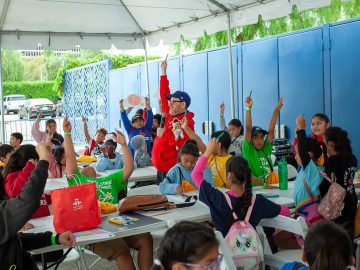
Researchers tested third- and sixth-grade students from culturally and linguistically diverse public schools in California’s Antelope Valley and Coptic Church schools in Los Angeles County. The students read short passages and answered questions to measure how well they understood what they read. Some students owned phones, while others did not. Some brought their phones to school that day, while others left them at home.
The results showed a statistically significant connection between owning a cellphone and lower reading comprehension scores. Whether the phone was sitting on a desk, stored out of sight, or left at home made no difference.
The researchers also found that the age when a child first received a cellphone was not linked to stronger or weaker reading skills.
Important findings for Latino and other multilingual families
The study included many students from homes where English is not the primary language, including Spanish-speaking and Arabic-speaking families.
Researchers found that the negative relationship between phone ownership and reading scores existed for both English-speaking and non-English-speaking households. However, they also discovered one important difference.
Among students from homes where English is not spoken, children who started texting earlier after getting a phone showed better reading comprehension than those who began texting later. By sixth grade, students from Spanish- or Arabic-speaking households who began texting in second or third grade had reading scores similar to classmates who did not own phones.
Greenfield said the findings suggest that early texting may help multilingual children practice English in ways that support reading development, even though overall phone ownership was still linked to lower reading scores.
What the findings mean
The researchers say their study does not support the idea that elementary school cellphone bans alone will improve reading comprehension. Instead, the results suggest that phone ownership itself may be related to changes in children’s reading habits or attention over time.
They add that schools may still benefit from cellphone restrictions because keeping phones out of classrooms could encourage more face-to-face interaction between students and teachers, potentially strengthening social skills and relationships—an area they say deserves more research.
The study was co-authored by UCLA researchers Marola Hanna, Rocio Burgos-Calvillo and Laura Rhinehart.