How to measure blood pressure at home, keep a useful log and find free screenings or monitor-loan options near Los Angeles.
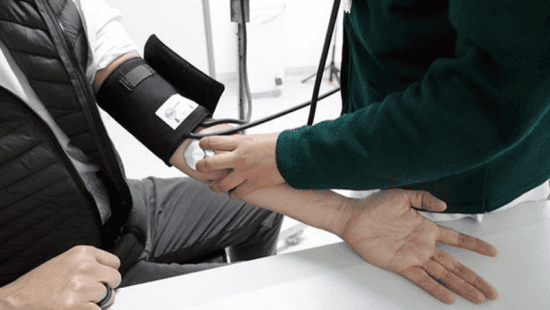
Before you worry about the number on your blood-pressure monitor, check how you took the reading. Rushing into a chair, talking during the measurement or letting your arm hang can make it look higher. The wrong cuff can push the result in either direction.
For families checking blood pressure at home, a few small adjustments can make the record you share with your doctor more useful. They won’t treat high blood pressure, but they can help your care team see what’s happening.
The CDC recommends a consistent routine, proper positioning and repeated readings. You can feel well and still have hypertension, as Parriva’s report on high blood pressure among Latino adults explains. In Los Angeles County, community screenings and library monitor loans can help you get started.
Five mistakes to avoid
1. Using a cuff that doesn’t fit. Measure around your upper arm and compare that measurement with the cuff’s stated size range. Don’t assume a cuff fits simply because it fastens.
Research published in JAMA Internal Medicine found that using an incorrectly sized cuff with an automated monitor could produce readings that were too high or too low. Ask a clinician or pharmacist to help check your fit.
2. Leaving your arm unsupported. Rest your arm on a table so the cuff is at heart level. Keep your back supported, feet flat and legs uncrossed. Place the cuff against bare skin, following the monitor’s instructions.
3. Measuring soon after coffee, smoking or exercise. Avoid caffeine, smoking and exercise for at least 30 minutes beforehand. Empty your bladder, too. Recent activity and a full bladder can affect the result.
4. Talking through the reading. Let calls and conversation wait. Stay quiet during the rest period and while the monitor works.
5. Skipping the five-minute rest. Sit quietly for at least five minutes before measuring. Give yourself time to settle rather than checking immediately after walking around or doing chores.
Together, these steps make readings easier to compare over time. A high result still deserves attention; don’t assume it’s simply a technique problem.
Choose a monitor and keep both readings
The American Heart Association recommends an automatic, validated upper-arm monitor, meaning its accuracy has been tested. Check the exact model at ValidateBP, which reviews evidence that listed devices meet accuracy criteria. Ask for help selecting a device if an upper-arm cuff is difficult to use.
Bring your monitor to an appointment so your care team can check your technique and compare it with office equipment. For a child or someone who is pregnant, choose a device validated for that group.
At each session, take two readings, one minute apart. Record both, including the top and bottom numbers, along with the date and time. Don’t keep only the lower result.
The AHA offers a printable blood-pressure log. Its instructions suggest monitoring for three to seven days before an appointment, with morning and evening measurements. Agree on a schedule with your clinician, including timing around medication.
Bring the log and your medication list to appointments. Home monitoring supports medical care; it doesn’t replace it. Don’t stop or change prescribed medication on your own.
Where to get help near Los Angeles
You may not need to buy a monitor immediately.
Pasadena Public Library lends blood-pressure kits for three weeks, with renewals available under library rules. Check the catalog or ask library staff about eligibility, availability and cuff size before borrowing.
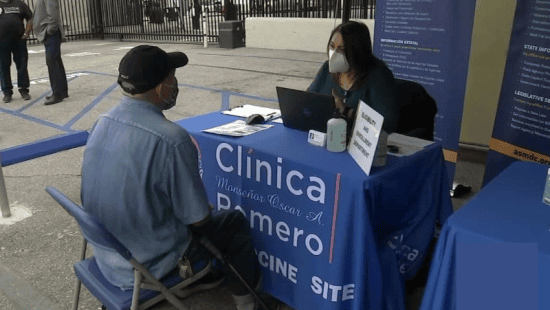
Pasadena also lists free blood-pressure screenings for adults 18 and older at Jackie Robinson and Villa Parke community centers, provided by Huntington Hospital outreach nurses. The city says pre-registration is not required. Confirm the next session with the center before traveling.
In Orange County, Orange Public Library lends kits to adult cardholders, including educational materials in English and Spanish.
If you need follow-up care, ask your clinic about monitoring support and appointment costs. The screening may be free even when later visits or treatment have a charge.
When a high reading needs urgent attention
For adults who are not pregnant, the AHA’s emergency guidance identifies readings above 180 systolic, the top number, or above 120 diastolic, the bottom number, as requiring prompt attention.
Call 911 immediately if a reading this high accompanies chest pain, shortness of breath, back pain, numbness, weakness, vision changes or difficulty speaking. Don’t wait for the pressure to fall.
If you have no symptoms, wait at least one minute and measure again. If it remains this high, contact your healthcare professional immediately. Pregnancy requires different thresholds and instructions from your maternity team.
At your next appointment, bring both your monitor and your log. A careful routine at home gives you and your care team a better starting point for deciding what to do next.
12. FAQ
Does one high reading mean I have hypertension?
One reading alone does not confirm a diagnosis. Record repeated measurements using the correct technique and discuss them with a healthcare professional. Follow the urgent instructions above for very high readings.
Should I buy a wrist monitor?
An automatic, validated upper-arm monitor is generally preferred. If an upper-arm cuff cannot be used, ask a clinician to recommend an appropriate alternative.
Should I stop medication if my home readings improve?
No. Do not stop or change prescribed blood-pressure medicine without guidance from your healthcare professional.
Do free screenings include free treatment?
Not necessarily. Pasadena lists its community screenings as free. Follow-up visits, tests and treatment may have different charges.