A proposed statewide program would let eligible businesses temporarily open in vacant storefronts with fewer permitting hurdles while keeping health and safety protections in place.
For many Californians, opening a small business can feel like navigating a maze of permits, inspections, and costly building requirements before making a single sale. A new proposal in the California Legislature aims to change that.
Assembly Bill 1679 would require every city and county in California to create a process allowing eligible businesses to temporarily operate in vacant commercial spaces for up to 120 days with fewer regulatory hurdles. Supporters say the bill could breathe new life into empty storefronts while giving entrepreneurs a lower-cost way to test a business before committing to a long-term lease.
For Latino entrepreneurs, who own hundreds of thousands of small businesses across California and are heavily represented in retail, food service, beauty, construction, and professional services, the proposal could create new opportunities to enter the market without facing the full cost of permanent occupancy on day one.
The bill would establish a statewide framework requiring local governments to issue a Temporary Commercial Activation Authorization for qualifying businesses operating in existing commercial buildings.
Under the proposal:
- Businesses could operate for up to 120 days.
- Cities could renew permits, allowing businesses to stay for as long as 12 months within a two-year period.
- Businesses could later apply for permanent occupancy if they decide to stay.
Instead of forcing every temporary business to immediately comply with every requirement designed for permanent tenants, cities could temporarily defer certain development standards that are not directly tied to public safety.
That could include parking requirements, some discretionary land-use approvals, and certain building upgrades that often add months of delays and thousands of dollars in costs.
Safety rules would still apply
One common misconception is that the bill would weaken health or fire protections.
It would not.
Businesses operating under the temporary program would still have to comply with fire codes, public health standards, food safety regulations, accessibility requirements under the Americans with Disabilities Act, and other life-safety rules. Local fire officials would continue to have authority to impose additional safety conditions when necessary.
In other words, the proposal simplifies permitting, not safety.
Why this matters for Latino entrepreneurs
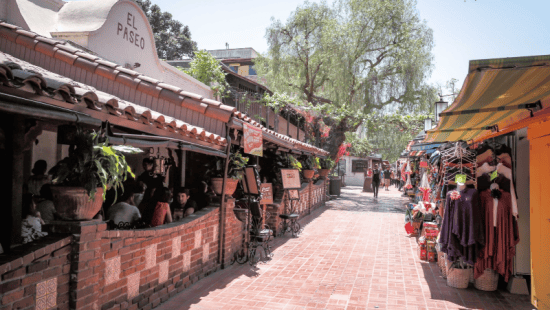
California’s Latino community continues to be one of the state’s strongest engines of entrepreneurship. Family-owned restaurants, clothing boutiques, tax preparation offices, beauty salons, repair shops, tutoring centers, bakeries, and neighborhood retail businesses all contribute to local economies.
Many of these businesses face the same challenge: the cost of opening a storefront can be overwhelming before the first customer walks through the door.
By allowing entrepreneurs to temporarily occupy vacant commercial spaces, AB 1679 could help business owners:
- Test whether a location attracts customers.
- Build a customer base before investing heavily.
- Generate revenue sooner.
- Reduce financial risk while exploring permanent expansion.
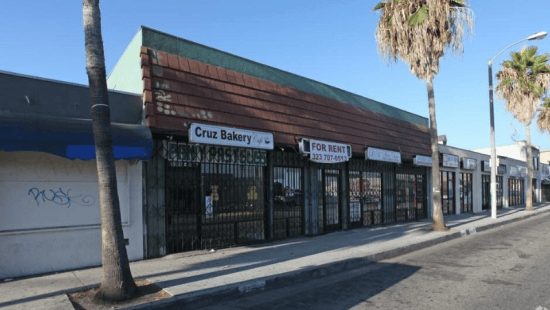
For Los Angeles, where many commercial corridors still struggle with vacant storefronts following the pandemic and changing shopping habits, temporary businesses could also help increase foot traffic and support surrounding businesses.
What the bill does not solve
While AB 1679 could reduce permitting barriers, it does not address several of the biggest problems facing California’s small businesses.
Commercial rents remain high in many cities. Insurance premiums continue to rise. Access to financing remains difficult for many first-time entrepreneurs. None of those issues would change under this legislation.
The Assembly committee analysis also notes that the bill places no size limit on businesses eligible for the program beyond occupancy restrictions. That means a well-funded retailer could potentially qualify alongside a first-time entrepreneur, raising questions about whether the program should prioritize truly small businesses.
The analysis also points out that the bill does not estimate how many businesses it would help, how many jobs it could create, or how much it could reduce commercial vacancies. Those are important questions lawmakers have yet to answer.
If enacted, the proposal could be especially useful for:
- Retail startups
- Artisan and handmade businesses
- Seasonal holiday shops
- Professional service providers
- Tutoring centers
- Tax preparation offices
- Beauty and wellness businesses
- Limited food operations that meet California food safety requirements
The bill generally applies to lower-risk commercial uses with occupancy of no more than 49 people and does not permit structural alterations or higher-risk occupancies.
AB 1679 is moving through the California Legislature and was reviewed by the Assembly Committee on Local Government before being referred to the Assembly Health Committee because of provisions affecting temporary food facilities. Lawmakers may still amend the bill before any final vote.
If it becomes law, every California city and county would be required to provide a pathway for eligible temporary commercial operations.
For aspiring entrepreneurs, especially those who have long viewed commercial storefronts as financially out of reach, the proposal represents something larger than a permitting change. It reflects a growing recognition that empty storefronts and ambitious small-business owners should not remain separated by unnecessary bureaucracy.
Whether AB 1679 becomes a catalyst for neighborhood revitalization will depend on how local governments implement the program and whether entrepreneurs can overcome the other financial challenges that still stand in the way of building a lasting business.