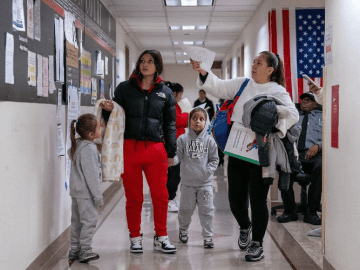
Inglewood Unified’s record-long state receivership offers a real-world preview of what could happen if Los Angeles Unified cannot stabilize its finances.
As Los Angeles Unified races toward an August 7 deadline to convince county officials that it can restore long-term financial stability, many parents are asking one question:
What actually happens if the state steps in?
California already has an answer.
Just south of Los Angeles, the Inglewood Unified School District spent nearly 14 years under state control after accepting an emergency state loan in 2012. On July 9, state and county education leaders announced the district has now met required operational standards and is expected to regain full local governance in July 2027, ending the longest state takeover of a California school district.
For LAUSD families, educators and taxpayers, Inglewood offers both a warning and a roadmap.
The situations are not identical. LAUSD is far larger and has significantly greater financial resources. But California law establishes a similar sequence of escalating oversight when districts face insolvency.
The lesson from Inglewood is that once a district reaches the point of requiring an emergency state loan, restoring local control can take years—not months.
It is important to distinguish between today’s reality and a possible future scenario.
Los Angeles Unified has not lost local control.
Instead, the Los Angeles County Office of Education (LACOE) has determined that the district shows signs it could become financially insolvent in future years. County officials have assigned a fiscal expert and given LAUSD 45 days to revise its financial plan after concluding the adopted budget does not adequately address projected deficits.
District leaders have publicly stated they intend to work collaboratively with county officials while continuing to prioritize student services.
Acting Superintendent Andrés Chait said after the county’s determination:
“We remain committed to working collaboratively with LACOE to strengthen the District’s long-term financial stability while continuing to serve students.”
County Superintendent Debra Duardo has also expressed confidence that cooperation between county officials and the district could prevent more severe intervention.
The Escalating Ladder of Intervention
California’s oversight system generally becomes more restrictive over time if financial problems remain unresolved.
Current Stage
- Fiscal expert assigned to advise LAUSD.
August 7, 2026
- LAUSD must submit a significantly revised budget demonstrating credible long-term spending reductions.
If County Officials Remain Unsatisfied
- A fiscal adviser could be appointed with authority to stay or rescind certain financial decisions made by the Board of Education.
If Insolvency Occurs
- Should the district ultimately exhaust its cash reserves and require an emergency state loan, California law provides for appointment of a state administrator, transferring key governing authority away from the elected school board.
This final step is considered a last resort and has not occurred in LAUSD.
Inglewood Shows What State Receivership Can Look Like
In 2012, Inglewood Unified accepted a $29 million emergency state loan to avoid bankruptcy.
The financial assistance came with a significant condition:
The elected school board lost its governing authority, and a state-appointed administrator assumed control of district operations.
Over the following 14 years, the district underwent dramatic restructuring.
Major Financial Reductions
To restore financial stability, administrators implemented extensive spending reductions that included:
- Staff layoffs
- Administrative reductions
- Campus consolidations
- Long-term budget restructuring
- Years of strict fiscal oversight
Repaying the emergency loan became a central priority that shaped district decisions for more than a decade.
The Human Cost Extended Beyond the Budget
Financial recovery was only part of the story.
As schools closed and staffing declined, many families left the district.
Enrollment dropped from roughly 18,000 students before receivership to fewer than 6,000 today, according to state and local reporting.
Leadership turnover also created instability.
The Los Angeles Times reported that Inglewood cycled through numerous appointed leaders during receivership, making it difficult to sustain consistent educational priorities.
Although the district has now met California’s operational benchmarks, academic challenges remain. Recent state data cited during the July announcement showed approximately one-third of students meeting English proficiency standards and about one-fifth meeting math standards.
LAUSD educates one of the nation’s largest Latino student populations.
If financial intervention were to become more restrictive, the effects could extend well beyond accounting.
Potential impacts could include:
- Changes to staffing levels
- Delayed hiring
- School consolidations
- Program restructuring
- Larger class sizes in some schools
- Delays in facility improvements
- Reduced local decision-making by elected school board members
Exactly which programs would be affected would depend on future budget decisions. No specific cuts have been approved at this time.
For many Latino families, neighborhood schools serve as centers for after-school programs, bilingual education, parent engagement and community partnerships. Significant budget reductions could affect those services depending on how savings are implemented.
Why LAUSD Leaders Want to Avoid Receivership
The district’s current strategy appears focused on avoiding the point where California would require an emergency loan.
According to county officials, LAUSD still has time to stabilize its finances before reaching that stage.
The next several months are expected to involve difficult discussions over spending reductions, labor agreements, enrollment declines and long-term fiscal planning.
Those conversations may prove politically difficult, but Inglewood’s experience illustrates why many education leaders describe early corrective action as preferable to prolonged state control.
What to Expect Next?
Several important dates will shape LAUSD’s future:
August 7
Deadline for submitting a revised financial plan.
Mid-August
County officials review whether revisions adequately address projected deficits.
September 15
California’s statutory deadline for county approval, conditional approval or disapproval of the district’s budget.
If county officials conclude the district has made sufficient progress, enhanced oversight could remain limited.
If not, oversight authority could increase.
For now, a complete state takeover remains a potential future scenario—not an immediate outcome.
But Inglewood’s experience demonstrates that once a district crosses the threshold into state receivership, returning control to local voters can take well over a decade.
For parents, this story is not only about budgets.
It is about who makes decisions for neighborhood schools, how quickly financial crises can reshape educational opportunities and why the choices made over the next several weeks could influence Los Angeles classrooms for years to come.
The experience of Inglewood suggests that preventing financial collapse may ultimately preserve something many communities value just as much as balanced books: local control.
Frequently Asked Questions
Is LAUSD currently under state control?
No. LAUSD remains governed by its elected Board of Education. The district is operating under increased county fiscal oversight after concerns about future solvency.
Could LAUSD lose local control?
Only if financial conditions deteriorate substantially and the district ultimately requires an emergency state loan. That would trigger a different level of state intervention under California law.
Why is Inglewood being compared with LAUSD?
Inglewood is California’s most recent and longest example of a district that entered state receivership after accepting an emergency loan. Its experience illustrates what prolonged intervention can involve.
Does increased oversight automatically mean schools will close?
No. Oversight itself does not mandate closures. Any future decisions about staffing, campuses or programs would depend on budget negotiations and actions taken by district leaders or, in a more severe scenario, state-appointed officials.
When will LAUSD know whether it avoided stronger intervention?
The next major milestone is the August 7 budget revision, followed by county review and the September 15 statutory budget determination.