New research shows home prices are rising much faster than young adults’ incomes. In California, Latino families face even greater barriers to homeownership because of affordability, lending disparities and higher borrowing costs.
Young adults in the United States are facing tough economic headwinds. For many, rising costs and a challenging job market are making it harder to afford basic expenses. That can make owning a home feel further out of reach.
About nine-in-ten adults younger than 40 (89%) say it’s harder for young adults today to buy a home than it was for their parents’ generation, according to a new Pew Research Center survey. Young adults are also less likely than older ones to say buying a home is a very good investment.
Since 2019, home prices in the U.S. have risen faster than young adults’ incomes, which has made buying a home even more challenging. This is true both at the national level and in most metropolitan areas around the country, according to a Center analysis of government data.
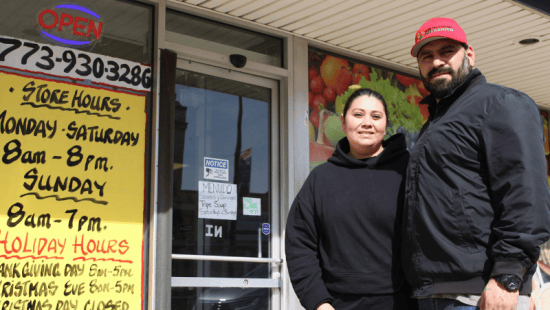
For Latinos is even worse escenario.
*Latinos make up 37.7% of California’s adult population, but received only 31% of home-purchase loans in 2024, indicating a persistent access gap to homeownership.
*The Latino homeownership rate in California is about 45%, compared with 60% for non-Latinos.
*Latino homeowners in California own homes with median values roughly $229,000 lower than those owned by non-Latinos, limiting wealth accumulation and equity growth.
*Housing affordability is a major barrier: in California, fewer than 1 in 10 Latino households could afford a median-priced home in recent years, compared with 21% of White households and 28% of Asian households.
In high-cost areas such as San Mateo County, only 8% of Latino households can afford a median-priced home.
One way of measuring home affordability is to compare the median price of a home with the median household income. This is often expressed as the price-to-income ratio.
Between 2019 and 2024:
The inflation-adjusted median home value rose 30% (from $269,600 to $350,000).
Inflation-adjusted median household income for households headed by those under 40 rose only 9% (from $92,700 to $100,900).
As a result, the price-to-income ratio for households headed by those under 40 rose from 2.9 in 2019 to 3.5 in 2024. The only other period when the price-to-income ratio for young persons reached this level was during the housing bubble of the mid-2000s. It peaked at 3.6 in 2006. Before 2000, it hovered around 2.5.
Other factors that influence the affordability of homes
Home affordability for young adults depends on more than just home prices and income. Factors such as mortgage rates, property taxes, home insurance and lending standards also play a role. Several of these factors have changed since 2019. For example, according to Freddie Mac, the average 30-year fixed mortgage rate increased from 3.9% in 2019 to 6.7% in 2024.
All these things have an impact on the monthly costs of owning a home. And those costs have risen significantly since 2019. Using the median home price and other costs for each year:
In 2019, if a homebuyer made a 3.5% down payment and had a mortgage rate of 3.9% on a $269,600 home, their monthly costs would have been $1,689. (Read “About this research” for more on how this was calculated.)
In 2024, with 3.5% down and a 6.7% mortgage rate on a $350,000 home, their monthly costs would have been $2,776.
Fewer young adults can now afford these monthly housing costs. In 2019, 56% of renter households younger than 40 had enough income to afford the monthly cost of owning a home. By 2024, that share had dropped to 37%.
Even before considering the monthly cost of owning a home, buyers need to come up with a down payment. In a 2024 Federal Reserve survey, 70% of renters under age 40 said they rent rather than own because they cannot afford a down payment. This was a bigger factor than not being able to afford the monthly mortgage.
The cost of a down payment has also gone up sharply in recent years as home prices have risen.
For the $269,600 home in 2019, a 3.5% down payment and an additional 3.0% in closing costs would have required a buyer to have $17,500 in cash.
For the $350,000 home in 2024, a similar down payment and closing costs would have been roughly $22,800.
There were four states in 2024 in which all metro areas with available data were very unaffordable: California, Hawaii, Nevada and Utah.
The 10 least affordable metros nationwide were in California or Hawaii. The 10 most affordable metros were spread across New York, Illinois, Missouri, Ohio and Pennsylvania.