The highest monthly arrest total of President Donald Trump’s second term comes as immigration enforcement shifts toward quieter, less visible operations. In Southern California, the effects are still being felt in Latino neighborhoods, workplaces and families.
U.S. Immigration and Customs Enforcement arrested 49,571 people in July, the highest monthly total of President Donald Trump’s second term, according to government data provided by ICE to the Deportation Data Project at UC Berkeley and analyzed by The Associated Press.
The July figure was 15% higher than the 43,021 arrests recorded in June and 70% higher than the 29,241 arrests recorded in February. Before Trump returned to office, monthly ICE arrests were generally a little above 8,000.
The numbers mark a significant escalation in immigration enforcement.
But for California, and particularly Los Angeles, the story is not simply about how many people ICE is arresting.
It is about how enforcement has changed.
The large, highly visible immigration operations that dominated headlines in Los Angeles during the summer of 2025 represented only a portion of ICE’s nationwide arrests. Since then, enforcement has increasingly moved toward arrests that receive less public attention, including arrests in communities and cooperation with local law enforcement agencies.
For immigrant communities in Southern California, that shift can make the crackdown harder to see but no less disruptive.
Los Angeles became one of the most visible testing grounds for the administration’s immigration strategy last year.
During a six-week enforcement surge beginning in June 2025, ICE arrests in the Southern California region increased nearly sevenfold compared with the same period a year earlier, rising from roughly 500 arrests to more than 3,500, according to ICE data obtained through a Freedom of Information Act request and analyzed by Capital & Main.
The increase was concentrated during highly publicized operations that brought federal agents into Latino neighborhoods, workplaces, and other locations across Los Angeles County.
The number of arrests later declined.
But the enforcement presence did not disappear.
By early 2026, ICE had made more than 14,000 arrests in its Los Angeles area of responsibility since the beginning of the previous year’s enforcement campaign, according to local reporting based on ICE data.
And the number of people held in immigration detention in the Los Angeles area remained significantly higher than before the 2025 raids.
Before those operations began, fewer than 1,000 people were detained in ICE’s Los Angeles area of responsibility on a typical day. By June 2026, that figure had roughly doubled.
The July national numbers provide an important clue about what is happening.
ICE is no longer relying exclusively on the large operations that attracted television cameras, protesters and political attention.
The agency has increasingly used traffic stops, arrests in communities and partnerships with state and local police through the federal 287(g) program.
Texas and Florida accounted for nearly 20,000 of the July arrests, according to AP. The administration has also received billions of dollars in additional funding and is adding approximately 12,000 ICE officers.
That does not mean California has become less important.
Instead, the enforcement model makes individual arrests more difficult to track through headlines.
A large raid produces dozens or hundreds of visible arrests at once.
A series of smaller arrests can produce the same effect on a community without creating a single defining news event.
California remains one of the country’s major immigration enforcement centers
California does not have a publicly available city-by-city breakdown of the 49,571 July arrests comparable to the national figure reported by AP.
It would be misleading to claim that a specific number of those July arrests occurred in Los Angeles without a verified July breakdown from ICE.
But there is extensive evidence that Southern California remains a major center of immigration enforcement.
ICE’s Los Angeles area of responsibility experienced a dramatic increase in arrests after June 2025, and the region continued to have elevated detention levels into 2026.
The Deportation Data Project, which receives immigration enforcement records from federal agencies through Freedom of Information Act requests and litigation, has documented the dramatic increase in arrests during the Trump administration. Its most recent publicly available comprehensive ICE dataset currently extends only through early March 2026, meaning researchers cannot yet use that database to independently break down the new July national total by Los Angeles neighborhood or city.
That gap in public data is itself significant.
The federal government is releasing enough information to show the scale of the enforcement campaign, but the public does not yet have the same level of detail for every community.
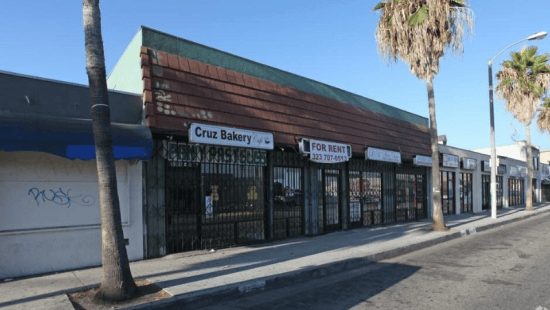
In Los Angeles, the effects of immigration enforcement have reached businesses and entire commercial corridors.
A UCLA study found that immigration enforcement operations in Los Angeles were associated with significant reductions in pedestrian activity around affected areas. The economic consequences were particularly visible in Latino communities.
Local businesses reported losing customers and revenue during and after the operations.
A furniture store owner in Inglewood told the Los Angeles Times that he laid off employees after last summer’s enforcement surge and was working twice as hard to earn roughly half as much as before. A restaurant owner reported losing $20,000 in canceled catering contracts.
The consequences have also extended to construction.
In Altadena, where thousands of homes were destroyed by the Eaton fire in January 2025, fear of ICE has complicated reconstruction efforts because many construction workers are immigrants.
Some workers have avoided construction sites because they fear being detained.
The result is a shortage of workers at a time when the community desperately needs them.
That creates an unusual contradiction.
Immigration enforcement is intended to remove people from the country, but the fear generated by enforcement can also discourage workers from showing up to jobs, slow construction and reduce economic activity.