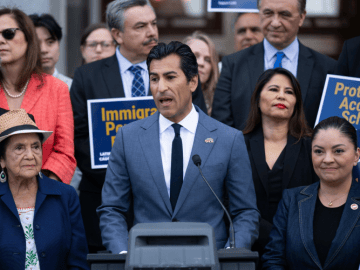
A stalled ICE accountability investigation and the reassignment of an agent are fueling concern about oversight and safety, especially in immigrant communities across Los Angeles.
Rent-burdened seniors and people with disabilities in Los Angeles have a few more days to apply for up to $19,000 in assistance. Measure ULA has generated $1 billion in tax revenue as of December 2025. While a majority of those funds are going toward affordable housing developments, a smaller portion is allocated to eviction legal defense and homelessness prevention.
Latinos make up over 71% of the housing insecure population in Southern California, but only 30% have benefited from this rental assistance.
The L.A. City Emergency Income Support Program, which closes April 30, is aimed at low income individuals who are at least 65 years old or are disabled. Applicants must demonstrate a household income at or below 50% of the median income and that they spend 30% or more of their income on rent.
“Whenever there is an economic shock or rents rise, seniors tend to struggle to pay for basics like food and medicine,” said Joe Donlin, director of the United to House L.A. coalition, which oversees the program.
While a specific total number of Latino beneficiaries has not been finalized, Measure ULA is designed to assist thousands of low-income, housing-insecure renters in Los Angeles, a disproportionately Latino population. As of early 2024, 30% of emergency rental assistance payments from the program had gone to Latino households.
Measure ULA, also known as the “mansion tax,” is a controversial initiative passed in 2022 that imposes a 4% to 5.5% tax on high-value real estate sales over $5 million to fund affordable housing and tenant assistance programs, such as this emergency grant.
Opponents of ULA recently gathered enough signatures for a statewide ballot initiative called the “Local Taxpayer Protection Act” that could overturn the tax measure in the November election.
According to Los Angeles’ 2025 Point in Time Count, seniors made up about 25% of the county’s homeless population last year. Individuals experienced a range of nonexclusive disabilities, including substance use disorder at 45% and serious mental illness at 46%.
Donlin said that by focusing on these demographics, the program “keeps vulnerable people in their homes.”
Those who participated in last year’s program, which distributed $9.8 million through one time payments of $20,000 to 494 families, are not eligible for this round.
Households of two earning up to $60,000 can receive $12,510. Households of three earning up to $68,150 and four-person households earning up to $75,750 can receive $15,606. Households of five earning up to $81,800 can receive the maximum amount of $19,000. Eligible recipients will receive the funds as a one-time payment on a debit card, which can be used for any personal expenses.
The Los Angeles Housing Department has budgeted nearly $16 million for this second round of the program, with more than $13.5 million allocated to approximately 1,005 households.
Donlin said this is one of 11 programs the organization oversees aimed at keeping people married.
For more information and to apply, visit: programs-forwardplatform.org/ula-emergency-isp