New report argues immigration enforcement now affects schools, businesses, hospitals and neighborhoods far beyond traditional ICE operations.
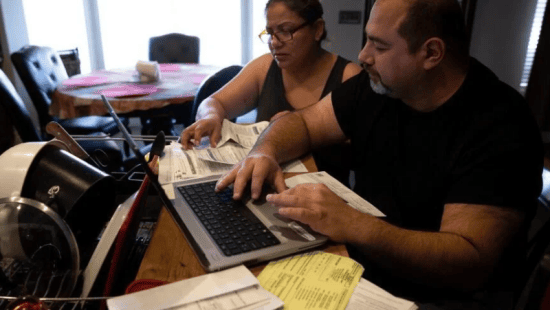
For many immigrant families in Los Angeles, immigration enforcement is no longer just a political debate in Washington. It can influence whether parents take their children to school, workers report for a shift, families visit a doctor, or neighbors attend church or community events.
A new report released this week by the American Civil Liberties Union argues those concerns are growing as immigration enforcement expands under President Donald Trump’s second administration. After reviewing more than 1,200 enforcement operations across eight states, the organization concludes that the effects now reach far beyond deportations, influencing schools, businesses, workplaces and entire communities.
In California, where nearly one in four residents is an immigrant and Latino workers help power industries ranging from construction and agriculture to restaurants, logistics and health care, the report raises broader questions about how immigration policy shapes everyday life.
According to the ACLU, “Far beyond Minneapolis, the Trump administration has deployed a national deportation policing force that has committed civil rights violations at a scale and severity without parallel in modern American history, turning schools, bus stops and grocery stores into sites of violence and abuse,” said Naureen Shah, the ACLU’s Director of Policy and Government Affairs and lead author of the report. The statement reflects the organization’s conclusions and allegations documented in its report.
The report, titled “Agents of Chaos and Cruelty,” reviewed 1,213 immigration enforcement operations conducted during 2025.
Among its principal findings, the ACLU says:
- More than 25,000 federal officers outside of ICE participated in immigration enforcement.
- Agencies that historically had little immigration role increasingly joined enforcement operations.
- Enforcement occurred at workplaces, neighborhoods, courthouses and other public spaces.
- The growing number of participating agencies makes accountability and oversight more difficult.
The report argues that immigration enforcement has evolved into a broader federal operation involving multiple agencies rather than ICE alone.
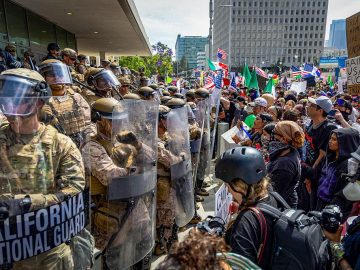
California has become one of the nation’s central battlegrounds over immigration enforcement.
Los Angeles has seen workplace operations, courthouse arrests, Home Depot enforcement actions and multiple lawsuits challenging federal practices.
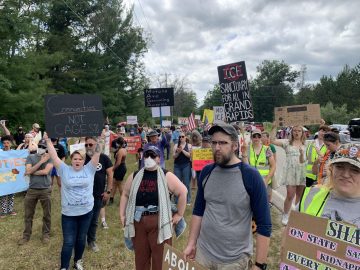
Civil rights organizations argue some operations have relied on unconstitutional tactics, including racial profiling and unlawful detentions. Federal officials dispute those allegations, and several cases remain before the courts.
The debate reflects a broader legal question that continues to unfold: how the federal government can enforce immigration law while respecting constitutional protections guaranteed to everyone in the United States.
Beyond Deportations: The Community Ripple Effect
The report argues immigration enforcement affects far more than the individuals who are detained.
Families may postpone medical appointments.
Parents may hesitate before taking children to school.
Witnesses may become reluctant to report crimes.
Workers may avoid commuting through certain neighborhoods.
Community organizations say those decisions can ripple across entire neighborhoods, influencing public health, education and economic activity.
Researchers have long found that prolonged uncertainty can affect children’s mental health, school attendance and academic performance. In California, where many classrooms include students from mixed-status households, educators and counselors have said fear of immigration enforcement can influence attendance even when no enforcement activity occurs at a school.
Why Latino Businesses Should Pay Attention
Immigration enforcement affects more than workers.
It can also change customer behavior.
When families become reluctant to travel, attend community events or visit neighborhood commercial corridors, local businesses often experience fewer customers even if they have no direct connection to immigration enforcement.
Parriva previously reported a similar pattern following the Boyle Heights Lineage warehouse fire. Latino-owned businesses described sharp declines in customer traffic as residents stayed home because of health concerns. While the circumstances were different, the experience illustrated how fear and uncertainty alone can reshape neighborhood commerce.
The ACLU report suggests immigration enforcement may produce comparable ripple effects when families avoid shopping districts, delay appointments or reduce daily activities because they fear encounters with immigration authorities.
California economists have repeatedly found that immigrant communities contribute substantially to consumer spending, entrepreneurship and workforce participation. Even temporary changes in community behavior can have measurable economic consequences, particularly in Latino business districts.
California’s Sanctuary Laws Do Not Stop Federal Enforcement
California law generally limits how state and local law enforcement agencies cooperate with federal immigration authorities. However, those laws do not prevent federal agencies such as ICE from carrying out immigration enforcement under federal law.
That distinction often creates confusion.
State protections may reduce certain forms of local cooperation, but they do not eliminate the possibility of federal enforcement actions in California communities.
Understanding where state authority ends and federal authority begins remains an important part of navigating California’s immigration landscape.
The Administration’s Position
Immigration and Customs Enforcement has defended expanded enforcement efforts as necessary to carry out federal immigration law and prioritize public safety.
The ACLU disputes that the tactics documented in its report are consistent with constitutional protections, arguing that greater transparency and oversight are needed.
At the time the report was released, federal officials had not issued a detailed response addressing each allegation contained in the report.
Know Your Rights
Legal organizations remind residents that constitutional protections apply regardless of immigration status.
Individuals generally have the right to:
- Remain silent.
- Speak with an attorney.
- Decline consent to a search unless officers have lawful authority.
- Ask to see a judicial warrant before opening the door to their home.
- Document interactions when it is safe and lawful to do so.
Community advocates also encourage families to prepare emergency contact plans, organize important documents and identify trusted legal resources before a crisis occurs.
Whether readers agree with the ACLU’s conclusions or not, the report raises questions that extend beyond immigration policy itself.
It asks how enforcement practices influence community trust, children’s education, local businesses, public health and neighborhood economies.
For California’s Latino communities, those questions are important.
They shape everyday decisions about going to work, taking children to school, seeking medical care and participating in community life.
As federal immigration policy continues to evolve, the broader impact on California families, employers and neighborhoods will likely remain one of the state’s most closely watched public policy issues.