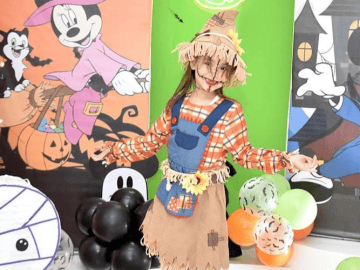
Wendy with her mother, Rosa María. The beginning of a story cultivated with struggle, love, and resilience.
Wendy Carrillo California State Senate race for District 26 brings renewed focus to immigration, healthcare, and housing issues affecting Latino communities in Los Angeles. Her personal story mirrors the experiences of many Salvadoran and immigrant families in California.
She was a little girl, almost a baby. Her grandfather tried to protect her and a friend, hiding them under a sink where all they could hear was the sound of bullets.
“Time felt endless, although later my grandfather told me it was only a few minutes,” says Wendy Carrillo, an activist, leader, and politician of Salvadoran origin who is now running in the D26 race for the California State Senate.
Wendy, as the Los Angeles community affectionately calls her, is part of the Salvadoran diaspora, a community that migrated to the United States carrying the scars of more than 12 years of conflict in their country.
“I migrated when I was very young, at five years old. I have few memories, but they deeply impacted my life and shaped who I am today. There are stories I’ve let go of to heal, others I’m still healing. I’ve rarely shared that my biological father was disappeared by the army and killed. My mother and I, when I was just months old, had to flee to Guatemala for a while before beginning the journey to California. I don’t deny what I lived through. My sense of social justice began in those early years and has been shaped by my experience as an immigrant. That resilience we all carry has been the driving force of my life, and my goal in politics is to use what I have to help the Latino immigrant community that hasn’t had the opportunities I’ve had,” she says firmly.
Wendy has been present in Los Angeles political life for several years. She worked in various media outlets until, encouraged by friends, she ran for Congress to fill the seat left by Xavier Becerra. Although she did not win, the experience led her to run again, this time for the California Assembly seat held by Jimmy Gomez, which she won by a wide margin.
“Politicians and establishment leaders told me not to run, that it wasn’t my time. I told them I don’t understand democracy that way. I ran and I won. I started a path that has allowed me to be closer to my community and work with them to make a difference,” she adds.
“In my life, my political career, and my struggles, I’m not alone. My history is with me—my mother, my grandparents, my years in El Salvador, my father Fernando, my sisters, and my community,” she says. “They are all with me in every step of my journey.”
A Life of Struggle
Wendy remembers not only the bullets and fear, though she did not fully understand them at the time. “I remember my neighbor’s horse. I loved it. It made me so happy. My family would enter me in pageants. I remember my earrings, the parrots,” she says with nostalgia.
Sometimes, during the conversation, it feels as if Wendy is drifting back into those years, as memories surface in fragments.
Her mother, Rosa María, was a strong and determined woman. Wendy pauses to share that she sometimes sings to her: “Rosa María, Rosa María, queen of all flowers…” and laughs. The story she tells is the story of several women: her mother, grandmother, and aunt—who shaped her early life while her mother worked to bring them to California.
During the civil war, Salvadorans lived under constant fear, with “hope” often the only word left to hold on to.
Rosa María eventually traveled alone to California, where she worked cleaning houses and as a babysitter, building a foundation for her family’s future.
“I still remember it. I was very obedient. They took me across the border in a car with my aunt and grandmother. I was a fan of Mickey Mouse. I remember wearing a red Mickey Mouse Club shirt, my hair in pigtails. I didn’t speak the whole way, just like they told me,” she recalls.
Her mother immediately enrolled her in kindergarten. Wendy adapted quickly and already knew the alphabet.
“When I arrived, I didn’t feel different. I looked like my classmates, but I realized I spoke differently. They would ask me why I had an accent. Most of them were Mexican,” she says.
Her mother married Fernando, a Mexican immigrant from Zacatecas, and together they had four daughters. Wendy became the eldest sister. They lived in Boyle Heights, a community that shaped her upbringing. Though life was modest, she remembers it as happy.
“I remember eating my first hamburger at eight years old. I saw the first McDonald’s arrive in Boyle Heights. Everything I lived before and what I was living then, I always saw it as who I am: an immigrant building her life in a country that is also part of her story. Life was beautiful but fragile,” she adds.
Wendy recalls many people who supported her family along the way. For her, this is part of her mission in politics: advocating for a community that shares the struggles reflected in her own story.
“My mother always taught me to work hard and stay true to who we are. I’ve always lived by that,” she says.
At eight, she realized she was undocumented. She later benefited from amnesty under President Ronald Reagan, became a legal resident at 13, and a citizen at 21.
At 14, her political awareness deepened. While studying at Roosevelt High School, she participated in a walkout against Proposition 187.
“In my life, my political career, and my struggles, I’m not alone. My history is with me; my mother, my grandparents, my years in El Salvador, my father, my sisters, and my community,” she says. “They are all with me in every step of my way.”
Her family has always shared political discussions at the table. After the walkout, her mother told her: “You’re just like your father”.
Her mother married Fernando, a Mexican immigrant from Zacatecas, and together they had four daughters. Wendy became the eldest sister. They lived in Boyle Heights, a community that shaped her upbringing. Though life was modest, she remembers it as happy.
A Vision of Power
For Wendy, power and politics must serve a social purpose. Her goal is to help legislate and create initiatives that benefit people. She remembers the devastation of El Salvador’s war and the role of U.S. support, but also recognizes the opportunities she found in the United States, including amnesty and the progress her family has made.
“We are a family of seven votes. We went from having no legal status to being citizens who can actively participate in politics,” she says.
Politics, for her, is not separate from life. “It’s almost a form of enjoyment. I like making a difference and seeing how we can change lives,” she says.
She also loves music and karaoke, a passion encouraged by her mother, who enrolled her in arts, music, and dance classes. “I love singing ‘Como la Flor’ by Selena and songs by Linda Ronstadt. My mother always fought for us to have a well-rounded education,” she says.
She immediately got to work advancing policies to benefit her community. “I had tears of joy when I won. I’m Catholic and inspired by the Jesuits who died seeking justice. That’s El Salvador’s history. Salvadoran women are strong,” she says.
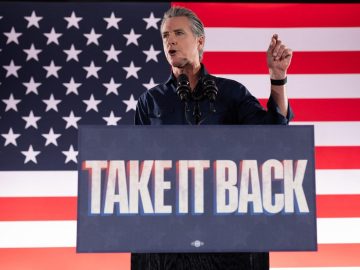
She worked alongside colleagues like Anthony Rendón and addressed issues such as the criminalization of miscarriage in El Salvador. She also accompanied Governor Gavin Newsom to El Salvador to better understand child migration.
Still, frustration exists. “Change isn’t always fast enough. We haven’t been able to help the ‘Dreamers.’ This country owes these thousands of young people a solution; they are bright young individuals caught in a situation they did not choose. There is also a lot of division. There’s still so much left to do,” she says.
Wendy Carrillo, spiritually and firmly bound to her culture and traditions.
Her Agenda
Her top priority is healthcare access, especially for those affected by policies under the Trump administration.
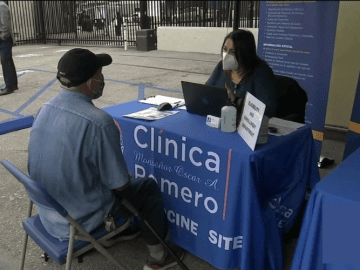
“These policies affect everyone, our elders, parents, children. We must support community clinics. If a community isn’t healthy, everybody suffers,” she says.
She also highlights gentrification and the need for truly affordable housing.
“What kind of housing is being built? Is it really affordable? People are being pushed out. Where do they go?” she asks.
Authenticity, she says, is essential.
“Many politicians make empty promises. You need relationships and the ability to get votes to make things happen,” she says.
A New Chapter
Years ago, Wendy was arrested for DUI, an experience she says reshaped her life.
“It changed me. I looked in the mirror and asked who I was. I’ve now gone over 900 days without alcohol. I feel calmer, more grounded.”
She speaks openly about it.
“Many people hide these experiences, but I share mine hoping it helps others.”
She also found solidarity from veterans and others struggling with similar issues, strengthening her commitment to mental health advocacy.
Closing on Music and Meaning
Music remains central to her life.
“You have to do the right thing because we are here. At least to say I tried.”
She closes with lyrics that guide some of her outlook:
“The day I die, I won’t take anything with me… Only memories remain.”
“Only our work will remain,” she says. “How we helped others; that is what stays.”