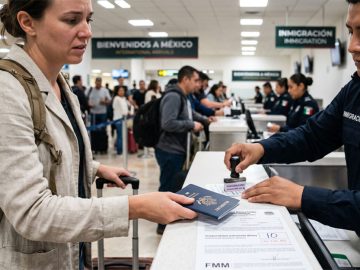
Chihuahua crash U.S. agents case raises urgent questions about U.S. involvement in Mexico operations and the limits of cross-border security cooperation.
A deadly crash in northern Mexico is now forcing a sensitive conversation about how the United States and Mexico work together to fight organized crime.
On April 19, four anti-narcotics personnel were killed when their vehicle veered off a mountain road and plunged into a ravine in Chihuahua. The victims included two U.S. Embassy trainers and two Mexican officers from the state’s investigative agency, according to local authorities. They were returning from an operation that dismantled clandestine methamphetamine labs in the municipality of Morelos.
Mexican officials identified the fallen officers as Pedro Ramón Oseguera Cervantes and Manuel Genaro Méndez Montes. The presence of U.S. personnel has become the central issue.
President Claudia Sheinbaum said she was not informed in advance that U.S. Embassy staff were participating in activities tied to the operation. Speaking the next morning, she ordered a formal review to determine whether the involvement complied with Mexico’s national security framework.
“We cooperate, but there are limits,” Sheinbaum said, emphasizing that her administration does not permit foreign agents to take part in active operations on Mexican soil.
The U.S. Embassy in Mexico has not publicly detailed the role of its personnel, though officials in Chihuahua described them as instructors involved in ongoing training programs. Governor Maru Campos and state prosecutor César Jáuregui Moreno both praised the victims and framed the collaboration as part of long-standing security coordination.
Security analysts say the distinction between training and operational involvement is not just technical. It is political.
According to research from the Congressional Research Service, U.S.-Mexico security cooperation has historically relied on intelligence sharing, training, and funding rather than direct field participation, especially after Mexico tightened rules governing foreign agents in recent years.
“This kind of incident exposes the gray areas,” said a security expert from the Wilson Center, noting that joint efforts often blur lines when operations move quickly.
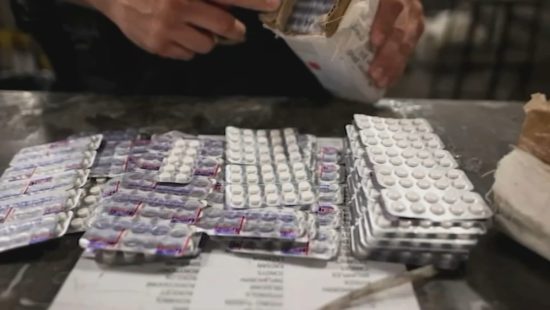
The stakes are high on both sides of the border. Synthetic drugs, particularly methamphetamine and fentanyl, remain central to the flow of narcotics into the United States. Data from the U.S. Drug Enforcement Administration shows Mexican-based criminal networks dominate production and trafficking, making cooperation essential.
For Latino communities in the U.S., the consequences are direct. Overdose deaths, public safety concerns, and cross-border economic impacts all tie back to how effectively both governments manage this shared challenge.
What makes this moment different is not just the loss of life. It is the political signal.
Sheinbaum’s response reflects a broader shift toward reinforcing sovereignty while maintaining cooperation. That balance has defined Mexico’s security policy for years, but incidents like this test its limits.
The investigation now underway will determine whether protocols were followed. More importantly, it will shape how far future cooperation can go in a fight that neither country can manage alone.