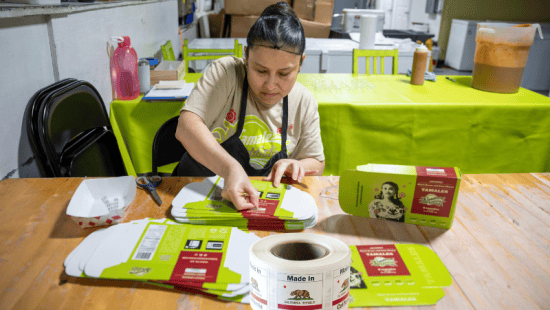
California officials are urging students to check whether they qualify for hundreds or even thousands of dollars in unused CalKIDS scholarship funds that can help cover college costs.
LOS ANGELES — California officials are urging community college students to check whether they have unclaimed CalKIDS scholarship money waiting for them as part of a new statewide effort to connect students with college funding they may not even know exists.
Governor Gavin Newsom announced that more than $20 million in unused CalKIDS scholarship funds has already been set aside for eligible community college students across the state.
So far, California has identified roughly 40,000 students who qualify for the money but have not activated or claimed their accounts.
For students struggling with rising tuition, textbook costs, housing expenses, and transportation, the money could help ease some of the financial pressure that often pushes students to delay or abandon college.
Officials say the funds can be used for tuition, books, laptops, supplies, and other education-related expenses.
“This is money that belongs to students,” state leaders said while announcing the outreach effort. “We want to make sure they know it’s there and how to use it.”
What Is CalKIDS?
CalKIDS is a California college savings initiative launched in 2022 to help students build a financial foundation for higher education or career training.
Unlike many scholarship programs, families often do not need to apply.
The program automatically creates scholarship accounts for many eligible California students and deposits seed money into those accounts.
According to the California State Treasurer’s Office, the program has already distributed more than $37 million to nearly 70,000 community college students statewide.
Officials estimate more than 4 million California children and students are eligible overall, but many accounts remain unclaimed because families do not realize the accounts exist.
Latino Students Represent the Largest Group
The program is especially important for Latino communities because Hispanic students make up the largest share of CalKIDS participants statewide.
According to state data:
- More than 2.57 million CalKIDS accounts belong to Hispanic or Latino students.
- Latino students represent about 53.7% of all CalKIDS participants.
That reflects broader education trends across California.
Data from the California Department of Education shows Latino students account for roughly 56% of California’s K-12 public school enrollment, making them the largest student population in the state.
The financial impact can be significant.
Many Latino students are the first in their families to attend college and are more likely to face economic barriers that make even smaller education costs difficult to manage.
For some students, a few hundred dollars can mean the difference between staying enrolled or dropping classes.
Funding amounts vary depending on eligibility.
Typical CalKIDS deposits include:
- $100 for eligible babies born in California
- $500 for eligible public school students in grades 1 through 12
- Additional financial support for foster youth and homeless students
The accounts are managed through ScholarShare 529 and can be used at accredited colleges, universities, trade schools, and career training programs.
That flexibility matters as more California students pursue alternatives to traditional four-year universities.
To claim funds, students need their Statewide Student Identifier, commonly called an SSID.
Students can usually get their SSID by contacting their current school or the last school district they attended.
California has issued SSIDs through public schools since the 2005-2006 school year, although students who graduated before then may not have one.
Once students have their SSID, they can visit the official CalKIDS website to check eligibility and activate their account.
State officials say the new partnership between community colleges and California’s Cradle-to-Career data system will help campuses directly notify students who may have money waiting for them.
California community college enrollment has struggled in recent years as inflation, housing costs, and work demands make higher education harder to afford.
Programs like CalKIDS are increasingly part of the state’s strategy to keep students enrolled and reduce financial barriers before debt becomes overwhelming.
For Los Angeles-area families already balancing rent increases, transportation costs, and economic uncertainty, even modest scholarship support can help students stay focused on school instead of survival.
The message from California officials is simple: students should check their eligibility.
For some families, hundreds or even thousands of dollars may already be sitting in an account waiting to be claimed.