Fullerton School District is expanding free breakfast in classrooms, offering more than 600 students at a third elementary school easier access to morning meals. Research suggests participation can improve, but academic benefits remain uncertain.
The Fullerton School District has expanded its free breakfast program to three elementary schools, serving hundreds of children. Research suggests the approach can increase participation, but its academic benefits are less certain.
For some children, the school day begins before they have had anything to eat. Their families may be rushing to work, facing financial difficulties or simply struggling to get everyone out the door on time.
By the time those students arrive at school, the opportunity to eat breakfast in the cafeteria may already be gone.
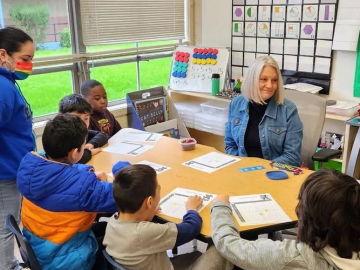
That is the problem the Fullerton School District is trying to address by bringing breakfast directly into classrooms, making a morning meal part of the school routine rather than something students must find time to get before class.
The district expanded its Breakfast in the Classroom initiative to Pacific Drive Elementary School for the 2026 to 2027 school year, its third participating campus. The program gives more than 600 students access to free breakfast.
The other participating schools are Commonwealth and Richman elementary schools. All three are Title I campuses serving communities where many families face economic challenges.
At Pacific Drive, 73.6% of students qualify for free or reduced price meals, according to California Department of Education data. At Commonwealth and Richman, the proportion is approximately 80%.
The expansion was made possible through a grant from the nonprofit No Kid Hungry, which helps cover equipment, coolers, storage and other logistical expenses.
But Fullerton’s initiative also presents a bigger question for Los Angeles County: Should more school districts bring breakfast into the classroom, particularly at schools serving children from low income households?
Getting breakfast to children who might otherwise miss it
The argument for classroom breakfast is straightforward. A free meal does little good if students cannot access it.
Under California’s Universal Meals Program, public school students are entitled to free breakfast and lunch. But making meals available does not necessarily mean every child eats them.
Breakfast in the Classroom attempts to close that gap by allowing students to eat after arriving at school, instead of requiring them to visit the cafeteria before classes begin.
Research suggests this approach can make a difference in participation.
A study published in JAMA Pediatrics found that schools offering breakfast in the classroom had average participation rates of 73.7%, compared with 42.9% at schools offering traditional cafeteria breakfast.
The study also found a small improvement in overall attendance, although it did not find significant differences in standardized reading or math performance.
For children experiencing food insecurity, increasing access to a reliable morning meal is meaningful even if it does not translate directly into higher test scores.
Does eating in class improve academic performance?
This is where the evidence becomes more complicated.
A separate randomized study published in the Journal of the Academy of Nutrition and Dietetics examined 16 urban schools in Philadelphia over approximately two and a half years.
Researchers compared schools offering universal free breakfast in the classroom with schools serving free breakfast in the cafeteria before classes began.
The results did not show improvements in attendance or standardized reading scores among students receiving classroom breakfast. Math scores were slightly lower in the classroom breakfast group.
The findings do not mean breakfast is bad for children. They suggest that moving breakfast from the cafeteria into the classroom does not automatically improve academic performance.
The distinction matters. Providing children with nutritious food and improving how well they perform on standardized tests are two different goals.
Schools should not promise that classroom breakfast will produce better grades. A more defensible argument is that it can help ensure children have access to food before beginning their school day.
Los Angeles already has a program. Is it reaching enough students?
The Los Angeles Unified School District already offers Breakfast in the Classroom as one of its meal service options.
The district’s Food Services Division encourages students to eat breakfast at school and provides free meals under California’s Universal Meals Policy.
But the challenge is participation.
A recent report on LAUSD’s food operation found that the number of meals served daily had declined by 7%, a sharper drop than the district’s projected 4% enrollment decline.
The district attributed the decrease to both declining enrollment and fewer students participating in its meal program.
That makes Fullerton’s experience particularly relevant. The question for Los Angeles is not simply whether it can offer free breakfast. It is whether schools are making it easy enough for students to actually eat it.
Classroom breakfast could be particularly useful at campuses where students regularly arrive too late for cafeteria service or where participation remains low despite meals being free.
The cost and responsibility of feeding students
There are also practical considerations.
Serving food inside classrooms requires equipment, storage, distribution systems and staff coordination. Teachers may have to accommodate additional time for students to eat, manage packaging and clean up before instruction continues.
Food waste is another concern. Schools need to know whether students are eating the meals or simply taking food because it is available.
These issues do not necessarily outweigh the benefits, but they should be part of any decision to expand the program.
Fullerton’s experience also demonstrates the importance of outside funding. The No Kid Hungry grant helped cover equipment and logistical needs, allowing the district to expand without placing the entire initial burden on individual schools.
A model worth expanding, with accountability
More Los Angeles County school districts should consider classroom breakfast, particularly at elementary schools where large numbers of students come from low income households.
But expansion should be based on evidence from individual campuses, not simply the assumption that a program working in one district will work everywhere.
Schools should measure how many additional students actually eat breakfast, whether attendance changes, how much food is wasted and how much instructional time is affected.
Fullerton’s program offers an opportunity to demonstrate whether bringing breakfast into classrooms can improve access without creating unnecessary burdens for educators
Ultimately, the most important measure of success may not be higher test scores. It may be making sure that children who arrive at school hungry have a reliable opportunity to eat before they are expected to learn.