Voters approved fewer required City Council meetings without changing members’ $244,727 annual salaries, raising questions about transparency, public participation and accountability.
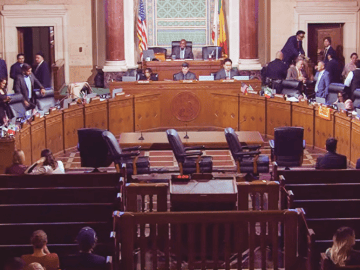
Los Angeles voters have approved a change that will allow City Council members to meet just once a week instead of three, a decision that is already generating debate about government accountability, public access, and what elected officials are expected to do for their salaries.
The measure, known as Charter Amendment EE, received 52.76% of the vote, compared with 47.24% opposed, according to the reported election results.
The change is part of a broader package of ethics and governance reforms, but one provision has attracted particular attention: reducing the minimum number of regular City Council meetings from three days a week to one.
For a city struggling with homelessness, housing affordability, public safety, deteriorating infrastructure and a budget under pressure, the decision has prompted questions about whether fewer public meetings will make local government more efficient or leave residents with fewer opportunities to hold their representatives accountable.
And there is another detail that makes the debate particularly sensitive: Los Angeles City Council members earn approximately $244,727 annually.
That is a substantial public salary for officials whose regular council meeting schedule is about to become considerably lighter.
What Exactly Did Voters Approve?
Until now, the Los Angeles City Charter required the City Council to hold regular meetings at least three days each week.
Amendment EE changes that requirement to at least one weekly meeting. The council will still have the authority to schedule additional meetings when necessary, and its committees will continue conducting business.
Supporters argue that three full council meetings every week consume valuable time that could be better spent working directly with residents, visiting neighborhoods and addressing problems within individual districts.
Councilmember Tim McOsker, one of the measure’s supporters, has argued that some council meetings are inefficient and unnecessarily expensive. He believes reducing the number of full council sessions will give representatives more time to work in their communities.
The argument is not without merit. Los Angeles has 15 council districts, each with its own needs, infrastructure problems and community concerns. Representatives regularly deal with constituent complaints, development proposals, public services and neighborhood issues that require time outside City Hall.
But critics see the change differently.
They argue that fewer council meetings could mean fewer opportunities for residents to speak directly to their elected representatives and participate in decisions affecting their neighborhoods.
The concern is that public discussions could increasingly move into committee meetings or other settings that receive less attention from residents.
Councilmember Monica Rodriguez opposed the measure, arguing that reducing the number of public meetings could weaken transparency and make it easier for important decisions to be shaped outside public view.
A $244,727 Salary and Fewer Public Meetings
The financial dimension is difficult to ignore.
Los Angeles City Council members earn approximately $244,727 a year. Their compensation reflects the responsibilities of overseeing a major American city, managing district offices, participating in committees, negotiating budgets and representing hundreds of thousands of residents.
But the salary figure has become part of the public debate because the measure reduces the minimum number of regular council meetings without reducing elected officials’ compensation.
Supporters would argue that the job cannot be measured by the number of times representatives sit in the council chamber. Much of their work happens in district offices, community meetings, negotiations and discussions with city departments.
Critics, however, question whether the change is really about efficiency or whether elected officials are making their own schedules more convenient at the expense of public participation.
The distinction is important. Reducing public meetings does not necessarily mean council members will work fewer hours. But it does change how frequently residents can directly observe and participate in the council’s regular proceedings.
More Than a Meeting Schedule
Amendment EE is not exclusively about reducing meetings. It also includes several changes intended to strengthen government oversight and ethics enforcement.
Among them are increasing the maximum penalties for campaign finance violations from $2,000 to $15,000, strengthening the independence of police and fire department oversight officials, and preventing former members of the city’s Ethics Commission from running for certain local elected positions for five years after leaving the commission.
The measure also increases the number of signatures required to qualify a referendum for the ballot, making it more difficult for residents to challenge certain city decisions through that process.
Supporters say these provisions will improve accountability and modernize city government.
However, the combination of ethics reforms with a reduction in public meetings created an unusual political debate. While some provisions strengthen oversight, critics argue that fewer council meetings could weaken one of the most visible forms of public accountability.
What Does This Mean for Angelenos?
For residents, particularly those in working-class and immigrant neighborhoods, access to elected representatives is not an abstract issue.
Public council meetings offer an opportunity to speak about housing developments, street conditions, homelessness, public transportation, policing and neighborhood services.
In communities where residents may already struggle to get responses from government agencies, fewer opportunities to address the full council could make participation more difficult.
The change also comes at a time when Los Angeles is facing significant challenges, including an affordable housing shortage, homelessness, infrastructure needs and the long recovery from the January 2025 wildfires.
Whether a reduction in regular meetings will help council members become more productive remains to be seen.
The city will have to demonstrate that the additional time is actually being used to improve services, respond to constituents and address problems across its 15 districts.
Ultimately, voters approved the change, giving their elected representatives greater flexibility in organizing their schedules.
But the decision also establishes a new expectation: if council members are going to spend less time in regular public sessions, residents will want to see more results in their neighborhoods.
After all, the job of a city council member is not simply to attend meetings. It is to represent the people who pay their salaries.
And in Los Angeles, that responsibility does not get any smaller just because the council meets less often.