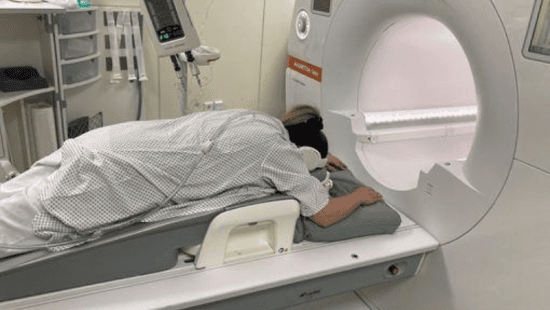

A new study found that breast MRI detects more early-stage cancers but also leads to more false alarms. Here’s what women should understand before considering additional screening.
A breast MRI can detect cancers that a mammogram misses. But getting a more sensitive test isn’t automatically the better choice for every woman.
A study published November 6 in JAMA Network Open found that MRI screening detected substantially more early-stage breast cancers than mammography alone. It also produced far more false-positive results and biopsy recommendations.
Researchers did not find an overall reduction in advanced breast cancer rates with MRI compared with mammography. That doesn’t mean MRI offers no benefit. It means the advantages of additional screening depend on a woman’s risk and the evidence supporting its use.
For patients, the important question is not simply which test finds more cancers. It’s whether additional screening is likely to help them.
What the study actually found
Researchers led by Karla Kerlikowske of the University of California, San Francisco, analyzed 172,865 screening examinations involving more than 105,000 women ages 40 to 74.
They compared mammography alone with MRI screening, sometimes accompanied by mammography, and evaluated results according to predicted risk of advanced breast cancer.
Among women classified as having intermediate-to-high advanced-cancer risk, MRI detected approximately 10 early-stage invasive cancers per 1,000 examinations, compared with about three for mammography alone.
But MRI also generated approximately 94 false-positive biopsy recommendations per 1,000 examinations, compared with 18 for mammography.
A false-positive recommendation means imaging raised concern about cancer that was not ultimately found. It does not necessarily mean a biopsy was performed.
The study also found fewer advanced cancers among women receiving subsequent MRIs than among those undergoing their first MRI. Because the research was observational, it cannot establish that repeated MRI screening caused that difference.
The findings do not overturn existing recommendations for women at high risk, and they should not be used to discourage medically recommended screening.
Who needs more than a mammogram?
For most women, mammography remains the standard screening test.
As Parriva previously reported when federal recommendations changed, the U.S. Preventive Services Task Force recommends mammograms every two years for women ages 40 through 74.
Women at substantially higher risk may need additional imaging.
The American Cancer Society recommends annual MRI along with mammography for certain high-risk women, generally beginning around age 30. This includes some women with inherited genetic changes or an estimated lifetime breast cancer risk of approximately 20% to 25% or greater.
Doctors assess risk using factors such as family history, inherited genetic variants, age, breast density and previous biopsy findings.
Those distinctions are increasingly relevant as breast cancer diagnoses have risen among younger women, although rising incidence alone does not mean everyone needs MRI screening.
Breast density can complicate the decision. Dense tissue makes cancers harder to see on mammograms and is associated with increased risk. But federal experts say there is insufficient evidence to recommend for or against supplemental MRI solely because a woman has dense breasts and an otherwise negative mammogram.
One more distinction matters: the new study used a model predicting advanced breast cancer risk over six years. Some clinical recommendations use lifetime breast cancer risk. Those percentages are not interchangeable.
What happens after an abnormal result?
An abnormal screening result does not mean a patient has cancer.
A radiologist may request additional mammogram images, an ultrasound or another diagnostic test. If an area remains suspicious, a biopsy may be recommended to examine tissue.
More intensive screening can lead to more appointments, uncertainty and procedures that ultimately find no cancer.
That doesn’t make appropriate follow-up unnecessary. It means patients should understand why further testing is recommended and what doctors hope to learn from it.
Access also matters. Earlier Parriva coverage of missed mammograms described how transportation, costs and other practical barriers can interfere with routine screening.
For California patients considering supplemental MRI, insurance coverage depends on the plan, medical indication and applicable requirements. A referral or prior authorization may be necessary. Patients should confirm coverage and potential costs with their insurer and imaging provider.
Five questions to ask before additional screening
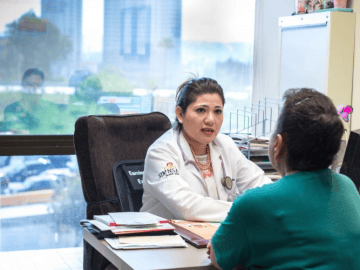
A conversation with a clinician can begin with a few specific questions:
- What is my estimated breast cancer risk, and how was it calculated?
- Does my family history or breast density change my screening recommendation?
- Would MRI provide a meaningful additional benefit for me?
- What happens if the test produces a suspicious result?
- If MRI is recommended, where can I get it, and what will my insurance cover?
The new research offers a clearer picture of the trade-offs between finding more cancers and generating more false alarms. It does not provide a single screening answer for every woman.
The most useful next step is to understand your personal risk and discuss a screening plan with a qualified clinician—not change your schedule based on one study.