Mexican historian Lorenzo Meyer examines Trump’s pressure on Mexico, Sheinbaum’s response, the rise of the political right, and what the U.S. midterm elections could mean for relations between the two countries.
Like the rest of the world, Mexico was closely following the approach of the general elections known as the midterms. More than an election was at stake: the future of relations between the United States and Mexico, the war in Iran and, practically, the geopolitical shift that President Donald Trump had pushed during his first years in office. Mexico had taken heavy blows since the start of his second term.
“Mexico has always held a position of weakness in relation to the United States. We have to understand that there is an international structure and Mexico is inside it, with the great imperial power as its neighbor. Mexico is the weak party; it has its sovereignty, but with limits,” said Lorenzo Meyer, a prominent Mexican historian, political scientist and academic known for his research on Mexican political history, democracy and relations between Mexico and the United States.
In this interview, Meyer discussed relations between the two countries, Trumpism’s attacks on Mexico, U.S. interference in the Mexican electoral process and what he saw as the advance of the far right. For him, one point in Mexico’s favor was President Claudia Sheinbaum, who had managed to negotiate with Trump without submitting and had maintained an impeccable profile despite all the pressure the country had faced.
“We have a historical situation that nothing can change; it is very difficult. All empires have well-defined interests, and nothing changes. Their rulers are sometimes less voracious, at other times more voracious. We have had to face Trump in a second term, a ruler with an unworthy, insolent, racist discourse who made Mexico his enemy from the moment he came to power. It is easy to explain: he seeks to please his base, white, middle and lower-middle-class people who do not sympathize with immigrants,” Meyer said.
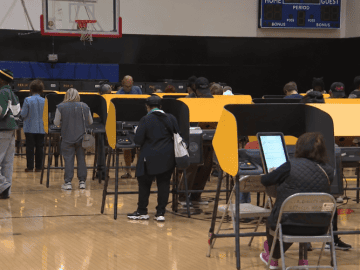
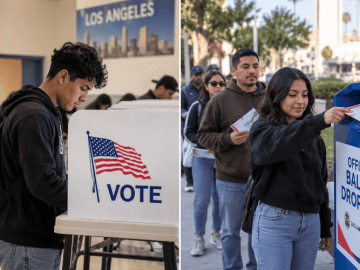
The U.S. electorate delivered a decisive rebuke to President Donald Trump and the Republican Party in Tuesday’s midterm elections, handing Democrats control of both the House of Representatives and the Senate. The results marked a major political setback for Trump, as Democrats made significant gains across the country, flipping traditionally Republican seats and breaking the party’s control of Congress. Voters expressed frustration over rising living costs, the war in Iran, and concerns about corruption and the administration’s policies. The Democratic victory was widely seen as a rejection of Trump’s second-term agenda and signaled a new period of congressional opposition to his administration.
The Trump administration had intensely attacked Mexico over nearly two years on several fronts: economic, political, migratory, and military. President Claudia Sheinbaum had faced each attack with intelligence, according to Meyer, negotiating with Trump but on her own terms.
“We have a president with a very rational personality; she is impeccability personified. She has done it very well; she has not bent. Sometimes I think about everything she faces, the wear and tear. She has responded to Trump on her own terms,” added Meyer, who was a professor emeritus at El Colegio de México and had written extensively about political power, authoritarianism and the influence of the United States on Mexican sovereignty and foreign policy.
In recent months, right-wing and conservative candidates had gained ground across Latin America. Argentina, Panama, Bolivia, Chile, Honduras, Colombia and Peru stood out for recent electoral shifts to the right, while Ecuador, El Salvador and Paraguay illustrated the continuity of governments of that orientation. The runoffs in Peru and Colombia, held in June, had both been decided by narrow margins. In Brazil, President Luiz Inácio Lula da Silva secured reelection on Oct. 25, defeating right-wing Sen. Flávio Bolsonaro in a closely contested runoff. Lula won 51.79 percent of the valid votes, compared with Bolsonaro’s 48.21 percent, reversing the first-round results, in which Bolsonaro had finished ahead with 47.03 percent against Lula’s 45.16 percent. The victory gave Lula a fourth, nonconsecutive presidential term and marked a significant moment for the political balance in Latin America. Bolsonaro refused to recognize the defeat and announced plans to challenge the results.
“It is logical that the United States has an interest in Mexico. Trump is far right, Mexico is a dissident, but an important one, and that bothers the United States. That is why there is interference ahead of the 2027 elections, the accusations of a narco government, the uncontrolled violence, and the corruption, which sounds ironic. All the corruption under the Trump government, and they accuse us of being corrupt. In Trumpist rhetoric, that does not figure. It does not talk about arms trafficking or drug consumption in their own country; everything that happens in Mexico cannot be explained without the United States,” the political scientist added.
However, Meyer said he was not worried about the advance of what he called the far right. He said it would be inconceivable for it to reach Mexico, pointing to the historical fact that Mexicans had always had an aversion to being placed alongside the United States, which he considered relevant. Mexico had a history, even a military one, that set it apart from other countries on the continent.
“The United States is not going to invade Mexico; it is not in its interest to have a bad relationship. It attacks Mexico verbally and accuses it, but that is as far as it goes. There is hope for Mexico; not everything is lost. At this moment, the United States has many open fronts, and Mexico has only one, with the United States. We are distrustful of the United States. I do not believe that in the 2027 elections in Mexico the ruling party will be defeated. There may be interference; I do not deny it, and the right has U.S. support, but the Mexican right has no leader and no platform. They can keep repeating that Morena is a narco government, but they will never be able to say, much less assert, that [President] Claudia has ties to the narco or is corrupt. We were on pause; the world was on pause for the midterm elections, but let’s not expect a drastic change; we Mexicans will always be on the defensive,” he said.
Despite this gray panorama, so to speak, Meyer did not see everything as bad.
“We have the opportunity to build a good scenario, an effective government, not corrupt, that has the support of Mexican society and defends the interests of Mexicans. I repeat, we are not Iran, nor do we have the Strait of Hormuz. It is only us,” he concluded.