New Caltech research reveals how lead and other toxic chemicals spread across Los Angeles during the 2025 wildfire. Scientists are still trying to understand what that exposure means for people’s health.
For families who watched smoke drift across Los Angeles during the Eaton Fire, a new study raises a troubling question: What exactly were they breathing?
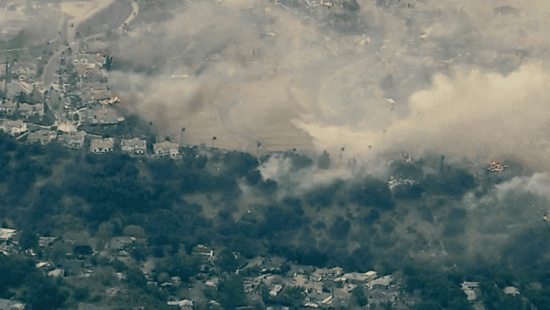
Scientists at Caltech have found that smoke from the January 2025 fire contained unusually high concentrations of lead, arsenic and other potentially harmful substances released as homes, vehicles and buildings burned.
The study, published October 28 in Science Advances, estimates that nearly seven million people across metropolitan Los Angeles experienced elevated outdoor lead concentrations during the fire’s most intense period.
That includes people who lived miles from the flames.
But the finding does not mean seven million people suffered lead poisoning. Researchers measured pollution in the air and estimated how widely it spread. They did not determine how much lead individual residents inhaled or whether anyone became ill because of that exposure.
For families still concerned about the fire’s effects, understanding that difference matters.
Why the Eaton Fire smoke was different
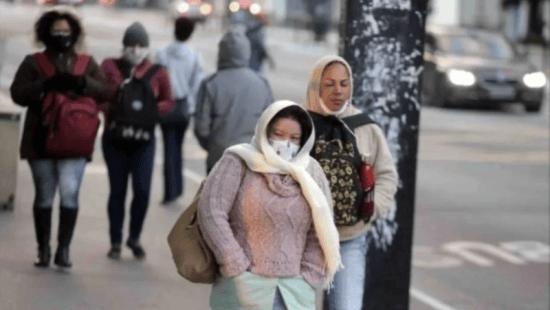
Most people know wildfire smoke can make breathing difficult, particularly for children, older adults and people with asthma or heart conditions.
But when a fire sweeps through neighborhoods, it burns much more than trees and brush.
Homes contain paint, electronics, furniture, plastics and other materials that can release hazardous chemicals when they burn. Vehicles and building materials add to that mixture.
Caltech researchers compared smoke from the Eaton Fire with smoke from the 2024 Airport Fire, which burned mostly vegetation.
The difference was striking.
The Eaton Fire plume contained more than 50 times as much lead, three times as much arsenic and seven times as much chlorine and bromine as the comparison wildfire plume.
Scientists tracked these chemicals using specialized air-monitoring equipment in Pico Rivera, about 11 miles south of Altadena.
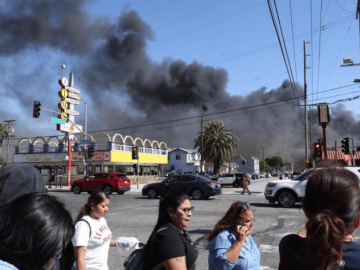
Lead concentrations rose sharply across eastern Los Angeles and the San Gabriel Valley on January 8 and 9, 2025, when burning structures contributed heavily to the smoke.
At the peak, researchers estimated that nearly seven million residents experienced outdoor lead concentrations more than 80 times typical background levels over a 24-hour period.
“Smoke travels; it’s not just about the burn area,” said Haroula Baliaka, the study’s lead author.
Her observation captures why the findings matter beyond Altadena. A family did not have to lose its home or live near the flames to encounter pollution from the fire.
What does that exposure mean for your health?
Lead is especially concerning for young children because it can affect brain development, learning and behavior.
The Centers for Disease Control and Prevention says no safe blood lead level has been identified in children. Exposure can also contribute to high blood pressure and kidney problems in adults.
Arsenic carries different risks, including an increased risk of certain cancers with particular types and patterns of exposure.
Still, knowing that a substance is dangerous does not tell scientists what happened to someone who breathed it for a day.
Health effects depend on how much entered the body, how long exposure lasted and individual circumstances.
The Caltech study measured airborne pollution, not lead in people’s blood. It cannot establish whether an individual developed a medical condition or predict that person’s future health.
Researchers are still investigating what brief but intense exposure to several toxic chemicals at once might mean.
There is another important distinction. Smoke exposure during the fire is different from ongoing contact with contaminated soil, ash or household dust.
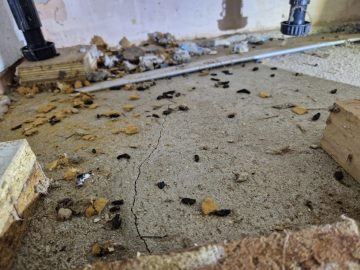
Those materials can remain after the smoke clears and may create additional exposure pathways.
Los Angeles County has separately documented concerns about wildfire contamination, particularly near burned structures.
The physical-health findings also add to a broader picture of wildfire recovery. According to a UCLA survey, nearly one in three Los Angeles County adults who experienced wildfires reported harm to their mental health. That survey measured a different health outcome and did not establish effects from toxic metals.
Together, the research shows why the consequences of a major fire cannot be measured only by buildings destroyed.
What Los Angeles families should know now
For residents worried about possible exposure, the practical questions are whether hazardous materials remain in their surroundings and whether medical testing is appropriate.
The Los Angeles County wildfire recovery website provides several resources:
- Blood lead testing: Families concerned about exposure, particularly those with young children, can ask a healthcare provider whether testing is appropriate. The county also offers free testing appointments through Quest Labs at 1-800-LA-4-LEAD.
- Soil contamination: Residents concerned about lead in their yards can review county guidance and information about the USC CLEAN Project. The county’s original free soil-testing program ended in July 2026.
- Ash and household dust: Residents who suspect lingering contamination should follow county cleanup guidance and avoid disturbing potentially hazardous materials without appropriate precautions.
A blood lead test can help identify current exposure concerns, but testing now cannot reliably reconstruct exactly how much lead someone inhaled during the January 2025 fire.
For additional guidance, residents can contact Los Angeles County environmental health specialists at 626-430-9821.
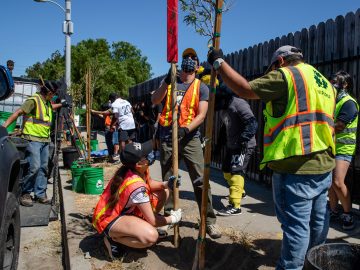
The findings also raise concerns for people who work around wildfire debris and damaged buildings. Parriva reported on the day laborers helping fire-affected communities in January 2025. Cleanup and rebuilding workers may face exposure risks distinct from those associated with breathing the original smoke plume.
The Caltech research points to a larger challenge for Los Angeles.
Traditional air-quality measurements can warn residents about dangerous particles without fully identifying the chemicals those particles contain. The new findings could help scientists improve pollution monitoring and emergency warnings when future fires reach populated neighborhoods.
For families, the message is important but measured: The Eaton Fire spread toxic metals across a much larger area than the neighborhoods it destroyed. Scientists now understand more about that exposure, but they do not yet know its full health consequences.
That knowledge gap is crutial, especially in a region where another wildfire could bring the same danger to a different community.