New UCLA research reveals the emotional toll of wildfire exposure in Los Angeles County as fresh fires bring renewed attention to the health effects that can linger after the flames are gone.
As new fires burn across Southern California, a UCLA survey is putting numbers to a consequence of wildfires that is harder to see: the toll on mental health.
Nearly one in three Los Angeles County adults who experienced wildfires reported that their mental health was harmed, according to newly released findings from the 2025 California Health Interview Survey.
The figure, 30.3%, compares with 21.8% of wildfire-exposed adults statewide.
The findings arrive as communities across the region confront renewed wildfire threats. In Malibu, the Bryson Fire prompted evacuations before Los Angeles County lifted evacuation orders and warnings on October 17.
The current fires were not included in the 2025 survey. But they underscore a concern for residents who have already lived through a disaster: The danger may pass, while the stress and uncertainty remain.
Wildfire exposure has risen sharply in Los Angeles
The survey findings released October 15 by UCLA’s Center for Health Policy Research show how dramatically wildfire exposure has increased.
Nearly 30% of Los Angeles County adults, approximately 2.3 million people, reported that they or someone in their household personally experienced wildfires during the previous two years.
In the 2024 survey, that figure was 6.6%, or approximately 503,000 adults.
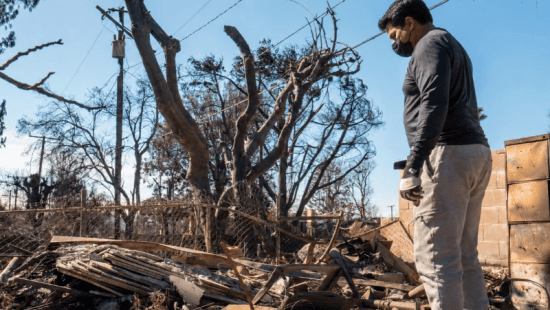
The increase follows the devastating January 2025 Eaton and Palisades fires, which destroyed homes, displaced families and disrupted communities in Altadena and Pacific Palisades.
Across California, approximately 6.5 million adults reported household wildfire exposure in the 2025 survey, up from 2.9 million in 2024.
The reported mental-health impact also grew.
Among California adults who experienced wildfires, the share reporting mental-health harm increased from 17.2% in the 2024 survey to 21.8% in 2025.
Because more people experienced wildfires, the estimated number reporting mental-health harm rose even more sharply, from 506,000 to 1.4 million.
Wildfire smoke was another concern. An estimated 2.1 million California adults reported that smoke from wildfires had harmed their mental health during the previous two years, compared with 1.6 million in the 2024 survey.
Those figures measure different experiences. Wildfire exposure and smoke exposure should not be treated as interchangeable, and their totals cannot simply be added together.
The survey also has limits. It measures self-reported harm, not clinical diagnoses, and the published findings do not establish why Los Angeles County’s percentage is higher than the statewide figure or whether the difference is statistically significant.
Why the emotional toll can last beyond the fire
A wildfire can change daily life in a matter of hours.
Families may have to leave home without knowing when they can return. Children may miss school. Workers may lose income. Residents can spend days worrying about relatives, pets, property or whether another evacuation will be necessary.
Those experiences can affect mental health even after the immediate emergency has ended.
According to the Substance Abuse and Mental Health Services Administration, common emotional responses to wildfires include persistent worry, anxiety, difficulty sleeping and recurring memories or nightmares.
The agency also explains that reminders of a previous disaster, including emergency sirens, can bring back fear and distress.
Not everyone experiencing these reactions has a mental-health disorder. Many people recover with time and support. Others may experience symptoms that last for weeks or months and interfere with work, school, relationships or everyday activities.
The American Psychological Association’s wildfire recovery guidance also describes how smoke, ash and other reminders can trigger emotional reactions.
Los Angeles has already seen how health concerns can continue after a different kind of fire. In its reporting on the Boyle Heights warehouse fire, Parriva reviewed a community health report documenting respiratory problems, eye conditions and anxiety-related concerns among patients seeking care.
That incident was not a wildfire, and its findings cannot be used to establish the psychological effects of the Eaton or Palisades fires. But it illustrates why the health consequences of major fires can extend beyond the emergency response.
For residents facing another wildfire season, the UCLA findings raise an important question: Are people receiving the mental-health support they need as they recover?
The survey’s published results do not answer that question or establish whether Latino residents, lower-income households or other demographic groups experienced greater mental-health harm.
Where to get mental-health help in Los Angeles
Residents experiencing anxiety, sleep problems, persistent distress or other emotional difficulties after a wildfire have several options for support.
The Los Angeles County Department of Mental Health provides a 24-hour multilingual help line at 800-854-7771. Residents can receive screening, crisis counseling and referrals to mental-health services.
The county also operates a Fire Support Line at 833-659-0600 for people experiencing mental-health challenges related to wildfires.
Anyone experiencing emotional distress or a mental-health crisis can call or text 988, the national Suicide & Crisis Lifeline. Spanish-language assistance is available.
The Disaster Distress Helpline also provides support for people affected by natural disasters at 800-985-5990.
Parents and caregivers can watch for changes in children’s sleep, behavior, mood or willingness to attend school. The county’s disaster-resource page includes information for families and materials in Spanish and other languages.
As Southern California faces new wildfire threats, the UCLA findings offer a reminder that recovery is not measured only by acres burned, buildings destroyed or evacuation orders lifted.
For many residents, the effects can continue long after the fire is out. Recognizing those less visible consequences is part of understanding what recovery really means.