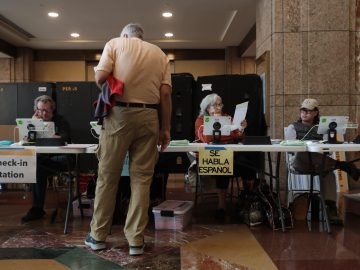
A $35,000 employee buyout program is part of a broader effort to close a $233.7 million funding gap, but the court says staffing cuts will bring longer waits and slower service.
The Los Angeles County Superior Court just offered $35,000 buyouts to staff as it faces a $233.7 million funding shortfall, and the service delays that follow could land unevenly on the very population that already struggles most to be served: the county’s Spanish-speaking majority.
What’s Happening
The Los Angeles County Superior Court announced a Voluntary Separation Incentive Program on September 18 to give court employees the option to leave court service as part of an effort to reduce staff positions and lower expenses amid ongoing budgetary constraints. The court will offer a $35,000 payment to current full-time employees with five or more years of continuous service who elect to resign. Vacated positions will be eliminated outright, in an effort to produce budget savings rather than one-time relief, the court said in a statement.
Court users should expect reduced or delayed service due to the staffing reductions and other operational cuts, including longer wait times at service windows, slower call center response, and delays in legal document processing. “Just as Los Angeles County residents are struggling to keep pace with rising gas and grocery prices, the court finds itself in a similar bind; our operational costs continue to outpace our budget resources,” said Presiding Judge Sergio C. Tapia II. “We are grateful to our partners in the executive and legislative branches, but the reality is that funding has not kept pace, and the court must responsibly weather this budget storm through difficult decisions like the VSIP.”
The shortfall behind this move is severe. The court is underfunded by $233.7 million compared to what it needs to process 1.3 million annual filings, with the current state budget leaving funding at just 76.77 percent of calculated need, the lowest level since 2021. This isn’t the court’s first time using this tool either; a 2024 VSIP, triggered by a $30.3 million cut in state trial court funding, produced roughly $4 million in ongoing annual savings.
Why This Could Hit Spanish Speakers Hardest
Spanish is, by a wide margin, the most requested language in California’s court system. In fiscal year 2022-23, Spanish accounted for 377,070 interpreted events statewide, more than any other language, yet only 1,310 Spanish interpreters were available to meet that demand, a gap that already existed before any new staffing cuts.
That gap isn’t new to Los Angeles specifically, and it comes with real legal history attached. The U.S. Department of Justice investigated LA County Superior Court after the Legal Aid Foundation accused it in 2010 of discriminating against people based on national origin by failing to offer the language assistance they needed to seek justice. The court eventually reached a compliance agreement requiring it to monitor complaints and offer free interpretation for all proceedings. The stakes of that agreement are significant given the county’s demographics: according to U.S. Census Bureau data, nearly 57 percent of Los Angeles County residents speak a language other than English at home, and almost 26 percent speak English “less than very well.”
That history is exactly what makes the current moment worth watching closely. If the service delays the court itself is warning about- slower clerk windows, slower call centers, delayed document processing, as expected- the population that already relies most heavily on language access services, overwhelmingly Spanish-speaking, could feel that slowdown more acutely than English-speaking court users, precisely within a system that was legally found lacking on this exact issue before.
A Broader Pattern Beyond the Courts
This isn’t happening in isolation. Separate reporting from LanguageLine has found that federal budget cuts have already led to layoffs of community health workers in California who specialize in helping non-English speakers enroll in insurance and navigate care. Requests for interpretation services in some sectors are actually down, not because need has dropped, but because of rising fear among immigrant communities about accessing services at all. As one language access advocate put it, “we’re hearing from interpreters who are receiving fewer calls, not because the population is shrinking, but because individuals no longer feel safe accessing services.”
Taken together, that suggests limited English proficient communities in California, and Spanish-speaking communities in particular, are probably facing reduced institutional support on multiple fronts simultaneously, not just budget-driven service slowdowns in the courts, but a broader climate that may already be discouraging people from seeking the help they’re legally entitled to.
What’s Still Unclear
One important caveat: no source confirms that the 2026 VSIP will directly affect the court’s Spanish-language interpreters or bilingual staff specifically. Certified court interpreters are often classified differently from general administrative employees, sometimes as independent contractors rather than staff eligible for this kind of buyout, so it isn’t yet clear whether language access positions are among those at risk of being eliminated outright under this program.
The Los Angeles Superior Court has been explicit that this round of cuts will mean real, felt delays for the public. Given the county’s demographics, and given that this exact court already has a documented history of struggling to serve non-English speakers adequately, the question worth watching in the months ahead is whether the burden of a leaner, slower court system falls evenly across Los Angeles County, or whether it lands hardest on the Spanish-speaking majority the court already had to be pushed, legally, to serve fully. For more immigration topics visit parriva’s immigration section.