For many owners, closing a business can mean losing far more than income. It can disrupt identity, routine, relationships and a sense of purpose at a time when the pressures pushing small businesses to the edge are already taking a toll.
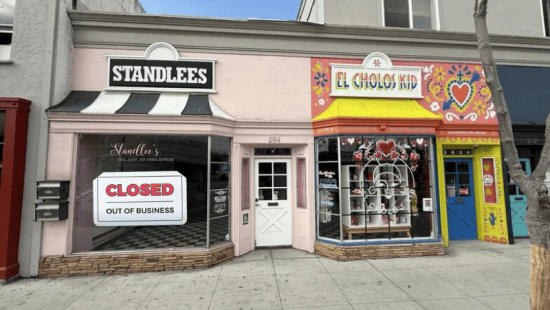
A storefront can close in one day. The person who built it may need much longer to understand what was lost.
For a business owner, a company can become more than a way to make money. It can become a daily routine, a source of pride, a connection to customers and neighbors, and a major part of how someone understands their own identity.
That is why closing a business can carry an emotional cost that does not show up on a balance sheet.
Research on entrepreneurial failure has documented psychological, social and financial consequences after a business fails. Grief can be one of those responses, although researchers also caution that people experience failure differently and do not all follow the same emotional path.
For Los Angeles entrepreneurs, those pressures are not happening in isolation.
A July 2026 study from the UCLA Latino Policy and Politics Institute examined the effects of immigration enforcement on small businesses and Latino entrepreneurs in Los Angeles County.
The report found evidence of significant economic disruption around enforcement sites and documented continuing financial and personal consequences reported by Latino entrepreneurs.
The study estimated that businesses near nine enforcement sites experienced about 46,000 fewer visits and $3.16 million in accumulated losses within two weeks of the June 2025 enforcement surge.
The research also found that the effects extended beyond revenue.
Nearly a year later, entrepreneurs interviewed for the study described continuing financial, psychological and physical consequences.
For small-business owners already operating with thin margins, another disruption can make an already difficult decision even harder.
The Federal Reserve’s 2026 report on employer firms found that rising costs of goods, services and wages were the most commonly reported financial challenge among surveyed small businesses. More than four in 10 also reported tariff-related costs as a financial challenge.
The survey also found that 60% of businesses applied for financing, but among applicants, only 42% received the full amount they sought.
These pressures do not mean every struggling business will close. But they help explain why a decision to close can come after months or years of stress.
Sometimes the owner already knows what closing would mean
Parriva has documented that fear among local business owners.
When Margarita López spoke with Parriva about her flower shop in El Monte, she described a business she and her husband had operated for 25 years.
For roughly two years, she said, they had barely been able to cover expenses.
“When we can’t even make rent, we’ll have to close.”
She also described what the business meant to her personally.
“Now, being in the flower shop makes me happy.”
And she understood that the possibility of closing was about more than losing a source of income.
“What was all that effort, all that work, all that time dedicated for?”
Her story was published before the current moment, but the question remains relevant to any owner facing the possibility of shutting down.
A business can also carry responsibilities that make closure emotionally complicated.
Elizabeth Mendoza, who built La Ceiba Restaurant and Pupusería, told Parriva that her greatest concern was not getting rich.
“If I can cover the salaries of my 18 workers and the operating costs of the restaurants, I feel happy.”
What worried her most, she said, were her workers.
For owners like Mendoza, closing a business can therefore feel like more than a personal financial decision. Employees, customers, family members and the surrounding community can all be part of the calculation.
Why business failure can feel like grief
Researchers studying entrepreneurial failure have found that the emotional aftermath can include grief, regret, disappointment, frustration, shame, anger, guilt and depression.
But there is an important distinction: business failure does not produce the same emotional response in everyone.
A systematic review of research on entrepreneurial learning from failure found that emotional responses vary depending on factors including the entrepreneur’s experience, age, sense of responsibility, resilience and social environment.
Some people struggle deeply. Others recover more quickly. Some use the experience to reconsider what they want to do next.
Another study examining small-business owners during the COVID-19 crisis found that business closure could produce a grief response. Researchers also acknowledged limitations in applying traditional stage-based grief models to business loss.
The broader research therefore supports a more careful conclusion:
Closing a business can be a genuine form of loss. But there is no single emotional timeline for recovering from it.
Closing a business does not mean the person failed
One of the hardest parts of business closure can be separating the end of a company from the identity of the person who built it.
An owner may have spent years introducing themselves through their business.
They were the restaurant owner.
The florist.
The contractor.
The shopkeeper.
The person customers called when they needed something.
When the doors close, that identity can suddenly disappear from everyday life.
That does not mean the skills, relationships or experience disappear with it.
Josue Calderón knows what that transition can feel like.
During the pandemic, Calderón had to close his South Central Los Angeles business. He later told Parriva that he fell into depression and experienced anxiety attacks as everything he had worked for seemed to come crashing down.
He eventually rebuilt and now owns two businesses in South Central.
“I wanted to be stable, opening a business was what I needed.”
He also described how deeply the business had become connected to his community.
“I love my business, my community, so much.”
Read Josue Calderón’s story of closing, rebuilding and returning to business
His experience is not evidence that every owner will recover in the same way.
It is evidence of something more specific: closure can be a painful interruption, not necessarily the end of an entrepreneur’s working life.
For some owners, recovery may mean opening another business.
For others, it may mean returning to employment, starting a smaller operation, changing industries, pursuing another skill or simply taking time to recover.
After moving her business, Skin By Marcela, she maintained relationships with existing clients while developing additional income streams. She also returned temporarily to radio and explored online projects and crafts.
Her approach was not to assume there was only one path forward.
“We have to open ourselves to all possibilities.”
That may be an important distinction after closure.
The goal does not necessarily have to be replacing the old business with an identical new one.
It may be rebuilding a life in which the skills, relationships and lessons from the business still have a place.
What can an owner do after closing?
There is no universal recovery plan, but the research and experiences of business owners point toward several practical questions.
Name what was actually lost.
It may be money. It may also be routine, identity, relationships, independence, status or a sense of purpose. Recognizing those losses can make the emotional reaction easier to understand.
Separate the business from the person.
A business can fail without making the person who owned it a failure. The skills used to build a company; selling, managing people, solving problems, serving customers and adapting remain with the owner.
Stay connected to people.
Isolation can make a difficult transition harder. Former customers, employees, family members, friends, professional contacts and other business owners can provide perspective and practical support.
Give yourself time before deciding what comes next.
Not every decision has to be made immediately. Recovery and reinvention can take different amounts of time for different people.
Consider professional support if the distress becomes overwhelming.
Persistent depression, severe anxiety, inability to function, or thoughts of self-harm should not be treated simply as the normal cost of business failure. Those situations call for professional help.
What the evidence can tell us
Research supports the idea that business failure and closure can create meaningful psychological and social loss.
It also shows that the experience varies.
Some owners experience grief, shame, anxiety or depression. Others describe relief, learning, resilience or a renewed sense of direction. Many experience several of these emotions at different times.
What matters is not assuming that every owner follows the same path.
The available research cannot establish that every business closure causes a mental-health crisis.
It cannot establish a universal number of months or years required to recover emotionally.
And it cannot establish that closing a business is psychologically identical to losing a loved one or experiencing another major life event.
Those comparisons can be emotionally understandable, but the evidence supports a narrower conclusion: business closure can involve a significant and complicated form of personal loss.
For Los Angeles entrepreneurs already dealing with rising costs, financing challenges, changing consumer behavior and, for some Latino business owners, the effects of immigration enforcement, that loss can come after a long period of accumulated pressure.
A business may close in a single day.
The person who built it does not.
And sometimes, understanding what was lost is the first step toward understanding what can come next.