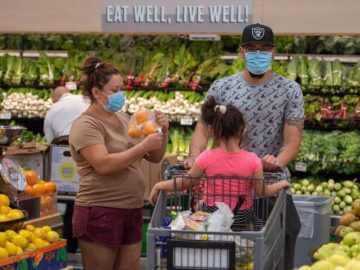
A new GAO report finds millions of adults receiving SNAP or Medicaid already work, including many full-time workers, as California enforces new CalFresh work requirements.
They work. They drive. They deliver food, prepare meals, stock stores and keep an increasingly service-based economy moving.
Yet having a job does not necessarily mean having enough money to cover the basics.
A new report from the U.S. Government Accountability Office puts numbers behind that contradiction. GAO found that 10.6 million adults living in households receiving SNAP worked at some point in 2024. Another 13.8 million adults enrolled in Medicaid worked during the year. About two-thirds of working adults in both groups worked full time.
The finding complicates a common assumption about public assistance: that people receiving food or health benefits are primarily people who are not working.
Many are working. Some are working full time.
California is now asking some recipients to prove they are working
The issue takes on added importance in California because new CalFresh work and community-engagement requirements began taking effect June 1, 2026.
The rules apply to certain adults, not every CalFresh recipient. People subject to the federal requirement generally can satisfy it by working an average of 20 hours a week or earning at least $217.50 a week before taxes. Other qualifying activities and exemptions can also apply.
The question for California is not simply whether people receiving food assistance should work.
The GAO data shows that millions already do.
The more difficult question is what additional work requirements accomplish when employment itself does not necessarily provide enough economic security to eliminate the need for assistance.
For Californians trying to understand whether the new rules apply to them, the California Department of Social Services’ CalFresh work-requirement information provides the official eligibility, exemption and qualifying-activity rules.
A job does not always equal economic security
GAO found that working adults receiving SNAP and Medicaid were concentrated in occupations including food preparation and serving, transportation, sales, office support and health-care support.
Those are jobs that keep communities functioning, but many can come with relatively low wages, unpredictable schedules or limited benefits.
That is where the story becomes bigger than SNAP.
A person can be working 20 hours a week and still struggle to afford groceries. Another can work full time and still face health-care costs that make Medicaid important to the household.
Parriva has previously reviewed this broader problem in its reporting on working families and the growing number of households relying on two incomes, as well as the limits of SNAP benefits in covering even a low-cost meal in much of the country.
The new GAO findings add another piece to that picture: employment and economic security are not the same thing.
But do work requirements actually increase work?
That is the policy question California now has to watch.
Supporters of work requirements argue that they can encourage people to enter the workforce, increase independence and reduce long-term reliance on public assistance.
But losing food assistance is not the same thing as becoming economically secure.
A 2026 Census Bureau working paper examining SNAP work requirements in several states found that the requirements reduced SNAP participation but did not increase labor supply in the study period. The research is still a working paper, not a final consensus on California’s program, but it illustrates why the effects of work requirements need to be measured by more than how many people leave the program.
California’s experience will provide another test.
The state’s Legislative Analyst’s Office estimates that, after exemptions, roughly 845,000 Californians could become subject to the expanded CalFresh work requirement.
The important questions will be whether those Californians find more stable employment, whether household earnings rise, whether food insecurity changes—and how many people simply lose benefits.
The gig economy adds another complication
California’s app-based economy makes the definition of work even more complicated.
Under Proposition 22, qualifying drivers and delivery workers for companies such as Uber, Lyft and DoorDash are generally treated as independent contractors rather than employees. The system provides certain earnings and health-related protections while maintaining the independent-contractor model.
But the GAO report does not establish how many Uber, Lyft, DoorDash or other California gig workers receive SNAP or Medicaid.
The better takeaway is that California has created a labor market in which some people work through multiple platforms, have fluctuating schedules and operate outside traditional employment structures.
Parriva’s reporting on Uber layoffs and Latino workers has examined how changes in the app-based economy can affect workers and their households.
Why this matters for Latino families
The Latino connection to this story should not be reduced to a claim about who receives public assistance.
Latino identity does not explain why someone needs CalFresh or Medicaid.
The more relevant question is how California’s changing rules affect working families in occupations such as transportation, food service, retail, delivery and other sectors where schedules and incomes can fluctuate.
For families already balancing rent, food, transportation, child care and health-care costs, a change in eligibility can have consequences even when someone remains employed.
That makes the new CalFresh rules a practical issue; not simply a debate over welfare policy.
The question California now has to answer
The GAO report establishes something important: millions of adults receiving food or health assistance are already working, and many work full time.
California’s new rules establish something else: some recipients must now demonstrate work or qualifying activity to maintain CalFresh benefits.
Those two facts are not necessarily contradictory.
But they raise a question worth watching:
If people are already working, will the new requirements help them achieve greater economic security or mainly determine who remains eligible for assistance?
The answer will depend on what happens next: employment, earnings, benefit participation and household food security.
For the workers at the center of this debate, the distinction is not academic.
Having a job is important. But having a job is not always enough.