Sacramento’s 2026 legislative session is over. Here are the decisions that could eventually affect California families, workers, consumers and immigrant communities — and what still has to happen before they become law.
California lawmakers spent their final days of the 2025-26 legislative session making decisions that could affect how much residents pay for electricity, how renters access solar power, how the state handles wildfire recovery and how consumers are protected from powerful companies.
But there is an important distinction: a bill passing the Legislature does not automatically make it a law. Measures now go to Gov. Gavin Newsom, who can sign or veto them. Some can also become law without his signature.
The Legislature’s Aug. 31 deadline marked the end of lawmakers’ opportunity to pass bills this session. California legislative calendar
For Californians, the more useful question is not how many bills lawmakers passed.
It is: What could actually change in your life?
Your electricity bill could be affected
One of the biggest fights of the final weeks centered on California’s growing data-center industry.
Lawmakers approved SB 1168, which directs the California Public Utilities Commission to examine the enormous amount of electricity data centers use and establish protections against their costs being shifted onto other ratepayers. The measure passed both chambers and is headed to the governor.
That matters because data centers require enormous amounts of electricity and can require utilities to build new infrastructure.
The debate is essentially about who should pay for that growth: the companies driving the demand or ordinary utility customers.
Another set of bills could affect renters more directly.
AB 1813 would expand community-solar opportunities, while SB 868 would allow certified plug-in or “balcony” solar systems. Both are now on the governor’s desk. The measures could give renters and people who cannot install traditional rooftop solar another way to generate electricity or participate in solar programs.
There is still a debate over costs. Utilities and consumer advocates have warned that some community-solar structures could shift expenses onto customers who do not participate.
So the promise is not simply “solar will lower your bill.”
The real question is whether these programs can expand access without raising costs for other customers.
Wildfire survivors are still waiting for the final answer
California’s wildfire legislation became one of the most consequential fights of the session.
SB 492, a compromise backed by legislative leaders and the governor, focuses on wildfire preparedness, survivor recovery, accountability and insurance-related reforms. Insurance Commissioner Ricardo Lara said the legislation could improve resilience and insurance availability while acknowledging that more work remains.
But wildfire survivors are divided over whether the compromise goes far enough.
Some survivor advocates say the deal protects important legal rights and improves recovery tools. Others argue it does not provide enough direct help for communities such as Altadena that were devastated by the Eaton Fire.
That disagreement matters because the underlying question remains unresolved:
Who ultimately carries the financial risk when a utility’s equipment causes a catastrophic wildfire?
The final deal did not include all of the liability protections Gov. Newsom had sought for utilities. That has already triggered concern among utility investors about future wildfire costs.
For families, however, the issue is much simpler:
Who pays when the next fire destroys a home — and will survivors be able to recover quickly enough to rebuild?
Parriva has been following California’s wildfire and insurance debates because the consequences extend well beyond Sacramento. The issue affects homeowners, renters, utility customers and entire communities.
Immigrant families could see a new path to challenge federal officers
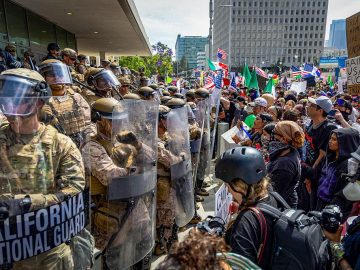
Another major measure is SB 747, which would create a state-court pathway for certain Californians to sue individual federal officers for alleged constitutional violations.
The legislation covers potential violations including unlawful searches, racial profiling, free-speech violations and wrongful death. It has passed both chambers and is awaiting the governor’s decision.
For immigrant communities, the significance is less about the bill number and more about accountability.
If the measure becomes law, certain Californians could have another avenue to seek damages when they allege that federal officers violated their constitutional rights.
That does not mean every immigration-related complaint would automatically result in a lawsuit or that California would control federal immigration policy.
It means the state could create another legal mechanism for addressing certain alleged misconduct.
Parriva has been tracking the rapidly changing immigration-enforcement landscape in California, including how federal enforcement interacts with the state’s sanctuary laws. Parriva’s California immigration coverage
Small businesses could see a different competitive landscape
California lawmakers also sent AB 1776, the COMPETE Act, to the governor.
The bill would expand the state’s ability to challenge certain anti-competitive behavior by dominant companies. Under the final version, enforcement would be handled by public officials rather than creating the broader private right of action that had been proposed earlier.
The potential consequence is significant for small businesses.
Supporters say stronger antitrust enforcement could help smaller companies compete against dominant corporations.
Business groups argue the law could expose companies to costly litigation and punish businesses for legitimately becoming successful.
Parriva previously explained what AB 1776 could mean for small businesses and why supporters and opponents disagree. Parriva’s AB 1776 explainer
What happens now?
This is the part Californians should watch carefully.
Passed by the Legislature does not mean signed into law.
The bills discussed here now move to Gov. Newsom.
Some measures could become law. Others could be vetoed or changed before taking effect.
That means headlines about “new California laws” should be read carefully over the coming weeks.
For Californians, the next important question will be:
Which bills does the governor sign, which does he reject, and when would the new rules actually take effect?
Newsom has already been signing legislation throughout August, including measures affecting schools, housing, workplace rules and other areas.
Parriva will continue tracking those decisions and translating them into what they mean for families, workers, consumers and communities.
Because Sacramento’s work does not really end when lawmakers leave the Capitol.
That’s when Californians begin to feel the consequences.