Forced work to support the family. Grief and disruption from a parent’s deportation. A fading belief that college is even still possible. None of these three pressures are new on their own. What may be new is how many Latino teenagers are now carrying all three at the same time, a combination researchers link to serious mental health risk.
For decades, Latinos in the United States died by suicide at a fraction of the national rate, a pattern researchers called the Hispanic paradox, generally credited to strong family and community support. That protection appears to be eroding, and quickly: suicide among Hispanic children age 12 and under rose 92.3% between 2010 and 2019 nationally, and the national Hispanic suicide rate climbed from 5.7 to 7.9 per 100,000 people between 2011 and 2021. Researchers have not pinned down a single cause for that rise. Three separate, well-documented pressures now landing on Latino teenagers offer a plausible piece of the answer, not because any one of them is new, but because of how often they’re now converging on the same teenager at once, and because that kind of convergence is exactly the pattern mental health researchers associate with rising, not falling, suicide risk.
Pressure one: working to keep the household afloat
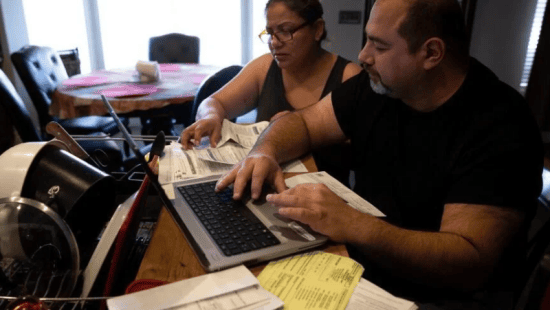
Raquel Zamora, chair of the School Attendance Review Board that tracks students who stop attending Los Angeles Unified School District schools, has described watching this pressure land on kids who are still legally minors. She pointed to two teenagers referred to a local business by a community organization, both of whom left school to help support their households. One saw his parents return to Mexico because of their immigration status. The other had to take over his family’s household expenses because his parents were too afraid of deportation to leave home for work. “This responsibility fell upon them far too soon,” Zamora said. “Many factors are at play: there are many victims of immigration raids, many who have been evicted due to the housing crisis and economic hardships… many have had to take responsibility for their families—they have no other choice.”
Pressure two: grief and instability after a parent is gone
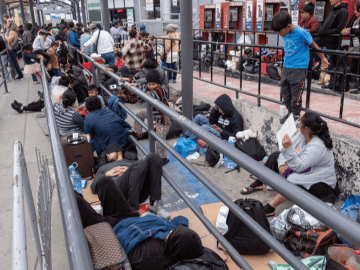
The second pressure often arrives without warning. Dulce Zepeda was 19 when her parents were detained by ICE and deported to Honduras during a family back-to-school shopping trip in August 2025, leaving her responsible for her 13-year-old sister, Maria. For nearly a year afterward, Dulce cooked, drove her sister to school, worked at a local McDonald’s, and sold her mother’s jewelry to help cover bills. “You never know when the last hug that you’re going to have from your parents,” she said. Advocates say roughly 50 U.S. citizen children a day are experiencing the arrest, detention, or deportation of a parent nationally, and clinicians describe the psychological toll as acute. Dr. Melinda Macht Greenberg, a clinical psychologist at Tufts University, has described the trauma of sudden parental detention this way: “The brutal nature of having a parent just taken away from you immediately, without any warning, without any ability to plan, without any ability to protect children, is particularly troublesome for youth.”
Pressure three: college stops feeling like the plan
The third pressure is quieter than the first two, and may be harder to notice from the outside. Zamora has observed it directly in the young people she tracks. “A estas alturas, estos jóvenes ya no ven a la universidad como un escalafón en su vida, como un futuro para construir los años que vienen,” she said, that at this point, these young people no longer see college as a stepping stone or a future to build toward. She also pointed to a policy gap that leaves these teenagers with nowhere else to redirect that lost ambition: “If these young people are simply disappearing, the most logical thing would be to discuss and incorporate vocational studies, training plumbers, electricians, and other technical professionals so they can enter the job market. There’s nothing like that; there’s no discussion about it.” No vocational alternative exists to replace the future these students are quietly giving up on.
Why the combination matters more than any single pressure
None of these three pressures is unique to this moment. Immigrant teenagers have long worked to help support their families, parental separation and loss have always been sources of childhood trauma, and educational aspiration has always been vulnerable to economic hardship. What may be different now is concentration: the same enforcement climate that is pushing teenagers into premature breadwinner roles is also the one causing the parental separations, and the same economic and legal instability undercutting a family’s ability to plan for their child’s education. These are not three unrelated hardships arriving by coincidence. They are downstream effects of a single cause, immigration enforcement, converging on the same young people at the same time, during the exact years in which Hispanic youth suicide has been rising fastest.
Developmental psychology has long identified this kind of stacking, sometimes called cumulative or toxic stress, as more dangerous to mental health than any one hardship in isolation, and as a recognized risk factor for suicide specifically. A teenager who loses a parent to deportation while also being expected to become the household’s financial provider, all while quietly abandoning the assumption that college was ever really available to them, is not experiencing three separate problems. They are experiencing one compounding one, of exactly the kind researchers point to when they try to explain why a population’s suicide rate is climbing rather than holding steady.
What isn’t yet proven
It would be irresponsible to claim this connection has been directly confirmed by a study linking these three specific pressures to the recent rise in Latino youth suicide. It hasn’t, at least not in anything found in the reporting available here. What exists instead is strong circumstantial alignment: documented, on the record accounts of all three pressures affecting the same population, at the same time, alongside separately documented national data showing rising suicide risk in that same population. Connecting those dots is a reasonable hypothesis, not a proven causal chain, and it deserves direct confirmation from mental health researchers and clinicians working with these families before being treated as settled fact.
If you or someone you know is struggling, help is available: Call or text 988 for the Suicide and Crisis Lifeline, available in Spanish. Teens can call the Teen Line at 800-852-8336 (6 to 10 p.m.) or text “teen” to 839863 (6 to 9 p.m. PST). Didi Hirsch Mental Health Services can be reached at 818-244-7257.