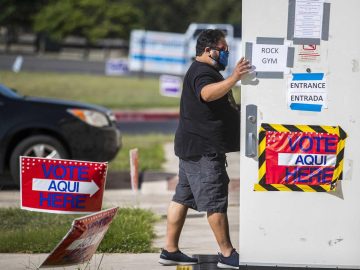
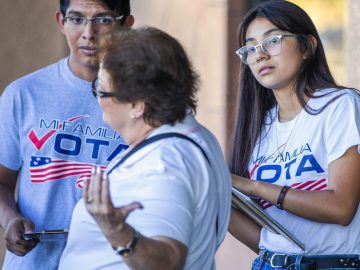
“This campaign was different,” Barreto says. “Traditionally, primary elections attract fewer voters and turnout tends to be low. This year, we saw much stronger participation. We witnessed a record increase in Latino turnout, particularly among young Latinos.”
Political scientist Matt Barreto says rising Latino turnout, especially among younger voters, helped reshape California’s primary elections and could play a decisive role in the governor’s race and Los Angeles mayoral contest.
“What are your impressions of the latest elections?” I ask Matt Barreto.
“Which election are you referring to?” he replies, precise and methodical, as one would expect from an academic and polling expert whose work focuses primarily on Latino voters.
This is not a question posed to just anyone. Barreto is widely recognized as an authority on Latino electoral behavior and political research.
“At the statewide level, Xavier Becerra will win the governor’s race. I’m one hundred percent certain of that,” he says confidently. “In Los Angeles, Karen Bass has a significant advantage, but she faces several intense months of campaigning ahead, especially among Latino voters. To defeat Nithya Raman, she will need to continue winning Latino support. Raman faces a major challenge because many Latino voters simply do not know her. If she wants a chance with that electorate, she will need to run a vigorous outreach campaign, introduce herself to the community, and communicate her proposals directly.”
Barreto is the cofounder of Barreto Segura Partners Research, a national polling and research firm. He is also a professor of political science and Chicano studies at UCLA, where his work focuses on Latino political behavior and public opinion. He has served as an adviser to both the Harris-Walz and Biden presidential campaigns.
“This campaign was different,” he says. “Traditionally, primary elections attract fewer voters and turnout tends to be low. This year, we saw much stronger participation. We witnessed a record increase in Latino turnout, particularly among young Latinos. One important factor was Xavier Becerra’s candidacy, which generated enthusiasm and attracted voters.”
In a previous interview with Latino Victory, Barreto described what he called an awakening among young Latino voters. For the first time, many became deeply engaged in the election. That surge in participation helped Becerra in the final days of the campaign, when support for him accelerated and ultimately propelled him into first place.
Barreto does not believe Latino voters automatically support a candidate simply because of a Latino surname, but he says representation still matters.
“It’s a combination of factors,” he explains. “Latinos continue to feel represented by candidates who share their background, represent their communities, and understand aspects of their culture. That remains important. There is a sense of pride, and that is what the data consistently shows. At the same time, campaign outreach matters.
Becerra ran a very smart campaign that successfully connected with young Latino voters. First and second time voters often give Latino candidates the benefit of the doubt. They are willing to listen, and those candidates do not have to spend as much time explaining who they are.”
Following the controversial political shift of 2024, when a segment of Latino voters moved toward the Republican Party with Donald Trump as a major factor, Barreto believes those voters have largely returned to the Democratic fold. Trump’s approval ratings among Latinos now rank among the lowest seen in recent years.
“In 2024 there were several issues at play,” Barreto says. “Inflation was high, housing was unaffordable, and there were widespread economic concerns. Some voters supported Trump even if they did not particularly like him. But today, most indicators suggest the country is in a worse position. He did not deliver. The shift was temporary. The idea that Latinos were becoming Republicans is not supported by the data. They saw him as an opportunity to improve their lives, and that did not happen.”
Although final numbers are not yet available, Barreto remains encouraged by the increase in young Latino participation. Still, he is far from satisfied.
“There is still a great deal of work to do,” he says. “While turnout among young Latinos increased, the numbers are not yet significant enough. Politicians and candidates need to do much more to engage these voters and bring them into the electoral process.”
Barreto attributes the persistently low turnout to long-established political habits.
“These are patterns,” he explains. “Candidates do not like taking risks. They look at voter files, and if a group has not voted before, they often set it aside and focus on people who regularly participate. As a result, those voters receive little engagement and develop a lower propensity to vote. But if candidates change that approach, reach out to them, and persuade them to participate, things can change. We cannot afford to ignore them.”
According to Barreto, young Latino voters have become a distinct political group, different from older Latino voters who are often more focused on retirement, Social Security, and other concerns associated with later stages of life.
One crucial factor for any candidate seeking to connect with Latino voters is narrative and message.
“There is a great deal of skepticism,” he says. “Candidates need to show that they are willing to fight for these communities. They need a message that resonates and feels different. The last time we saw that on a large scale was with Barack Obama in 2008. His message of hope and transformation resonated with all voters, not just Latinos.”
Los Angeles: A Close Contest
Barreto believes Los Angeles Mayor Karen Bass is currently better positioned for reelection. While he expects a competitive race, he believes Bass has built the alliances necessary to secure victory. According to a Los Angeles Times survey, Bass won roughly 70 percent of Latino voter support.
“Raman’s challenge is that many Latino voters do not know who she is,” he says. “Her task is more complicated. She needs to introduce herself, communicate her message, and explain the issues she stands for.”
He notes that third place candidate Spencer Pratt ultimately fell short but performed relatively well among Latino Republicans.
Raman has established some support among Latino voters under 30, and maintaining that connection will be important. Whether that support can expand to the broader electorate remains uncertain.
Barreto does not believe recent victories and nominations by candidates associated with the Democratic Socialists of America necessarily reflect broader Latino voting patterns.
“This phenomenon is relatively new,” he says. “In Los Angeles, I would estimate it represents around 10 percent of young voters. What we have found is that if you stop young people on the street and ask them what the DSA is, most have no idea. Their priorities are going to work, solving economic challenges, supporting their families, and having enough money left over to enjoy life. Young voters are more open minded, but they are also deeply frustrated.”
Looking ahead to November, Barreto expects national politics to be dominated by Trump and the battle for control of Congress and the Senate.
In California, however, he believes the path to Latino voters is straightforward.
“Candidates need a major voter outreach operation and a serious campaign effort,” he says. “They need to focus the conversation on the issues that matter most to Latinos. For Latino voters, the key word is opportunity. Their lives, their work, and their aspirations all revolve around that idea. Any candidate who wants to reach them must understand that and explain how they will create those opportunities and turn them into reality.”