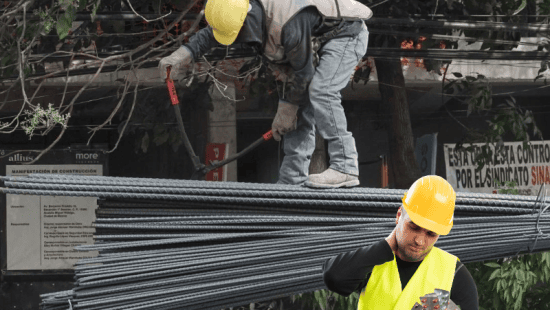
A new survey finds growing numbers of young workers are turning to construction, electrical, HVAC, and other skilled trades for job security, strong wages, and careers less vulnerable to artificial intelligence.
Young workers and even college graduates are increasingly turning to skilled trades instead of traditional white-collar careers in search of job security, competitive wages, and long-term stability, according to a recent survey by Resume Templates.
The survey, which included 1,250 respondents born between 1997 and 2012, found that 60% of Gen Z workers plan to pursue careers in construction, electrical work, HVAC, plumbing, building maintenance, manufacturing, and other skilled trades.
“Many young adults are questioning whether college debt is worth it and are instead exploring blue-collar careers that offer solid income, skill development, and long-term security,” said Julia Toothacre, Chief Career Strategist at Resume Templates.
The findings contrast with a Harris Poll conducted last year, which found that fewer than 40% of Gen Z respondents were interested in skilled trades, largely because they lacked awareness of the opportunities available. That survey, based on 2,200 respondents, reported that only 38% believed skilled trades offered the best job opportunities and just 36% strongly agreed that trade careers provided a faster and more affordable path to success.
For those entering the trades, opportunities are abundant. According to data from the U.S. Bureau of Labor Statistics, the nation will need approximately 150,000 new construction workers and 80,000 electricians annually over the coming years.
To meet growing demand, employers are expanding apprenticeship programs and workforce development initiatives with support from public and private investments.
Recent examples include:
Schneider Electric invested $100,000 in The SkillPointe Foundation to expand training opportunities in building energy management and other high-demand fields.
The Home Depot Foundation committed $10 million to broaden access to skilled trades education, including a $1 million partnership with Boys & Girls Clubs of America.
Carrier Global announced plans to hire 1,000 service technicians in the United States and train more than 100,000 climate solutions technicians.
Companies are also collaborating to address workforce shortages. The Business Roundtable recently launched a skilled trades initiative bringing together roughly 150 companies focused on workforce development across construction, building maintenance, energy solutions, and manufacturing.
“An electrician is an electrician,” said Dane Linn, Senior Vice President of Corporate Initiatives at the Business Roundtable. “They all go through the same training. The challenge is figuring out how to train people at scale.”
Resume Templates concluded that Gen Z’s growing interest in the trades is driven primarily by practical considerations, including job security, earning potential, and alignment with personal skills.
The rise of artificial intelligence may also be influencing career decisions. According to the survey, half of Gen Z workers who already hold college degrees are considering skilled trade careers.
“Unlike many corporate jobs, trade careers are not likely to be replaced by AI,” Toothacre noted.
Impact on Latino Construction Workers
The industry’s transformation in 2026 is having a significant impact on Latino workers, who remain the backbone of the construction workforce in California and across the United States. Latinos account for 33.8% of all construction workers nationwide and more than 40% of the workforce in California.
The effects are being felt across three major areas:
Immigration Enforcement Creates Workforce Disruptions:
The most immediate challenge facing Latino construction workers this year is the increased intensity of immigration enforcement operations.
Construction firms across California report widespread absenteeism driven by fear. Even when enforcement actions target only a specific segment of the population, concern spreads throughout entire crews, including documented workers and U.S. citizens from mixed-status families. Many workers are avoiding job sites and even routine visits to building supply stores out of fear of potential encounters with immigration authorities.
The labor shortage is particularly severe in specialized trades heavily staffed by Latino immigrants, including drywall installation, roofing, flooring, and stucco work. Workforce disruptions in these sectors are slowing residential construction projects and delaying post-wildfire rebuilding efforts throughout the state.
According to reports from the National Hispanic Construction Alliance (NHCA), some Latino-owned contracting companies have even removed logos and identifying markings from company vehicles to avoid attracting attention during enforcement operations.
Generational Change and the Technology Gap
The growing influx of Gen Z workers into skilled trades is creating new challenges for veteran Latino workers.
Research from UCLA’s Latino Policy and Politics Institute warns that at least 30% of Latino workers in California hold jobs that face a high risk of automation or replacement by emerging digital technologies.
At the same time, construction companies are increasingly adopting software platforms, Building Information Modeling (BIM), drones, and other digital tools to modernize operations and attract younger workers. Many experienced Latino tradespeople face barriers to advancement due to limited digital training, technology access, or language obstacles, making it more difficult to transition into supervisory and management positions.
Labor Shortages Create New Economic Opportunities
Despite these challenges, severe labor shortages have strengthened the bargaining position of skilled Latino workers and contractors.
Workers who remain on job sites are increasingly negotiating significantly higher wages, with some earning substantially above traditional hourly rates as contractors struggle to keep projects on schedule.
Latino-owned construction companies are also experiencing unprecedented opportunities. Industry data shows that Latino-owned construction firms already generate approximately $779 billion in annual revenue across the United States.
Organizations such as the NHCA are encouraging Latino subcontractors to expand their operations and become direct general contractors, allowing them to capture larger profit margins and take advantage of growing demand throughout the construction sector.
As labor shortages persist and skilled trades continue to attract younger workers, Latino workers and business owners remain central to the future of the American construction industry.