After 150 California students walked out over immigration raids, school officials imposed restrictions — igniting a broader debate about student rights and civic activism.
Beyond the school disciplinary code, students have the right to protest against raids conducted by U.S. Immigration and Customs Enforcement (ICE).
School districts across the country enforce disciplinary codes in cases of misconduct, such as truancy or skipping classes to participate in marches.
However, these are not ordinary times, nor are the ICE raids affecting many of these students’ parents ordinary circumstances. Therefore, school districts must address this situation and consider developing disciplinary policies that reflect the current reality.
Younger generations are often accused of apathy when it comes to political issues. Yet when they do speak out, the system punishes them. The most recent example occurred last weekend in Redlands.
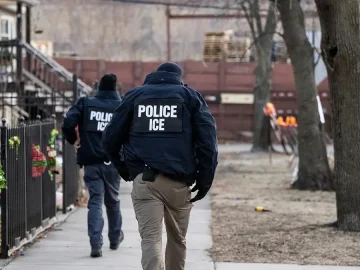
Anti-Immigration and Customs Enforcement (ICE) protests have taken a different turn across cities in America.
Now, about 150 students from different schools in Redlands, California, have come up and begun protesting against the harsh crackdown by the federal agency on immigrants. It started at the beginning of February when these students walked out of their schools to show solidarity with those affected by the ICE raids.
However, their mark of support to the affected immigrants has irked the school authorities. Following the protests, the school administration has temporarily suspended the students’ privileges. Officials have placed additional rules that now forbid the pupils from leaving their respective classrooms without prior permission or information.
These anti-ICE protests have challenged not only the enforcement agencies, but also the authorities of the school boards themselves. Besides staging a walkout, the students marched to a downtown intersection on the road, holding placards and signs. They protested against the immigration crackdown backed by President Donald Trump.
Apart from the withdrawal of their privileges, the students’ punishment involves loss of access to sports, dances and several other school performances. Students are now directed to compulsorily attend classes on Saturday, along with completing four hours of community service, in order to regain privileges.
Many experts have claimed that such an approach is being implemented in schools run by a conservative board. However, there has been a positive response to student activism within other California school systems. Many student activists have viewed the punishment as a deliberate method to silence the protests.
In the wake of the situation, the district’s Public Information Officer Christine Stephens has made her stance clear regarding the disciplinary measures that were undertaken. Stephens mentioned that the corrective steps were taken to ensure that these protests follow peaceful means.
She stated, “The superintendent’s message is consistent: We care deeply about our students, and we recognize that many young people are dealing and engaging with issues they see in the news and in their community. Students have the right to express themselves peacefully. At the same time, the district must uphold its responsibility to maintain a safe, supervised learning environment during the school day.”
Critics sometimes argue that modern students are apathetic or disengaged from civic life. However, participation in immigration-related protests suggests a level of political awareness and activism among segments of the student population. Student-led demonstrations have occurred at public and private universities across the United States, often drawing attention from national media and advocacy organizations. At the same time, not all students participate, and opinions on immigration enforcement vary widely across campuses. The issue remains politically and socially divisive, reflecting broader national debates about border security, federal law enforcement, and human rights.