Arturo Aguilar, his women, his support system: During a health crisis, he asked them for forgiveness. His daughters said to him, “Why are you asking us for forgiveness? You have been the best father and an example to us.”
He was an alcoholic; he left Oaxaca to leave that life behind. He traveled across the country to reach the border and get to Tijuana, and through the hills, on foot, he made it to Los Angeles with his life broken, a daughter in Mexico, and a heartbroken family.
“I asked myself why I had traveled, why I had left my daughter and my family. My dad gave me work, and I earned good money; you could say I had everything, but alcohol had taken it all away from me. Still, that day, I was sitting outside the door of my uncle’s house in Koreatown, waiting for him to arrive so I could start a new life,” says Arturo Aguilar, owner of El Valle Oaxaqueño and La Reina Oaxaqueña, two popular restaurants in Los Angeles.
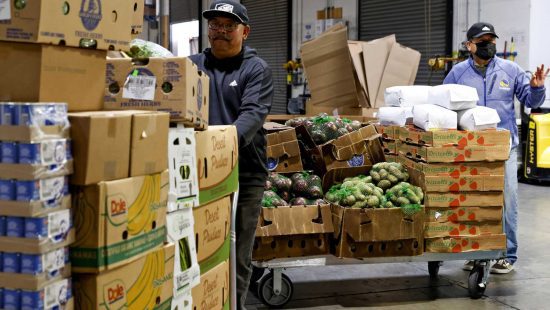
Getting there wasn’t easy. He started by helping his uncle sell fruit from a truck, waking up at dawn and coming home at nightfall, day after day. Later, his uncle gave him the chance to go out on his own, bought him one of the trucks, and he began expanding his route. He got married, bought three more trucks, and a house. He started making Mexican bread in his home’s garage, and it became very popular, so he bought a bakery, taking on debt but knowing he would come out ahead, and later expanded the bread business into a restaurant, then opened another, and then another. Of the three he had, he now has two open, not because of an economic or immigration crisis, but because of a business decision.
“It hasn’t been easy; I’ve fallen many times, but I’m still here. Ten years ago I had a serious health scare; I nearly lost my sight completely, I couldn’t stand up, I thought it was the end. I asked my daughters for forgiveness, and they told me I didn’t have to, that I had been a good father and that my example had given rise to good businesses. I recovered; I keep moving forward. I’m still here fighting; that’s why I don’t agree with those who say the American Dream doesn’t exist. My answer is, ‘We shouldn’t stop dreaming just because we have Trump; we have to do what we do best: work. The challenge we face right now is to reinvent ourselves, have a good plan, and carry it out. People come to me asking for work, and I interview them, and it’s like I’m the one asking for the job; they ask me more questions than I ask them: ‘How much am I going to make, what hours will I have, I can’t work this day or that day, especially not Sundays, because I go to church.’ I tell them, God will be happy if you bring food and money home; you can go to Mass any day.’ They want to start driving a car before they even start working,” says Arturo, in an interview with Parriva.
Oaxacan roots
Arturo Aguilar is originally from San Juan Teitipac, Tlacolula, Oaxaca. His father was a born merchant, and he and his siblings helped out however they could, while also attending school.
“Honestly, I didn’t like it, but I made it all the way to college, even though I didn’t finish. I had a happy childhood, typical of people from my town. But as a child, we moved to the city of Oaxaca, and it was different. My siblings were there, my mom stayed in the village running the businesses we had, and even though we kept studying, once I became a teenager the problems started,” says Arturo.
He left college and went to work at a bakery his father had already opened. That’s where he learned the trade, but he admits he was quite the ladies’ man, with several little girlfriends, and that got him into trouble.
“Haha,” he laughs. “I wore my heart on my sleeve and figured, ‘there’s room here for whoever comes along.’ I started going out with my fellow bakers and fell into alcoholism. It was a dark period that lasted three or four years. I hit rock bottom. My dad flat-out told me, ‘Not like this, son, you can’t keep working with me.’ I ended up alone; my family gradually left me behind. At first, I blamed them, but later I understood. I realized they were right. I was in a bad place; I had bad company, bad friends, and I lost myself. I couldn’t find a way out. My girlfriends used to tell me que no tenía dónde caer muerto. I looked for work at other bakeries and kept drinking; I couldn’t cut it out of my life. By then, I already had a daughter, and my parents were taking care of her. Whenever I went to see her, it hurt me deeply; I didn’t want her, once she grew up, to be told she had a drunk for a father, or that he had already died. One day, I decided to change, and the way to do it was to leave Oaxaca. I went to buy my bus ticket and went to my brother’s house, then my parents’. I told them I wanted to change and that I was leaving; I didn’t want to keep living like that,” he told them.
His parents cried and told him they had given him everything, that they hadn’t failed him.
“They told me that if that was my decision, all they could do was bless me. I kissed my daughter and told her, ‘I’m doing this for you.’ Some family members didn’t say goodbye; there was a Julio César Chávez fight on television,” he says.
Los Angeles and building a business
He left right away, stopped at relatives’ house in Mexico City, and continued on to Tijuana. The drinking, despite the short time that had passed, was already behind him. He reached the border, crossed through the hills, and they stopped at a safe house, since Border Patrol activity was very heavy around San Felipe. They finally pushed on, and he was able to make it to Los Angeles.
“After the initial shock, I felt a lot of homesickness, so I threw myself into work. Only once did I give in to temptation and drink, but I stopped myself immediately, telling myself I hadn’t traveled all this way just to fall back into it. After two years, I went back home, and by then my father received me differently; he could see I had truly changed for the better. That trip back to Oaxaca was also when I met my wife. Meeting Sofía Pérez was the best gift life has ever given me; she has been my everything; she has supported me through good times and bad; she has been a support that has helped me overcome every challenge. God and the Virgin of Juquila sent her to me. Afterward, we came together to Los Angeles. The work on the fruit trucks, and later at the bakery, is hard. We would get up at 4 or 5 in the morning and go to bed at 10 or 11 at night. The next day, the same thing,” he says.
“The day I start believing my own hype, I’ll lose my footing; I see myself as just another member of the team. I’m still working to this day, and when people ask if I’m the owner, I tell them, I’m the manager; my dad is the owner,”
Arturo remembers, laughing, how he got his first bakery. He always used to drive by it; he had seen it, and one day he noticed it was closed and the equipment was up for sale. He reached out to the owner, let him know he was interested in buying the whole business, and the amount being asked was more than he could afford.
“So he asked me, ‘If I sell it to you, how are you going to pay me?’ That’s when I knew, with certainty, that it was going to be mine. I told him, I’ll pay a down payment and the rest in monthly installments. He agreed, and nos dimos la mano,” he says. “I started with one tiny little spot. Today, the entire small shopping center belongs to my business,” he adds proudly.
He was fortunate that his father got to see how far he had come in life.
“I had the chance to bring him to Los Angeles, so he could see what I had; I didn’t even have the restaurants yet! I took him to Las Vegas, and at one point he told me, ‘Son, I’m proud of what you’ve done.’ Hearing him say that is a great gift,” he says. “I still can’t quite believe it. I have two restaurants. I had a third one, but it wasn’t working out, so I closed it. You have to be able to accept when things aren’t going well and not keep pushing forward anyway. Right now, my daughters run La Reina Oaxaqueña, and we’re expanding it. We’re going to be able to sell other things and have a full bar. I always say, the day I start believing my own hype, I’ll lose my footing; I see myself as just another member of the team. I’m still working to this day, and when people ask if I’m the owner, I tell them, I’m the manager; my dad is the owner,” he mentions.
The crisis and how to handle it
Arturo shares that the crisis the country is going through right now, both economic and related to immigration, has been difficult.
“You have to have strategies. Most people think you need to pull back in times like these. I tell them, no! You have to innovate, you have to invest, offer new products; that’s how we’ve managed to keep growing, little by little. I employ around 100 people, and to those who feel pressured by immigration issues, I tell them not to worry; if they need to miss a day, they should. They’re not going to lose their job. The key word in times like these is reinventing ourselves,” he says.
Arturo says he runs his businesses simply and with common sense.
“We all get a salary. My wife has a salary, I have a salary, my daughters too, everyone does. Everything else goes back into the business accounts. That way we’re able to invest, instead of just spending money for the sake of spending it. We’re very charitable; we know we have to give back to the community. We make donations to churches and schools, and during the pandemic, we handed out food pantries. I don’t agree that the American Dream is over. A lot of people think money is just scooped up with a shovel, but you have to work hard. You have to take risks; that’s one piece of advice I can give: if you have some savings put away, invest it, try to start your own business. You have to grind it out; you have to work like an owner,” he says positively.
When Arturo looks back, even though he says he still can’t quite believe it, there’s a certain satisfaction in what he’s built, but he feels he’s still far from finished. “I have a lot of plans, a lot of things left to do. When my wife and I talk at night, she tells me, ‘Remember when you were like that, going through such a hard time? Look at you now.’ And it gives me satisfaction to talk about it with her. But one of my mantras is, ‘I Am Not a Finished Product.'”