DMV says most Californians are unaffected, but some immigrants with legal status must reissue their REAL ID at no cost
More than 325,000 California residents will need to replace their REAL ID after the California Department of Motor Vehicles (DMV) identified an error in its data system that led to the issuance of identification cards with incorrect expiration dates. The issue, confirmed by the agency, is not related to fraud or applicant eligibility, but to a long-standing technical failure in a legacy system that has been in use for nearly two decades.
The DMV said the issue affects approximately 1.5% of REAL ID holders statewide, and emphasized that 99% of residents do not need to take any action.
What Happened: A Technical Failure, Not an Immigration Issue
According to official information from the DMV, the problem originated in a legacy system implemented in 2006, which in certain cases failed to properly align the REAL ID expiration date with the federal authorization period for lawful presence held by some immigrants with valid legal status.
As a result, some REAL IDs did not fully comply with federal requirements, even though applicants met all legal criteria at the time of issuance.
State officials stressed two key points:
- No REAL IDs were issued to undocumented individuals
- The error does not affect or invalidate anyone’s immigration status
The DMV has begun sending direct notifications to affected individuals, outlining the steps required to reissue the REAL ID and maintain compliance with federal standards.
As part of the corrective plan, the DMV announced that:
- No replacement fees will be charged
- The reissuance process will be expedited
- No action is required unless an official DMV notification is received
“About 99% of REAL ID holders will not be affected,” said Steve Gordon, Director of the DMV, reaffirming the department’s commitment to serving all Californians and ensuring state-issued identification meets federal requirements.
California is home to one of the largest populations of immigrants with lawful status in the United States, and the REAL ID is a critical document for mobility, employment, and access to essential services.
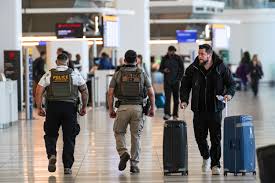
For many Latino families, a REAL ID is more than an identification card—it determines the ability to board domestic flights, enter federal buildings, and avoid disruptions that can affect work, education, or family stability.
For this reason, the DMV emphasized that this adjustment is administrative and preventive, not punitive or selective.
The REAL ID stems from the REAL ID Act, passed by the U.S. Congress in 2005 to establish minimum security standards for state-issued driver’s licenses and identification cards.
In California, a REAL ID allows residents to:
- Board domestic flights
- Enter federal buildings
- Access military installations
A standard state driver’s license that does not meet REAL ID requirements will not be sufficient for these purposes.
To obtain a REAL ID, applicants must provide:
- Proof of identity
- A valid Social Security number
- Proof of California residency
- Evidence of lawful presence in the United States
These requirements have not changed as a result of the recent announcement.
What You Should Do Now
- Do not visit the DMV unless you receive an official notice
- Monitor your mail and official DMV communications
- Follow only the instructions provided by the DMV
- No additional fees should be paid for this replacement
This incident once again highlights a recurring challenge for public agencies: reliance on outdated technology systems to manage critical services. While the DMV identified and addressed the issue internally, the situation underscores the importance of investing in modern digital infrastructure to protect both data integrity and public trust.

REAL ID deadline is approaching. Here’s what you need to know