New public health data shows emergency room visits increased during the eight-day Boyle Heights warehouse fire as residents continue reporting strong odors, respiratory symptoms, and concerns about possible environmental contamination.
Disasters can be addressed directly or simply covered up. What is happening in Boyle Heights looks more like a cover up than a real solution.
Los Angeles officials decided not to order evacuations when the fire broke out at a massive warehouse that stored nearly 85 million pounds of frozen food. “There is no indication that the smoke is that toxic,” Mayor Karen Bass said, relying on an assessment by the Los Angeles Fire Department.
Things quickly spiraled out of control. The fire intensified, the toxic smoke spread far beyond expectations, and the damage proved to be much greater than authorities may have anticipated.
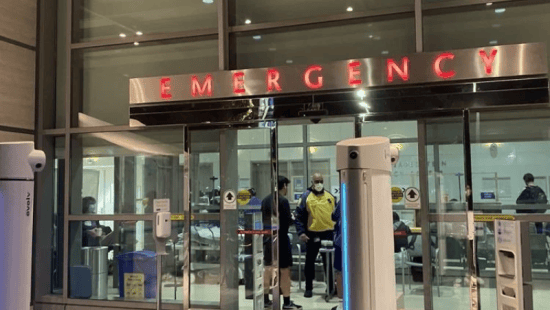
Now, as the full impact of the fire is beginning to emerge, record numbers of residents in the area are seeking treatment at urgent care centers for respiratory problems.
The number of Angelenos who went to hospitals with sore throats and concerns about smoke inhalation surged while the massive Lineage cold storage warehouse burned in Boyle Heights, according to the Los Angeles Times.
Multiple news outlets have documented the grim conditions facing the neighborhood as cleanup efforts continue. One headline captured the situation succinctly: Impact of Boyle Heights Fire: Rats, Rotted Food, Strong Odors, Dead Birds in the LA River.
Now some people sarcastically call Boyle Heights the new Rat City.
“Run your air purifiers. Or ask for hotel vouchers. Keep being persistent with your representatives,” residents have urged one another on social media. The message reflects a growing sense that air purifiers and face masks are no longer enough to protect the community from odors that many describe as resembling a crematorium.
Residents have reported an overwhelming stench that they compare to a dead body, garbage, or rotting meat. The smell has lingered long after the flames were extinguished because crews are still removing the spoiled food from the warehouse.
Kelvin Vasquez, who lives about a block away, said he suffered from a sore throat, headaches, dizziness, and nausea during the eight day fire. After the flames were put out, he said his greatest concern became the decomposing food left inside the warehouse.
“It smells pretty much like a dead body,” he said. “Like a dead animal.”
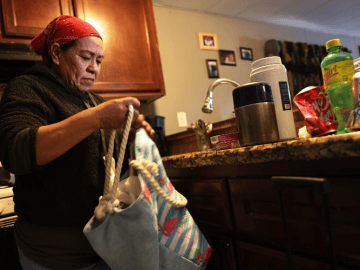
Gabriela Dueñas, who lives less than half a mile from the site, said she avoided going outside because she feared the smoke and the lingering air pollution. She said the odor became even stronger after the fire itself and worries about the long term health effects on residents, pets, and elderly neighbors.
Despite those conditions, authorities have not announced a general hotel voucher program for residents affected by the Boyle Heights warehouse fire. The only emergency housing currently available is through 211 LA and Airbnb.org for displaced residents who qualify by calling 2 1 1.
The fire began on June 17 and burned for eight days, consuming solar panels, insulation foam, and other industrial materials.
During that period, more than three times as many people visited emergency departments within a 10 mile radius of the warehouse mentioning the fire or smoke inhalation compared with the previous two weeks, according to data from the Los Angeles County Department of Public Health obtained through a public records request.
The department also reported that visits involving sore throats nearly doubled within five miles of the fire on June 21, reaching 1.9 times the normal level.
The environmental damage to the Los Angeles River also remains impossible to fully measure.
“The community here is really interested in knowing, ‘Are there any contaminants that are potentially making their way down to the L.A. River?’” said Yoshira “Yoshi” Ornelas Van Horne, an assistant professor of environmental health sciences at UCLA. “We really can’t answer that unless we actually have measures and samples analyzed.”