“Our community has been hit very hard. Resources don’t reach us in sufficient numbers. Sometimes it seems as though they want to leave all the poverty in South L.A. But they don’t count on the strength of our community.”
Some people look. Others see with their eyes wide open.
Adela Barajas is one of them. Her life has been devoted to confronting injustice and defending humanity, compassion and the possibilities that can make this world a better place to live.
It sometimes seems as though she has lived through everything. Her experiences have profoundly shaped the way she sees the world.
In 1994, she spent eight hours in a coma. She was driving to work early one morning when a drunk driver crashed into her car. She remembers those hours, the people she saw and the space she occupied.
“Uncle, how did I get out of the truck?” she remembers asking. “I already know what my funeral is going to be like. It will be full of flowers.”
She says she looked at people and spoke to them, but they walked past her. She wondered whether she would be able to see and reassured herself: “Of course. I’ll be watching them.”
Talking to someone who has devoted her life to social justice is different. For Barajas, many of the problems other people learn about through newspapers or computers are realities she encounters every day on the streets.
“I’m an expert at walking, at finding my way through life. I’m not someone who stays behind a desk. My space is the street, interacting with the community. I see firsthand all the injustices affecting our community in South Central. I interact with the people who live through them and are trying to move forward. Many times, we are their last option, and we have to be there for them,” says the founder of L.A.U.R.A. (Life After Uncivil Ruthless Acts).
Violence Does Not Happen in Isolation
Barajas recognizes that domestic violence is a serious problem, but she is clear that it does not exist in isolation and cannot be explained by a single cause.
Domestic violence, child abuse, alcoholism, gangs and economic conditions are part of a web of circumstances affecting families.
“Our community has been hit very hard. Resources don’t reach us in sufficient numbers. Sometimes it seems as though they want to leave all the poverty in South L.A. But they don’t count on the strength of our community. They trust our work because they know we understand their problems and that we are here to work with them and help them,” she says.
“Domestic violence is very complex, especially now. Many times women don’t want to report it. We can’t blame them. There are very critical issues: immigration, raids, the economy, husbands who have lost their jobs, alcoholism and so many other things.”
A Tragedy That Became a Mission
Barajas’ activism and the creation of L.A.U.R.A. were born from a personal tragedy.
In 2007, her sister-in-law, Laura Sánchez-Barajas, was murdered. The killing profoundly affected Adela and led her to commit herself to Laura’s children and relatives, helping them find positive ways to process and express their emotions in the face of their grief.
She decided to transform a cruel tragedy into something that could help make the world a better place.
L.A.U.R.A. was born from that determination.
For years, the organization has worked to improve the quality of life of residents in South Los Angeles, an area Barajas describes as “the forgotten part” of the greater Los Angeles area.
Through L.A.U.R.A., young people, survivors of violence and their families are empowered through civic engagement, community collaboration and access to support resources. The organization also provides social services, particularly to the Latino community in South Central Los Angeles.
“How to Love Myself”
One phrase that repeatedly emerges in Barajas’ conversation captures much of her philosophy.
“We went through a period when everything seemed to be about ‘All It’s About Me.’ I believe in the idea that we have to work together, as a community, based on the most human and compassionate principles.”
She says between 30 and 40 young people currently participate in her projects.
“We share our problems. We try to help each other. I give them a fundamental question: ‘How to Love Myself.’”
Barajas says many young people arrive feeling that they are not valued. The work, she explains, is about helping them recognize what they carry inside themselves.
“When they come here and we work on that, they bring out the gold they have inside, that positive, wonderful spirit they are made of.”
She also speaks about young people who arrive facing serious mental-health struggles.
“Many of them come here at risk of suicide. They go through a transformation, and we manage to bring them back.”
When they arrive, she asks them to involve their parents.
“Many of them are in denial. We have to work with that,” she says.
“We’ve devoted many of the few resources we have to involving them in activities that allow them to experience things they haven’t had the opportunity to experience. We go to the beach, we go camping…”
The Cost of a Lack of Resources
Barajas insists that one of South L.A.’s biggest problems is a lack of resources.
She says that more than 90 percent of trauma centers are located outside the Ninth Council District (CD9), forcing many families to seek help outside their own communities.
“I never turn my back on people. They can call me at two or three in the morning, and I’ll be there. I know exactly what they’re going through.”
Another major problem she identifies within the Latino community is a lack of communication.
“People don’t talk. They don’t have conversations. I see problems, but you ask them and many times they tell you everything is fine. I have to insist: ‘If you love yourself, you can help with the problem.’”
She also challenges traditional gender roles within families.
“We know the problem with men: because of machismo, they want to be the controller, the one who decides what should be done and how. That doesn’t work. We have to open the conversation and tear down those myths.”
A Community That Is Too Often Stereotyped
Although crime has improved in different parts of Los Angeles, some areas of South L.A. continue to face problems involving violence and crime.
For Barajas, statistics can also contribute to stigmatizing young people who live in these neighborhoods.
“This is a community with a lot of love, but there is a total lack of resources. We can’t just look at the numbers. We have to look at the resources the city is putting into keeping these young people involved in activities that keep them away from harmful situations.”
“There are many areas of Los Angeles with worse numbers. But because of the neighborhoods these young people live in, people assume they are involved in harmful activities. That’s not true.”
She says she is currently having difficulty using a local park where she has traditionally held activities for young people.
“I tell them, when have you ever seen us doing anything bad? Whenever we’re there, we’re doing positive activities. But if I don’t have that support, imagine other people or organizations.”
“They have a diamond inside them. If you know and understand what their lives have been like, you understand them. They need to have programs that offer the activities they need.”
The Power of Opportunity
Barajas has seen how young people change when they receive resources and become involved in the organization’s activities.
“They like L.A.U.R.A.; otherwise, they might be out there with nothing to do. We’ve devoted many of the few resources we have to involving them in activities that allow them to experience things they haven’t had the opportunity to experience. We go to the beach, we go camping…”
She knows the city offers programs, but says many families simply cannot afford them.
“These families have to make a choice: either they eat, or they send their children to the city’s summer programs,” she says.
Barajas sees some improvement in the Ninth Council District, although not necessarily throughout the surrounding areas.
“Yes, there is crime. If you’re from here, you know where to walk and where not to go. It happens to me. I go out walking at night, but I know where to go and where not to go. The small police stations they’ve installed have helped.”
But she insists the neighborhood should not be defined by its problems.
“They have a diamond inside them. If you know and understand what their lives have been like, you understand them. They need to have programs that offer the activities they need.”
She remembers one young man who was about to lose a support check he received through the organization.
“He couldn’t understand it. He kept insisting that he had to take it home. He told us he had been waiting so long for this money because he wanted to give it to his mother and help her pay the rent.”
“Imagine that. A teenager, at such a young age, worrying about these things that might seem insignificant somewhere else in the city.”
What She Would Ask of Politicians
If she were to write a wish list for politicians, Barajas knows exactly what she would ask for.
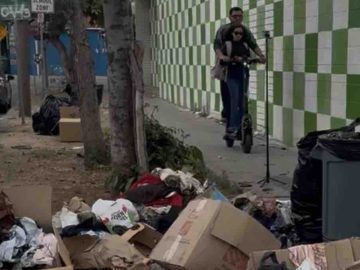
“I would ask politicians to listen more to the Latino voice, dedicate more resources, and improve cleanliness. Don’t focus only on the outer edges of the district; focus on the entire district.”
“I believe in people, in the community. Any politician I meet, I’ll ask them to keep their word. If they don’t, I’ll find them and hold them accountable. They know me.”
L.A.U.R.A. and Its Community Work
For years, L.A.U.R.A. has maintained a role in community and political advocacy, working with municipal, state and federal authorities on behalf of victims of violence and their communities.
Barajas is also part of the Crime Survivors for Safety and Justice network, where she continues to advocate for survivors of violent crime and carries her message of transformation and justice beyond her own organization.
A Life Dedicated to Her Community
Barajas has spent many years as an activist. It is her life, but she has also learned that she needs moments to disconnect.
She puts her phone away and turns off the sound. She practices positive thinking. But if her community needs her because something serious has happened, she does not leave them hanging. She goes, no matter what time it is.
Once a year, she travels to Mexico. She loves horseback riding. She had a horse named Pinto, who recently died.
“He was beautiful, but he got colic,” she recalls.
Then she returns to what is essential — the reason she has devoted so many years to her community.
“My community is not a ghetto. It is a community where resources and opportunities are lacking, but there is love, understanding, unity and a lot of humility.”