The state’s new incentive replaces the eliminated federal tax credit, but affordability, charging access, and everyday realities continue to slow EV adoption in many Latino communities.
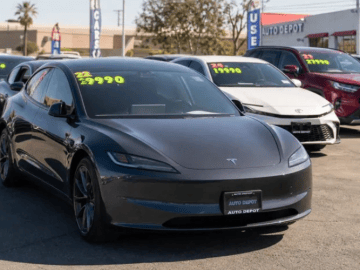
California is betting that a new electric vehicle incentive will keep EV sales moving after the federal government eliminated its tax credits. Under the state’s newly approved budget, first-time buyers can receive an instant $3,500 discount on eligible new electric vehicles or $1,750 toward eligible used models at participating dealerships.
For many California families, that could make an electric vehicle more affordable. But for many Latino households, experts say the biggest obstacles extend well beyond the purchase price.
The new program, approved as part of Governor Gavin Newsom’s $350 billion-plus state budget, dedicates $135 million to help replace the federal incentive that disappeared earlier this year. Unlike the former federal tax credit, the California rebate is applied immediately at the dealership, eliminating the need to wait until tax season.
The new rebate is designed to encourage first-time electric vehicle ownership while helping California stay on track toward its long-term clean transportation goals.
Under the program:
- First-time buyers can receive an instant $3,500 rebate on eligible new EVs.
- Eligible used EVs qualify for a $1,750 rebate.
- Participating automakers must match the state’s incentive dollar for dollar.
- New vehicles must generally have a manufacturer’s suggested retail price below $50,000, while used vehicles must cost $25,000 or less.
- California manufacturers, including Rivian and Lucid, are exempt from those price limits.
The program will be administered by the California Air Resources Board, with participating dealerships joining as agreements are finalized.
Why Latino EV Ownership Still Lags
The rebate addresses one challenge: purchase price.
But research suggests price is only one piece of a much larger puzzle.
Consumer Reports and the Union of Concerned Scientists have found that Latino consumers consistently express strong interest in electric vehicles. More than 40 percent say they are interested in buying or leasing one. Yet actual ownership remains significantly lower than that level of interest.
That gap points to barriers that financial incentives alone may not overcome.
While $3,500 reduces the upfront cost, many families are more concerned about monthly payments than sticker price.
Interest rates, insurance costs, and higher vehicle prices continue to make financing difficult for households already balancing housing, childcare, and other rising expenses.
For many buyers, reducing a monthly payment by $50 or $60 may matter more than lowering the purchase price by several thousand dollars.
One of the biggest hurdles is where drivers will charge their vehicles.
Many Latino Californians live in apartments or multi-family housing where installing a home charger is not possible. Public charging stations remain unevenly distributed, with greater availability in higher-income neighborhoods than in many working-class communities.
Without reliable charging near home or work, owning an EV becomes less practical, regardless of available rebates.
Long Commutes Create Additional Challenges
Many Latino workers commute significant distances across Southern California or travel between suburban and rural communities for construction, agriculture, healthcare, logistics, and service jobs.
Although modern EV ranges continue to improve, concerns about charging availability during long workdays remain a major factor in purchasing decisions.
For families who depend on one vehicle to get everyone to work, school, and appointments, reliability often outweighs environmental benefits.
Another barrier is familiarity.
In communities where relatively few neighbors or relatives own electric vehicles, buyers often have unanswered questions about battery life, maintenance costs, charging, resale value, and long-term reliability.
Consumer advocates say expanding education and trusted community outreach could be just as important as offering financial incentives.
The California Air Resources Board will begin enrolling dealerships and implementing the rebate program over the coming months.
For consumers, the next question is whether the new incentive will significantly expand EV ownership beyond higher-income communities or primarily benefit buyers who were already planning to purchase an electric vehicle.
For California policymakers, success may ultimately depend not only on rebates, but also on continued investments in neighborhood charging infrastructure, affordable financing, and consumer education that reaches communities historically left out of the state’s clean transportation transition.