A federal judge ruled that election rules are largely controlled by Congress and the states, halting a Trump administration effort to require documentary proof of citizenship for federal voter registration.
A federal judge has permanently blocked key portions of a Trump administration executive order that would have required documentary proof of U.S. citizenship to register to vote in federal elections. The decision could have significant implications for voter registration efforts across the country, including in California, which is home to the nation’s largest Latino population.
U.S. District Court Judge Denise Casper ruled that the U.S. Constitution gives primary authority over federal election administration to states and Congress, not the president acting alone through executive order. The ruling permanently bars implementation of several election-related directives that had been challenged by a coalition of states and voting rights advocates.
For California voters, community organizations, and civic engagement groups, the decision preserves the current federal voter registration process while legal and political debates over election security and voting access continue.
The central legal question was not whether only citizens should vote. Federal law already restricts voting in federal elections to U.S. citizens, and knowingly registering as a noncitizen carries serious legal penalties.
Instead, the dispute focused on whether a president can require additional documentation, such as a passport or birth certificate, through executive action.
Judge Casper concluded that federal election rules are governed through constitutional powers assigned to Congress and the states. Because Congress had not authorized the changes outlined in the executive order, the court determined that the administration exceeded its authority.
Why Latino Advocacy Groups Supported the Lawsuit
Organizations representing Latino and immigrant communities argued that documentary proof requirements could create practical barriers for eligible voters.
Groups such as the League of United Latin American Citizens and other voting rights advocates have argued that naturalized citizens, lower-income voters, seniors, and people who have changed their legal names may face challenges obtaining or producing required documents.
Advocates also contend that additional paperwork requirements can discourage participation in voter registration drives that often take place through churches, schools, community centers, and neighborhood organizations.
Many California Latino civic groups rely heavily on community-based registration campaigns that use standard federal voter registration forms. Maintaining that process allows those outreach efforts to continue without major procedural changes.
The Administration’s Argument
Supporters of the executive order view the issue differently.
The Trump administration argued that requiring documentary proof of citizenship would create a uniform national standard and strengthen public confidence in election administration. Supporters contend that citizenship verification requirements are a reasonable safeguard designed to ensure that only eligible citizens participate in federal elections.
The broader debate reflects an ongoing national disagreement over how election systems should balance security, verification, and voter access.
California administers elections through state and county election officials and already operates under extensive voter registration and verification procedures.
The ruling means California’s existing voter registration process remains unchanged for now.
This is especially significant in Los Angeles County, which administers elections for one of the largest local electorates in the United States. Community organizations that conduct voter registration and citizenship outreach campaigns can continue using existing federal registration procedures without the new documentation requirements envisioned by the executive order.
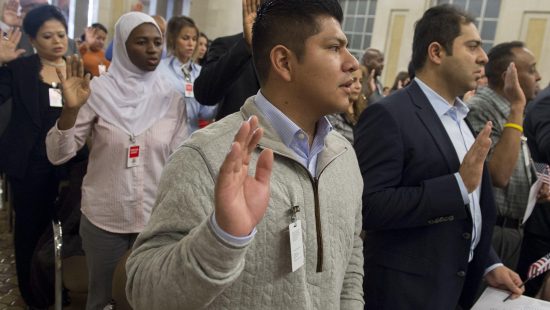
For naturalized citizens, who represent a substantial portion of California’s electorate, the ruling removes the possibility that additional federal documentation requirements would be added before future federal elections.
The legal battle over election administration will continue, for sure.
The Trump administration has supported legislative efforts that would require proof of citizenship for voter registration through congressional action rather than executive order. Future court appeals are also possible.
Meanwhile, federal courts continue reviewing other election-related policies, including separate disputes involving citizenship verification databases and voter eligibility checks.
For now, however, Judge Casper’s ruling preserves the current federal voter registration system and reinforces the principle that major election rule changes generally must come from Congress or the states rather than the White House acting alone.