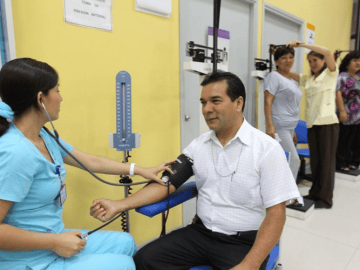
A major international study found that adding apalutamide to hormone therapy before and after surgery dramatically improved outcomes, but persistent screening gaps and underrepresentation in clinical trials remain major concerns for Latino communities.
A major international prostate cancer study unveiled at the 2026 American Society of Clinical Oncology (ASCO) Annual Meeting is generating optimism among cancer specialists and patients alike.
The Phase 3 PROTEUS trial found that combining apalutamide with androgen deprivation therapy (ADT) before and after surgery significantly improved outcomes for men with high-risk localized prostate cancer. Patients receiving the combination treatment were nearly nine times more likely to have little to no detectable cancer remaining at the time of surgery compared with patients receiving ADT alone.
The findings are important nationally, but they carry particular significance for Latino communities in California and Los Angeles, where prostate cancer remains one of the most important men’s health challenges.
According to the American Cancer Society, prostate cancer is the most commonly diagnosed cancer among Latino men in the United States, accounting for approximately 25% of all new male cancer diagnoses.
The PROTEUS study evaluated whether intensifying treatment before and after surgery could improve outcomes for men with high-risk localized prostate cancer.
Researchers found that 8.9% of patients receiving apalutamide plus ADT achieved a pathologic complete response, meaning little to no cancer remained in tissue removed during surgery. Only 1.0% of patients receiving hormone therapy alone achieved the same outcome.
The study also found a 20% reduction in the risk of metastasis or death.
For patients and families, these findings suggest doctors may be gaining a more effective strategy for attacking aggressive prostate cancers before they spread beyond the prostate.
The results build on a broader trend in prostate cancer treatment. Increasingly, oncologists are using combination therapies earlier in the disease process rather than waiting until cancer becomes advanced.
Why Latino Men Face Unique Challenges
While prostate cancer affects men across every racial and ethnic group, Latino men often encounter barriers that can delay diagnosis and treatment.
Research shows Latino men are approximately 24% more likely to be diagnosed with advanced or metastatic prostate cancer than non-Hispanic White men despite having slightly lower overall incidence rates.
Several factors contribute to this disparity.
Only about 20% of Latino men report receiving annual PSA screening tests, compared with nearly 39% of non-Hispanic White men.
Studies also indicate Latino patients are less likely to receive timely treatment for high-risk localized disease and may face delays linked to insurance gaps, language barriers, transportation challenges, and limited access to culturally appropriate healthcare information.
These delays matter because prostate cancer outcomes are strongly linked to how early the disease is detected.
When prostate cancer is diagnosed before it spreads, the five-year survival rate is nearly 100%.
California is home to the nation’s largest Latino population, including millions of men who fall into age groups at elevated risk for prostate cancer.
Los Angeles County alone contains one of the largest Latino populations in the country.
That means improvements in screening access, early diagnosis, and treatment availability could have an outsized impact on public health outcomes throughout Southern California.
Health experts frequently note that awareness campaigns focused on Latino communities can help close gaps in screening rates and encourage earlier conversations between patients and physicians.
Not All Latino Communities Face the Same Risk
One of the most important findings from recent research is that Latino populations are not a single uniform group.
Studies from major cancer centers have found meaningful differences among men from different ancestral backgrounds.
Men of Mexican descent appear more likely to present with aggressive high-grade tumors and metastatic disease at diagnosis.
Men of Puerto Rican heritage experience prostate cancer incidence rates significantly higher than many other Latino populations and even higher than non-Hispanic White men.
Meanwhile, men of Cuban descent tend to show risk patterns closer to national averages.
These differences highlight why researchers increasingly call for more detailed and disaggregated data collection in cancer research.
A Persistent Problem: Latino Men Remain Underrepresented in Clinical Trials
The PROTEUS trial enrolled approximately 2,000 patients across 18 countries and included Latino participants.
However, a broader issue remains unresolved.
Analyses of major industry-sponsored prostate cancer trials show Latino men typically represent only about 4.6% to 6.7% of participants, despite accounting for a much larger share of prostate cancer cases nationwide.
Researchers warn that underrepresentation creates important knowledge gaps.
Questions remain about whether certain treatments perform differently among specific Latino populations, whether side effects vary, and how genetic differences may influence treatment responses.
The lack of data is particularly concerning because researchers rarely separate Latino participants by country of origin, making it difficult to understand differences among Mexican, Puerto Rican, Cuban, and other Latino populations.
Important Points
• The Phase 3 PROTEUS trial showed significantly improved outcomes using apalutamide plus ADT before and after surgery.
• Patients receiving the combination treatment were nearly nine times more likely to have little to no cancer remaining at surgery.
• The treatment reduced the risk of metastasis or death by 20%.
• Prostate cancer remains the most commonly diagnosed cancer among Latino men in the United States.
• Latino men face higher rates of advanced-stage diagnosis and lower screening rates.
• Latino participation in prostate cancer clinical trials remains substantially below population need.
Researchers will continue monitoring long-term outcomes from the PROTEUS study, including overall survival and quality-of-life measures.
Meanwhile, federal regulators and cancer researchers are pushing for greater diversity in clinical trial enrollment through FDA Diversity Action Plans and community-based recruitment efforts.
For California families, the immediate takeaway is clear.
New treatment advances are improving outcomes for high-risk prostate cancer. But those advances can only help patients who are diagnosed in time to benefit from them.
That makes screening, early detection, and access to care just as important as the latest breakthrough therapy.