During the 2022 to 2024 legislative session, a record 39 Latino lawmakers served in the California Legislature, representing about 32.5% of legislative seats.
Latino elected officials are increasing nationwide and across California, yet Los Angeles city and county leadership still falls short of reflecting the region’s large Latino population. Experts say demographic growth alone does not guarantee political power.
Rhetoric targeting immigrant and Latino communities has become increasingly visible in today’s political climate. Yet that has not stopped Latinos from seeking elected office and leadership positions in government.
Voters are electing a growing number of Latino leaders to local offices, and many are the first Latinos to hold those positions. Political science experts say the rise in Latino leadership is the result of years of grassroots organizing, combined with ongoing attacks on immigrant and Latino communities by Trump administration officials and conservative activists.
“That’s the difference now. There is an added sense of urgency because of the relentless attacks on Latinos across the country,” said Anna Sampaio, an ethnic studies professor at Santa Clara University who specializes in race and gender politics.
But…
Something has happened in the City of Los Angeles. Latino representation seems almost like a joke. With 4 out of 15 seats (roughly 27%) in the City Council, Latino representation remains below the city’s nearly 50% Latino population. The election for mayor does not include any Latino candidate with a real chance of winning.
There is also only one Latino member on the five-seat Los Angeles County Board of Supervisors: Hilda L. Solis (District 1). Why have Latinos not achieved the same growth as other parts of the nation?
There are currently an estimated 7,700 Latino elected officials nationwide, according to the National Association of Latino Elected and Appointed Officials. That number has increased from 6,883 officials in 2020.
Latinos make up an estimated 55 million people, or about 16% of the U.S. population, making them the country’s largest ethnic minority group. Their political views, priorities, and cultural backgrounds are highly diverse. Despite their growing population, Latinos remain underrepresented in elected office.
As of early 2024, California had more than 1,800 Latino elected officials, many serving in local government and on school boards. During the 2022 to 2024 legislative session, a record 39 Latino lawmakers served in the California Legislature, representing about 32.5% of legislative seats. California also had 14 Latino members in the U.S. House of Representatives.
At the state level, Latino representation included 10 state senators and 24 Assembly members. Locally, most Latino elected officials served on municipal councils and school boards.
Latinas currently hold four of California’s 52 congressional seats and about 19% of state legislative seats. However, no Latina currently holds a statewide constitutional office in California.
Although Latino representation has grown significantly, it still does not reflect California’s population, where Latinos make up nearly 40% of residents.
The growth has accelerated in recent years. Between 2020 and 2021, the number of Latino elected officials in California increased by 10.4%, rising from 1,660 to 1,833 officials.
The Trump Effect
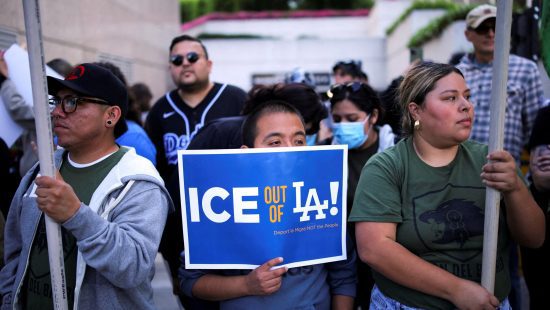
Since the beginning of President Donald Trump’s second term, Latino communities have faced intensified immigration enforcement and political rhetoric. Critics point to social media posts from official White House accounts that reinforce Hispanic stereotypes, along with federal English only initiatives and efforts to dismantle diversity, equity, and inclusion programs.
Advocates say these policies and messages have motivated more Latinos to seek office in order to defend their communities and represent those who may feel silenced in the current political climate.
As a result, lawmakers in several cities and states have proposed measures aimed at protecting immigrant communities. These efforts include limiting cooperation with U.S. Immigration and Customs Enforcement, blocking the construction of ICE detention centers, and calling for reductions in ICE funding.
Latino political representation is also increasing at the national level.
The 119th Congress includes 56 Hispanic or Latino members, accounting for about 10.35% of total congressional membership, according to the Congressional Research Service.
Forty years ago, during the 99th Congress, there were only 14 Hispanic or Latino members, all of them men.
At the beginning of 2025, seven Hispanic U.S. senators were serving in Congress. That number later dropped to six after Sen. Marco Rubio resigned to become Secretary of State, becoming the first Latino to hold the position.
Latinas also reached a new milestone in state legislatures last year. According to the Center for American Women and Politics, Latinas held 214 state legislative seats in 2025, up from 192 the previous year.
New Mexico Gov. Michelle Lujan Grisham is currently the only Latina governor in the United States. Only two Latinas in U.S. history have ever been elected governor, both in New Mexico.
In Texas, Gina Hinojosa recently won the Democratic nomination for governor, becoming only the second Latina to secure a major party nomination for governor in the state.
Sampaio said the largest increases in Latino political participation have often come in response to attacks on immigrant rights and Latino communities.
“We’re likely to see more Latinos run for office at the local, state, and national levels in response to attacks on their communities and identities,” Sampaio said. “These policies are not only creating fear, they are also mobilizing people politically.”