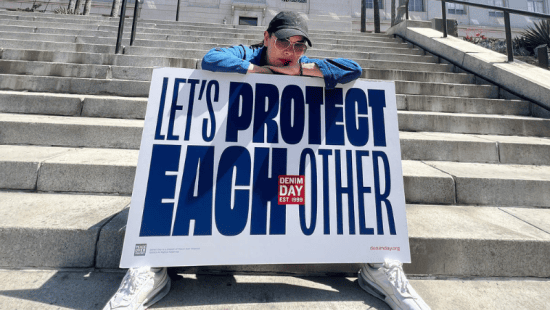
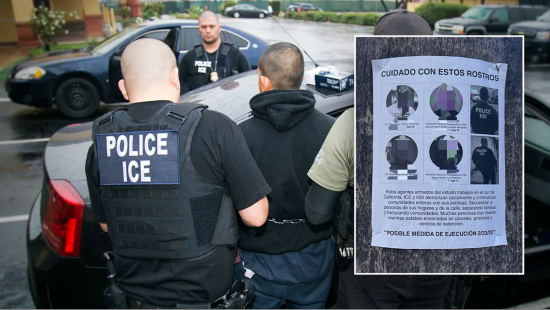
Oakland workers negotiated protections against AI-related job displacement. California has also enacted new employment safeguards, but the law does not guarantee that automation cannot eliminate government jobs.
Artificial intelligence is changing how government agencies operate, raising an important question for California public employees: What happens when technology can perform work previously done by people?
In Oakland, city workers negotiated a tentative labor agreement that includes protections involving artificial intelligence. The agreement followed months of negotiations and a threatened strike that was called off.
But Oakland’s negotiations raise a broader question for public employees throughout California: Does state law protect their jobs when government agencies introduce AI, or must workers negotiate additional safeguards?
The answer depends on how AI is used, what employment decision is involved and whether workers have contractual protections.
What Oakland workers negotiated
On October 31, Oakland announced a tentative three-year agreement with the International Federation of Professional and Technical Engineers Local 21.
The agreement includes AI usage protections, a 9% wage increase over three years and additional employment benefits.
The Guardian reported November 12 that the agreement includes retraining or reassignment for employees displaced by AI.
However, Oakland’s official announcement does not explain those protections in detail. The exact contractual wording matters: guaranteeing reassignment is different from requiring an employer to consider alternative positions.
The agreement is also awaiting approval. Local 21 members are scheduled to vote November 17–19, and City Council approval is required.
Until those steps are completed, the agreement should not be described as a fully approved contract.
What California’s new AI employment law protects
California enacted SB 947 in September 2026, establishing rules for employers using automated decision systems in certain workplace decisions.
The law covers public employers, including cities and counties.
Beginning July 1, 2027, covered employers cannot rely solely on an automated decision system when making disciplinary or termination decisions.
When an employer primarily relies on such a system, a human must corroborate the decision using supporting information.
Employees must also receive specified written notice when the decision is communicated and may request a description of their own data used by the system.
The law includes enforcement provisions and protections against retaliation.
But these safeguards address automated employment decisions. They do not generally guarantee continued employment when government agencies eliminate positions because technology changes how work is performed.
Certain collective bargaining agreements can also qualify for exceptions if they explicitly waive the law’s provisions and satisfy specified requirements.
Parriva previously examined related workplace safeguards in Your Employer May Be Tracking More Than Your Work, including California’s regulation of AI-assisted employment decisions and workplace monitoring.
A proposed protection California lawmakers rejected
Another measure would have required advance notice when public agencies introduced certain AI technologies affecting represented employees.
AB 2656 would have required covered public employers to notify recognized employee organizations at least 45 days before developing, purchasing or requiring generative AI to perform work within represented job classifications.
Governor Gavin Newsom vetoed the measure September 30.
In his veto message, Newsom acknowledged that workers should know when technology significantly affects their jobs but argued that workplace-specific protections were better developed through collective bargaining.
That creates an important distinction: California enacted safeguards for certain automated employment decisions but did not enact the proposed statewide advance-notice requirement for public-sector unions.
Existing collective bargaining obligations and employment protections may still apply.
San José shows why contract language matters
Oakland is not the only California city where AI has entered labor negotiations.
In San José, city officials negotiated AI-related provisions with employee organizations, including restrictions on automated personnel decisions and discussions about retraining.
A May 2026 city counterproposal stated that AI should not be the sole determining factor in hiring, promotion, discipline or employee evaluations.
It also proposed that the city consider training, upskilling, reskilling and reassignment before layoffs resulting from AI-related workforce reductions.
But considering those alternatives does not guarantee that affected workers will receive another position.
According to San José’s October 26 supplemental memorandum, members of the Association of Engineers and Architects and City Association of Management Personnel ratified their tentative agreements. A separate maintenance supervisors’ group rejected its agreement.
The city submitted agreements for council consideration. The final council action and operative AI side-letter wording have not been independently confirmed.
What should government workers know?
Employees should distinguish between AI assisting their existing duties, AI influencing employment decisions and AI contributing to the elimination of positions.
California’s new law establishes safeguards for covered automated decisions beginning July 2027. Other protections involving layoffs, retraining or reassignment may depend on employment law, civil-service rules and collective bargaining agreements.
Workers can ask their union representatives or personnel departments what AI policies apply, whether notice or bargaining requirements exist and how employment decisions can be challenged.
The broader question is whether automation is actually eliminating jobs. As Parriva previously reported in AI Job Loss Predictions: What California Found, predictions about AI displacement should not be confused with documented job losses.
Oakland’s negotiations show that public employees are seeking protections before those risks become reality.
What remains uncertain is how enforceable those protections will be—and whether workers elsewhere in California have comparable safeguards.