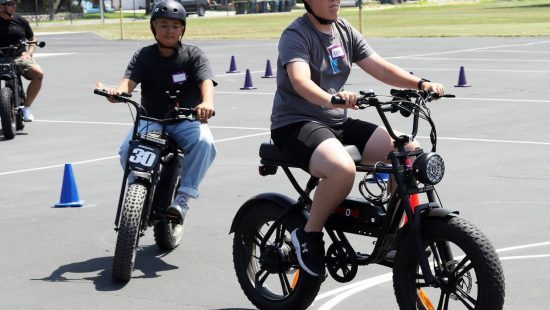
New research from Children’s Hospital Los Angeles shows how serious e-bike injuries can be. California officials are also warning families that some vehicles sold as e-bikes may actually be motorcycles.
For many teenagers, an electric bike means freedom. They can get to school, visit friends or run to the store without asking someone for a ride.
For parents, it can mean one less trip in the car.
But there’s something families may not realize when buying one of these vehicles: Not everything advertised as an e-bike is legally a bicycle.
Some electric two-wheelers are powerful enough to fall under motorcycle rules. And that difference matters, especially when a child is riding on neighborhood streets alongside cars.
New research from Children’s Hospital Los Angeles shows why doctors are concerned. Meanwhile, Orange County prosecutors are taking action against some parents accused of allowing children to ride electric motorcycles illegally.
What doctors are seeing in Los Angeles
In research released in October, Children’s Hospital Los Angeles examined 379 children and teenagers treated for e-bike or electric scooter injuries between 2019 and 2025.
The combined number of cases rose from 33 in 2019 to 124 in 2025.
Although more children were treated for scooter injuries, those hurt on e-bikes tended to have more serious injuries.
Nearly half of the e-bike patients suffered broken bones. About one in four needed surgery, compared with about one in ten scooter patients.
And nearly 9% of e-bike patients suffered potentially life-threatening injuries, compared with 2.8% of scooter patients.
The study doesn’t mean every child riding an e-bike faces the same risk. It examined patients treated at one hospital, not everyone who rides these vehicles.
But the findings add to concerns already raised by a California study documenting an increase in e-bike crashes.
How to tell if it’s an e-bike or an electric motorcycle
This is where things can get confusing for families.
A vehicle may look like a bicycle, have handlebars and two wheels, and be sold online as an e-bike. But California law looks at how the vehicle works, not just what the seller calls it.
Under California’s electric bicycle rules, a legal e-bike must have working pedals, a motor below 750 watts and limits on how fast that motor can assist the rider.
California recognizes three classes:
- Class 1: The motor helps when someone pedals, up to 20 mph.
- Class 2: The motor can move the bike without pedaling, but assistance stops at 20 mph.
- Class 3: The motor helps while pedaling, up to 28 mph.
Children younger than 16 can generally ride Class 1 and Class 2 e-bikes. Class 3 riders must be at least 16.
Riders under 18 must wear helmets. Helmets are also required for everyone riding a Class 3 e-bike.
But if a vehicle doesn’t have working pedals, or its motor exceeds the legal limits, it may be classified differently.
That could mean the rider needs a driver’s license, registration, insurance or other equipment required for motorcycles or mopeds.
California Attorney General Rob Bonta has warned parents about electric vehicles marketed as e-bikes that don’t meet state requirements.
The important point for families is simple: Don’t assume a vehicle is legal for a child just because the seller calls it an e-bike.
Orange County is holding some parents accountable
The issue has become more serious in Orange County.
On October 21, the district attorney’s office announced criminal charges against six additional parents.
Prosecutors allege they allowed their children to ride electric motorcycles illegally.
One case involves an 11-year-old boy who was seriously injured in a collision with a pickup truck.
The office said it has charged 12 parents since January, including a mother whose 14-year-old son allegedly struck an older man who later died.
These are allegations. The parents have not been found guilty simply because charges were filed.
The cases show how serious the consequences can become when children ride vehicles they may not be legally permitted or prepared to operate.
Orange County has also tried a buyback program aimed at getting certain electric motorcycles off the streets. Whether programs like that reduce injuries will require evidence over time.
What parents can do before the next ride
If your child already has an electric bike, or you’re thinking about buying one, start with a few basic checks.
Look for the manufacturer’s label. California requires legal e-bikes to identify their class, motor wattage and maximum assisted speed.
Check the pedals and motor. A vehicle without working pedals, or one modified to exceed legal limits, may not qualify as an e-bike.
Know the age rules. Children under 16 cannot legally ride Class 3 e-bikes. Electric motorcycles have different requirements.
Make sure your child has the right helmet. A helmet can reduce the risk of head injuries, but it cannot prevent every injury in a crash.
And before your child rides in traffic, make sure they understand how to handle intersections, turning cars and unexpected stops.
Families can find more information in the California Attorney General’s e-bike safety guidance.
Electric bikes can be a convenient way for young people to get around. The goal isn’t to take away that independence.
It’s to make sure children are riding vehicles that are appropriate for their age, meet California’s rules and don’t expose them to risks they aren’t ready to handle.
Before the next ride, parents should know exactly what kind of electric bike their child is using.